Is the Jade Plant Toxic? A Detailed Guide to Growing It
In our country there is an old saying, "jade tree in the wind, elegant and unrestrained," used to praise a man's appearance and bearing. The jade tree is the plant I want to introduce to you today. The jade plant has thick, plump green leaves, as smooth and lustrous as jasper, and its branches are vigorous and quaint, with the bearing of a great tree; placed in a living room or office lobby, it looks especially noble and grand, a beautiful sight. Let us take a look at how to grow the jade plant and whether the jade plant is toxic.
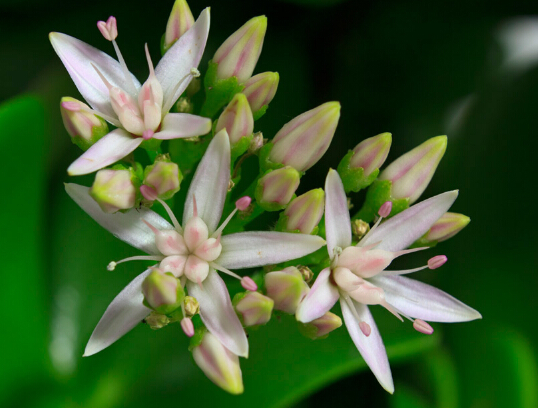
The jade plant is a plant of the genus Crassula in the family Crassulaceae, also known as the jade plant (Yanzizhang), Crassula tree, glass tree, eight treasures, kanqing, winter green, and succulent evergreen, fat baby. It is native to southern Africa. It likes a warm, dry environment with plenty of sunlight. It is not cold-tolerant, fears strong light, and tolerates slight shade. A fertile, well-drained sandy loam soil is best.
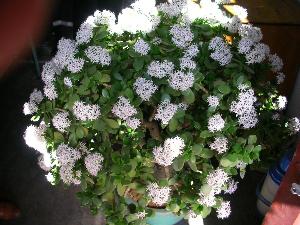
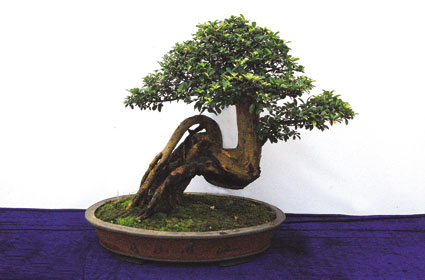
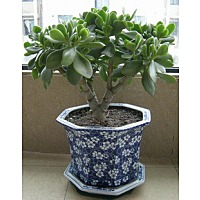
The jade plant has thick branches and leaves, is green all year round, has unusual leaf shapes and a dignified plant form, is easy to cultivate and simple to manage. It is suitable for pot culture and can be placed on a balcony or as an accent on an indoor table, looking very delicate and elegant. Its crown is tall and graceful, its stems and leaves are green, and it bears white flowers at the tips, very refined and unique. If matched with a pot stand or processed with gravel into a small bonsai, the jade plant is suitable for pot culture, and can also be trained into the appearance of an old tree stump, making it even more attractive when decorating a tea table or desk.
How to Grow the Jade Plant
1. Soil: For potted jade plant, it is suitable to use a mix of leaf mold and garden soil with a small amount of river sand as the growing medium, and a little hoof parings or other slow-release fertilizer can be added as a base fertilizer.
3. Sunlight: The jade plant likes sun. If there is insufficient light, it easily leads to damp heat, root rot and leaf drop, but the intense summer heat and strong sunlight are unfavorable to plant growth. In winter, the pot should be moved to a sunny spot in a shed or shelter so that the leaves stay fresh and green.
4. Watering: From spring to autumn, the jade plant can be watered once every 1 to 2 days, but waterlogging in the pot must be avoided. In the high summer heat, when the temperature reaches above 30°C, the plant is in a dormant or semi-dormant state, so watering should be controlled. At the same time, shading and cooling work should be done well; the ground around the pot can be sprayed with water 2 to 3 times a day, and attention should be paid to ventilation. In winter, the frequency of watering should be appropriately reduced, keeping the potting soil slightly dry.
5. Fertilizing: The jade plant does not require much fertilizer or water, and fertilizer and water should even be controlled. Generally no fertilizer is applied; if growth is too weak, some potassium-containing liquid fertilizer can be added, or once a month during the growing season a dilute, well-rotted cake fertilizer solution can be added.
6. Pruning: During the growing period, the jade plant should be moderately pruned of overly long and overly dense branches to keep the plant's shape symmetrical and its vigor strong.
The branches and leaves of the jade plant all contain a large amount of euphorbia resin. When human skin comes into contact with the sap flowing from the branches and leaves, it can cause skin redness, swelling, pain and blistering; if it accidentally splashes into the eyes, it can cause blindness. In fact, just do not let young children accidentally eat the sap, do not eat the branches and leaves, and pay a little attention, and that is enough. The jade plant's thick, plump green leaves are as smooth as jasper, and its vigorous, quaint branches have the bearing of a great tree. Displayed on a living room desk, it closely resembles the imperial jade-carved bonsai of the Forbidden City, elegant and noble, with a beautiful scene.
Looking at a great deal of information about whether the jade plant is toxic, opinions vary. Besides what is said above, some say that what is toxic about the jade plant is its flowers, which at night release waves of cancer-causing gas; others say the jade plant is not toxic at all, believing that all substances have their own safety standards for the harmful substances they contain, with clear permitted standards of quality and quantity; still others say that the jade plant not only releases oxygen during the day, but also has a function that most flowers do not have, namely absorbing carbon dioxide at night, because the stomata on its fleshy stems close during the day and open at night, and while absorbing carbon dioxide it releases oxygen, increasing the concentration of negative ions in the indoor air, so it is very suitable for growing in the bedroom. Someone also did an experiment to verify whether this view is correct or not: at night, a glass cover was placed over the jade plant, with the bottom of the glass cover sealed as much as possible, so that by the next morning the gas inside the glass cover would be what remained after the jade plant's nighttime respiration. By lighting a match in the gas inside the glass cover (oxygen supports combustion, while carbon dioxide extinguishes fire), the result was that the originally burning flame suddenly dimmed, and then before long went out, confirming that the jade plant really does absorb oxygen and exhale carbon dioxide at night, which is also a common trait of many plants. Other people's statements are, after all, other people's; we just need to learn from them appropriately and pay attention.
1. Ecological Habits
The growth habits of the jade plant, native to southern South Africa, are: it likes sun and tolerates shade, likes warmth and tolerates drought, is not cold-tolerant, and falls into a semi-dormant state at high temperatures; it is suited to warm, moist soil.
2. Propagation Method
Propagated by cuttings, generally planted in spring and summer. It roots quickly and has a high survival rate. Cuttings taken from young shoots root after 3 weeks. After the roots grow 2-3 cm, pot management begins. The suitable temperature is 16-21°C.
3. Pot Management
When potting, lay a drainage layer at the bottom. During the plum rain season and the semi-dormant period in midsummer, watering should be controlled. In summer it is best placed outdoors for growing, with appropriate shading, attention to ventilation, and shelter from heavy rain. During cultivation, pay attention to shaping and pruning; fertilizer and water should not be too much, and the pot or soil should be changed every year in early spring. High temperatures and poor ventilation can cause leaf drop. In winter, place it indoors, keep the potting soil slightly dry, and maintain the room temperature at 7-10°C; either higher or lower is unsuitable.
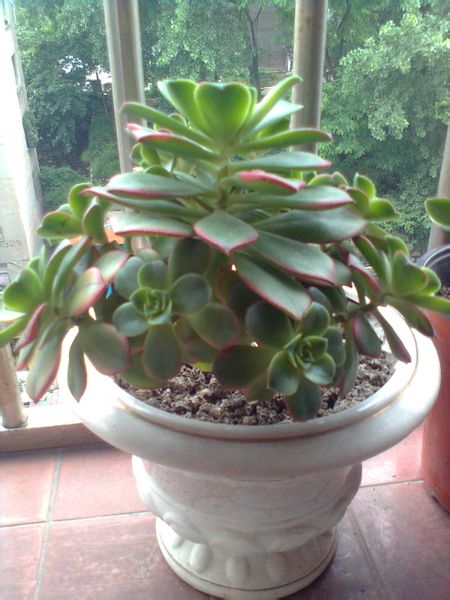
Points to Note When Growing the Jade Plant
1. Ecological Habits
The growth habits of the jade plant, native to southern South Africa, are: it likes sun and tolerates shade, likes warmth and tolerates drought, is not cold-tolerant, and falls into a semi-dormant state at high temperatures; it is suited to warm, moist soil.
2. Propagation Method
Propagated by cuttings, generally planted in spring and summer. It roots quickly and has a high survival rate. Cuttings taken from young shoots root after 3 weeks. After the roots grow 2-3 cm, pot management begins. The suitable temperature is 16-21°C.
3. Pot Management
When potting, lay a drainage layer at the bottom. During the plum rain season and the semi-dormant period in midsummer, watering should be controlled. In summer it is best placed outdoors for growing, with appropriate shading, attention to ventilation, and shelter from heavy rain. During cultivation, pay attention to shaping and pruning; fertilizer and water should not be too much, and the pot or soil should be changed every year in early spring. High temperatures and poor ventilation can cause leaf drop. In winter, place it indoors, keep the potting soil slightly dry, and maintain the room temperature at 7-10°C; either higher or lower is unsuitable.