What are the benefits and effects of duckweed? A detailed analysis
Duckweed, also known as green duckweed or field duckweed, is a floating aquatic plant of the family Lemnaceae, and it also serves as the collective name for plants in the Lemnaceae family. So, how much do you know about duckweed? What benefits and effects does duckweed have? Let us take a look together below.
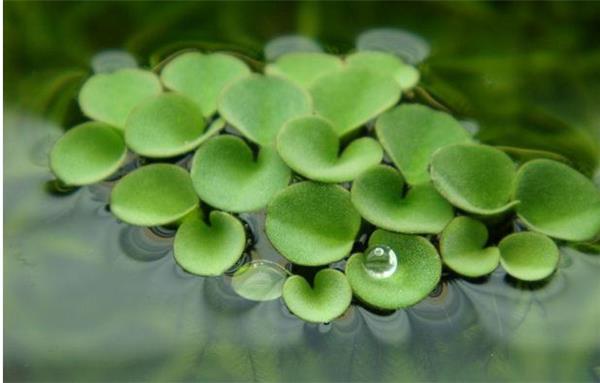
A brief introduction to duckweed
Duckweed, a traditional Chinese medicine name, is the dried whole plant of Spirodela polyrhiza, a plant in the family Lemnaceae. The frond is symmetrical, green on the surface, pale yellow or greenish-white or often purple on the underside, nearly round, obovate or obovate-elliptic, with entire margins, 1.5-5 mm long and 2-3 mm wide, slightly raised on the upper surface or ridged along the midline, with 1 filamentous root hanging from the underside, the root white, 3-4 cm long, the root cap blunt, the root sheath wingless. It prefers a warm climate and humid environments, and is intolerant of severe cold. It is suitable for cultivation in paddy fields, ponds and lakes. It is harvested from June to September, washed clean, impurities removed, and dried in the sun. It is pungent and cold in nature. It has the effects of dispersing wind-heat, promoting eruption of rashes, and promoting urination.
The benefits of duckweed
1. Wind-heat common cold
This product is pungent and cold, light in quality and floating upward, and has the effects of dispersing lung qi, inducing sweating, and dispelling wind-heat. It is more suitable for wind-heat common cold with fever and absence of sweating, and can be used together with mint, cicada slough, forsythia and the like. In cases of wind-cold common cold with aversion to cold and absence of sweating, it can also be used together with wind-cold-dispelling medicines such as ephedra, elsholtzia and notopterygium.
2. Incomplete eruption of measles
This product is pungent and dispersing, and can dispel wind-heat, release the exterior and promote eruption of rashes. For the early stage of measles with unsmooth rash eruption, it is often used together with the benefits and effects of mint, cicada slough, burdock fruit and the like.
3. Rubella with itching
This product is pungent and dispersing, and has the effect of dispelling wind and stopping itching. It can be used to treat wind pathogens blocking the skin surface, causing rubella and itching. For those tending toward wind-heat, it is mostly used together with pungent-cool wind-dispelling and itch-relieving medicines such as cicada slough, mint and burdock fruit; for those tending toward wind-cold, it is mostly used together with pungent-warm wind-dispelling and itch-relieving medicines such as ephedra, saposhnikovia and schizonepeta.
4. Edema with scanty urine
This product can open and diffuse lung qi at the upper level to induce sweating and expel pathogens, and at the lower level can regulate the water passages to promote urination and reduce swelling. Therefore, it is most suitable for treating edema with scanty urine complicated by exterior wind-heat syndrome. It can be used alone, or together with ephedra, forsythia, winter melon peel and the like.

The effects of duckweed
1. Effects on the cardiovascular system
The water extract has a cardiotonic effect on frog hearts weakened by quinine, which calcium can enhance; large doses cause the heart to stop in diastole; it can also constrict blood vessels and raise blood pressure.
2. Antipyretic effect
A decoction and infusion at 2 g/kg, given orally to rabbits with fever induced by injection of combined typhoid vaccine, proved to have a weak antipyretic effect.
3. Other effects
Antibacterial and antimalarial experiments were both negative; in the laboratory and in the field it has a killing effect on Culex larvae and mosquito pupae.
Contraindications for the use of duckweed
Having discussed the benefits and effects of duckweed, let us learn about its contraindications.
1. Bencao Jingshu: Do not use in those with exterior qi deficiency and spontaneous sweating.
2. Ming Bencao Congxin: "Unless there is severe excess and severe heat, it should not be tried lightly."
3. Depei Bencao: "In blood deficiency with dry skin, and qi deficiency with wind pain, these two conditions are contraindicated."
4. For externally contracted wind-heat and unsmooth eruption of measles and the like, it is often used clinically in combination with Chinese tamarisk twig, burdock fruit, mint and the like. For wind-heat urticaria, it can also be taken internally and applied externally. Duckweed can drain heat and promote urination, so it is used for edema with exterior heat.
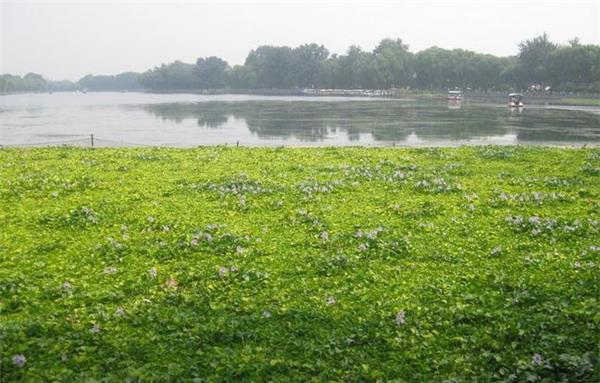
Documentary records of duckweed
1. Shennong Bencao Jing: It mainly treats sudden fever with itching, drains water qi, counteracts the effects of alcohol, promotes beard and hair growth, and stops excessive thirst.
2. Bencao Shiyi: Applied as a powder to facial dark spots; taken as pounded juice, it mainly treats edema, promotes urination; also for poisoning in people, take duckweed seeds dried in the sun and ground into powder, take one square-inch spoonful with wine; it can also be made into an ointment to promote hair growth.
3. Rihuazi Bencao: It treats heat toxin, wind-heat diseases, heat mania, swollen toxic sores, burns and scalds, and wind rashes.
4. Diannan Bencao: It induces sweating and resolves toxins. It treats scabies and mange, scabies and ringworm, and dispels the wind of skin itching.
5. Gangmu: It mainly treats wind-dampness numbness and paralysis, beriberi, traumatic injuries from blows and falls, red eyes with corneal opacity, mouth and tongue sores, vomiting of blood, and nosebleeds.
That concludes the related introduction to the benefits and effects of duckweed. I believe that after reading this, everyone has gained some understanding of the benefits and effects of duckweed. I hope the relevant knowledge introduced today can be of some help to everyone.