A Detailed Guide to Growing Aquatic Canna
Canna, also known as red canna, mostly originates from the tropical regions of the Americas, Asia and Africa. So how much do you know about aquatic canna? What are the growing methods for aquatic canna? Let us take a look together below.
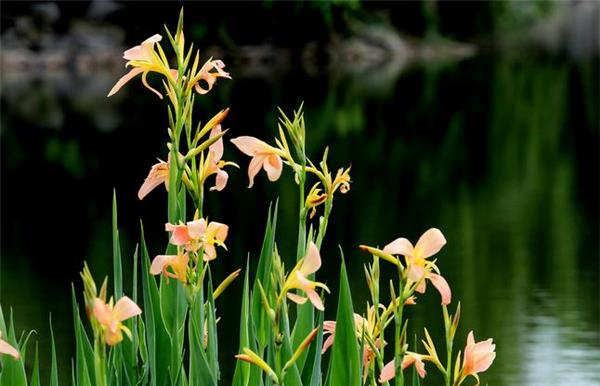
Introduction to Aquatic Canna
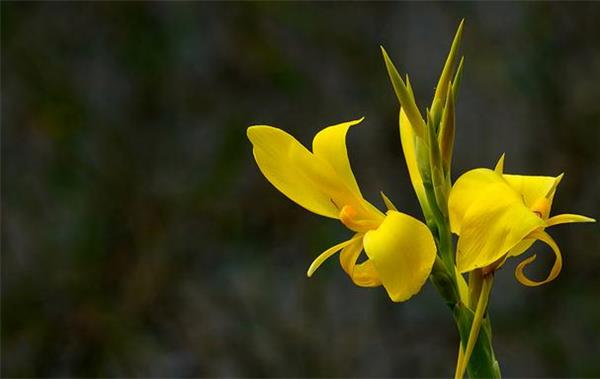
Aquatic canna, also known as Florida canna, is a large perennial herbaceous plant native to South America. It is a famous ornamental flower and has now been introduced and cultivated in many parts of the world. It bears yellow flowers with a shape similar to narcissus, and its peak flowering period is in spring, but it can continue blooming sporadically until summer. The plant height is about 1.2 m.
Growth Habits of Aquatic Canna
Aquatic canna is vigorous by nature and highly adaptable. It likes light and fears strong wind. It is suitable for growing in moist and shallow-water sites, and it grows well in both fertile soil and sandy soil. The suitable growing temperature is 15-28°C; below 10°C is not good for its growth. In its place of origin it has no dormant period and grows and blooms year-round. In the cold northern regions it goes dormant in winter, and the rhizomes need greenhouse protection to overwinter.
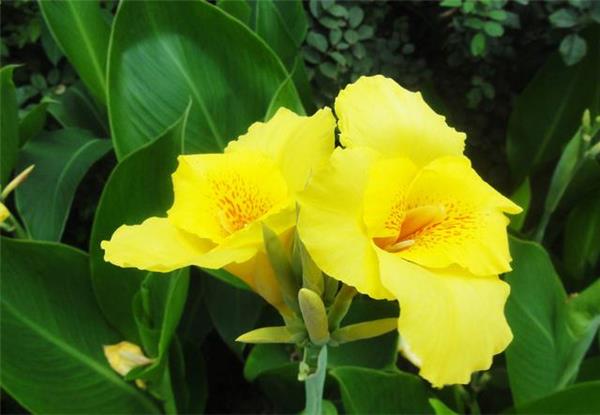
Growing Methods for Aquatic Canna
1. Substrate: When aquatic canna is planted outdoors, it should be fertilized appropriately; when grown indoors at home, relevant nutrient solutions can be purchased.
2. Temperature: The suitable growing temperature for aquatic canna is 15-28°C; below 10°C is not good for its growth. When planted in the open ground in the south, it can overwinter outdoors. In the north, where winters are cold, the aboveground stems and leaves should be cleared before late October each year, the tubers dug out, briefly dried, and stored in a cellar or greenhouse in heaps of sandy soil, with the temperature kept at 5-7°C. In warm regions, after 2-3 years the tubers need to be dug out and replanted in separate clumps in the same spot.
3. Light: Aquatic canna likes light and should be grown in a place with plenty of sunlight.
4. Watering: Aquatic canna is tolerant of flooding and can grow normally in water 20 cm deep. For open-ground planting, choose a damp spot by a pond or a shallow-water site, dig holes and plant in clumps, bury the tubers in the soil and cover with 7-10 cm of soil, then keep the soil moist or under shallow water after planting.
5. Fertilizing: When aquatic canna grows to 4-5 leaves, this is a sign that flower spikes are about to emerge. At this point, begin topdressing 2-3 times with potassium dihydrogen phosphate, which can also be sprayed on the leaves at a concentration of 0.3%-0.5%.
6. Pests and diseases: Aquatic canna has strong resistance and no major pest or disease problems, but care should be taken to keep the water body clean, promptly remove duckweed and clear weeds. In southern regions, attention should also be paid to the harm caused by snails. The control method is to mix trichlorfon with sawdust, put it into a cloth bag, then tie the bag to the pseudostem so that the bag floats on the water surface and moves with the waves; after the liquid medicine diffuses, the snail damage can be controlled.
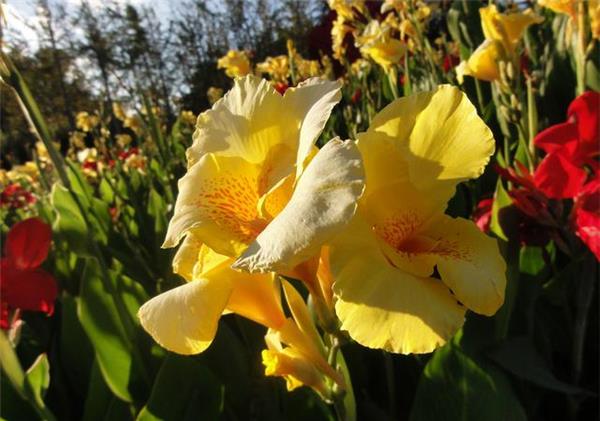
Propagation Methods for Aquatic Canna
1. Seed propagation: Sowing is done indoors in March-April. Before sowing, the seed coat must be filed open with a steel file, soaked in warm water for 1 day, then the seeds are taken out, drained of water and sown.
2. Dividing the tubers: Propagation by dividing tubers is usually done in March-April, when the tubers are taken out of the soil, debris is removed, and they are divided with a shovel or a sharp knife. Each tuber should have 2-3 robust buds and is used as propagation material.
The Flowering Period of Canna
Canna is a perennial bulbous herbaceous flower. The plant height can reach 100-150 cm, and the rhizome is thick and fleshy; the aboveground stem is succulent and unbranched. The stems and leaves have a white powdery coating; the leaves are alternate, broad, and oblong-lanceolate. Broadly elliptical. The raceme emerges from the top of the stem, the flower diameter can reach 20 cm, the petals are straight, and there are four petaloid stamens. Flower colors include creamy white, bright yellow, orange-yellow, orange-red, pink, bright red, purple-red, and variegated spots, with more than 50 varieties. The flowering period of canna is June-October in the north; year-round in the south.
That is all for the related introduction to aquatic canna. I believe that after reading this, everyone has gained some understanding of aquatic canna. I hope the related knowledge introduced today can be of some help to everyone.