How to grow water spinach? Mastering these cultivation methods is key
Water spinach is a common summer vegetable that frequently appears on our dining tables. Some friends may not be particularly familiar with water spinach, so today let us give a brief introduction and learn about it together.
Introduction to water spinach
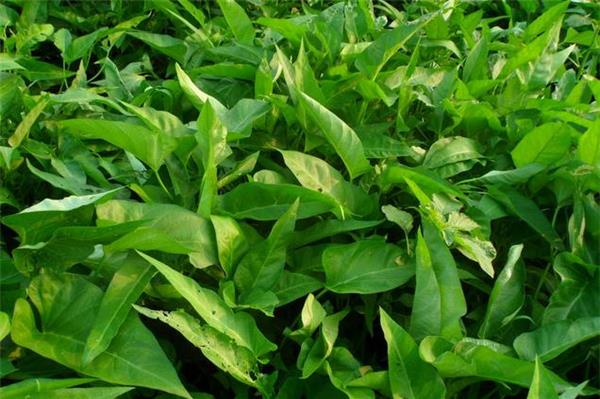
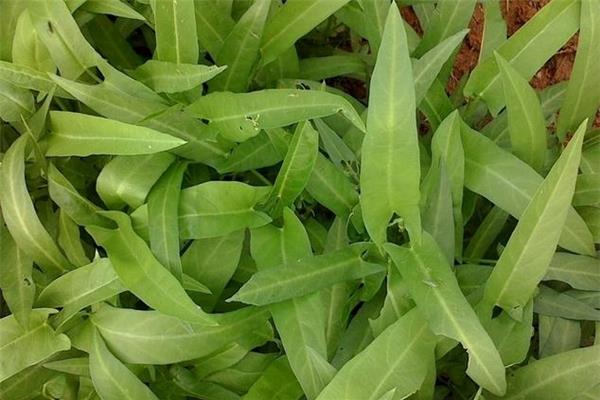
Water spinach has a fibrous root system, with shallow roots and strong regenerative ability. The dryland type has short stem nodes, with stems that are flat-round or nearly round, hollow, and dark green to light green. The aquatic type has long internodes, easily produces adventitious roots at the nodes, and is suitable for cutting propagation. The cotyledons are opposite, horseshoe-shaped; the true leaves are alternate, long ovate, heart-shaped or lanceolate, with entire margins, smooth dark green surfaces, and petioles. The inflorescence is a cyme, with 1 to several flowers; the corolla is funnel-shaped, the flowers are complete, white or light purple. The ovary has two chambers. The capsule contains 2-4 seeds. The seeds are nearly round, with a thick coat, dark brown, and a 1000-seed weight of 32 g to 37 g.
The effects and benefits of water spinach
1. Cancer prevention
Water spinach is an alkaline food and contains elements such as potassium and chlorine that regulate water balance. After eating, it can reduce the acidity of the intestinal tract, prevent imbalance of intestinal flora, and is beneficial for cancer prevention.
2. Lowering blood lipids and aiding weight loss
The niacin, vitamin C, and other components it contains can lower cholesterol and triglycerides, giving it the effect of reducing blood lipids and aiding weight loss.
3. An excellent beauty food
The chlorophyll in water spinach is known as the "green spirit." It can clean teeth, prevent dental caries, eliminate bad breath, and improve skin health, making it truly an excellent beauty food.
4. Preventing heatstroke and relieving fever
It is relatively rich in crude fiber. This dietary fiber is composed of cellulose, hemicellulose, lignin, mucilage, and pectin, and has the effect of promoting intestinal peristalsis, relieving constipation, and detoxifying. Water spinach is cool in nature, and its juice has an inhibitory effect on Staphylococcus aureus, Streptococcus, and others, and can help prevent infection. Therefore, if eaten frequently in summer, it can prevent heatstroke and relieve fever, cool the blood and expel toxins, and help prevent and treat dysentery.
The nutritional value of water spinach
1. Water spinach is extremely rich in crude fiber, which is composed of cellulose, lignin, pectin, and others.
2. Water spinach is an alkaline food and contains elements such as potassium and chlorine that regulate water balance.
3. Water spinach is rich in vitamin C and carotene, and its vitamin content is higher than that of Chinese cabbage.
4. The protein content in the tender shoots is 4 times higher than that of an equal amount of tomato, and the calcium content is more than 12 times higher than that of tomato, and it also contains a relatively large amount of carotene.
Cultivation methods of water spinach
Water spinach likes a high-temperature and humid environment. Its seeds need a temperature above 15°C to germinate; the temperature during the initial stage of axillary bud germination on seed vines must be kept above 30°C so that buds emerge quickly and uniformly; the suitable temperature for vine and leaf growth is 25-30°C. When the temperature is higher, vine and leaf growth is vigorous, and the harvest interval becomes shorter. Water spinach can tolerate high temperatures of 35-40°C; below 15°C, vine and leaf growth is slow; below 10°C, vine and leaf growth stops. It is not tolerant of frost; when exposed to frost, the stems and leaves wither and die. The storage temperature for seed vines in cellars should preferably be kept at 10-15°C, with relatively high humidity, otherwise the seed vines are prone to freezing to death or drying out.
Water spinach likes relatively high air humidity and moist soil. If the environment is too dry, the vines produce more fiber, greatly reducing the yield and quality of water spinach.
Water spinach likes sufficient light, but it also has relatively strong adaptability to dense planting. Water spinach does not have strict requirements for soil conditions, but because it likes fertilizer and water, it is best to choose relatively sticky soil with strong water- and fertilizer-retention capacity. Water spinach has many branches and leaves and grows rapidly, so during its growth period, it requires a relatively large amount of fertilizer, especially nitrogen fertilizer.
That is all for the introduction to water spinach. I believe that after reading this, everyone has gained some understanding of water spinach. I hope today's content can be of some help to everyone.