How to grow yellow flag iris? Detailed care methods and tips
Yellow flag iris, also known as yellow iris, water iris, yellow-flowered iris, etc., is a perennial wetland or emergent herbaceous plant with rhizomes. Next, let us take a look at how to care for yellow flag iris.
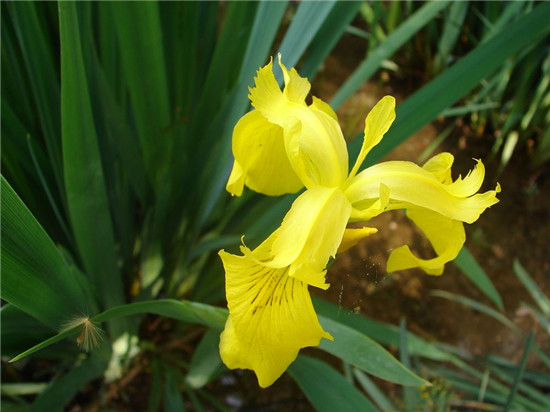
The flower stems of yellow flag iris are thick and sturdy, 60-70 cm tall, 4-6 mm in diameter, with obvious longitudinal ridges, branched in the upper part; the stem leaves are shorter and narrower than the basal leaves; there are 3-4 bracts, green, membranous, lanceolate, 6.5-8.5 cm long, 1.5-2 cm wide, with acuminate tips; the flowers are yellow, the stamens about 3 cm long, the filaments yellow-white, and the anthers dark purple.
The style branches are pale yellow, about 4.5 cm long, about 1.2 cm wide, with the tip lobes semicircular and sparsely toothed along the edges; the ovary is green, triangular-columnar, about 2.5 cm long, about 5 mm in diameter.
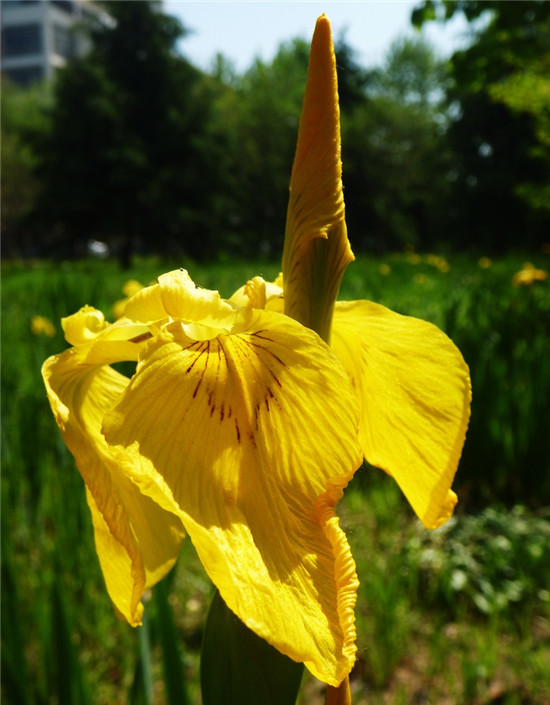
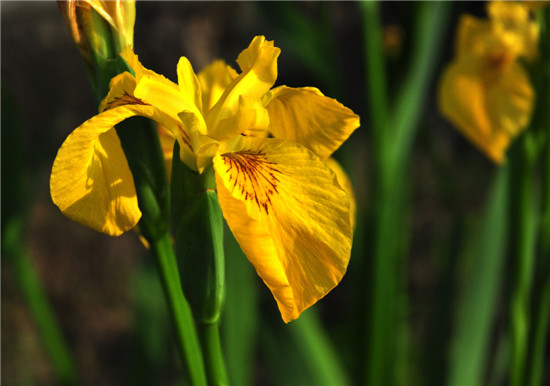
The flower stems of yellow flag iris rise slightly above the leaves; the upper part of the drooping petals is long elliptical, nearly equal in width at the base, with brown markings or none; the standard petals are pale yellow, and the flower diameter is 8 cm. The capsule is elongated, containing many seeds; the seeds are brown and angular.
The flowering period is May-June. Yellow flag iris is the pride of aquatic flowers, with bright yellow flowers and graceful blooms, and extremely high ornamental value. It adapts to a wide range, and can be cultivated in open ground at the edge of ponds or as an emergent plant in water.
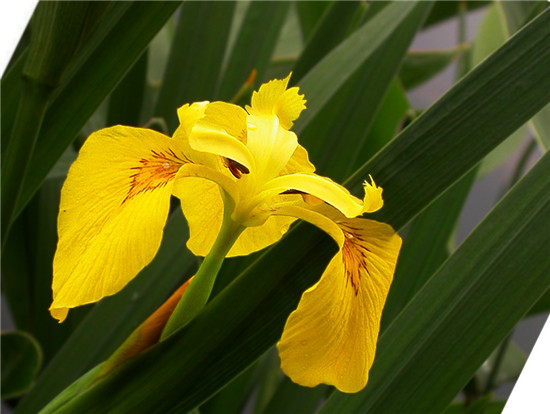
Yellow flag iris has strong adaptability, and its dense leaf clumps and flowers make it one of the most widely used flowers in wetland waterscapes everywhere. Whether arranged by the lakeside or beside a pond, the waterscape it displays is full of poetic charm.
At the turn of spring and summer, placing a few stems of yellow flag iris in a vase to accent the living room is refreshing. Yellow flag iris is also a good medicinal herb. The dried rhizome can relieve toothache, regulate menstruation, and treat diarrhea. It can also be used as a dye. With the acceleration of urban and rural waterscape construction, the use of yellow flag iris continues to increase.
[Propagation] Sowing, division
(1) Sowing: After the fruit ripens in autumn, wash the harvested berries and sow them indoors; after sowing, keep the substrate moist or in shallow water, and under a temperature of about 20°C, they will gradually germinate by the following spring. After germination and growth, transplant once, and plant out once the seedlings have grown larger.
(2) Division: After the weather warms in spring, do this together with repotting or during the growing season. Dig out the plant together with the underground stems, wash them clean, cut off old roots, old stems, and dead leaves, use a sharp knife to cut the underground stems into several pieces, keeping 3-4 new buds and part of the root system on each piece, then plant them separately. For division during the growing season, divide the plant into several clumps, each with part of the rhizome, root system, and leaf clump, and cut off 2/3 of the leaf length, then plant. When dividing, take care to damage the young leaves and new buds as little as possible.
How to care for yellow flag iris
(1) Temperature: It prefers warmth, and the most suitable temperature for growth is 20-25°C. It is not cold-tolerant, and growth stops below 10°C. In winter the aboveground parts wither, and new buds grow again the following spring.
(2) Water: It prefers a shallow-water environment, and usually the water should be kept shallow or the soil moist. Do not let the potting soil dry out, otherwise the plant will grow poorly and the leaves will turn yellow and wither. When the water in the pot decreases, add water in time to keep a certain depth of water in the pot.
(3) Fertilization: During the growing season, apply fertilizer once a month. In the early stage, fertilization should be mainly nitrogen, and before and after heading and flowering, more phosphorus and potassium fertilizer should be applied. It is best to use solid fertilizer and place it about 5 cm deep in the mud to facilitate absorption by the root system.
(4) Pruning: Remove dead leaves promptly when found, and pull up weeds regularly. Before overwintering, clean up the dead leaves of the aboveground parts.
(5) Potting and repotting: Choose a watertight container with an inner diameter of 40-50 cm. Apply sufficient base fertilizer at the bottom of the pot, and fill it with fertile pond bottom mud or garden soil; then dig a hole in the middle and plant the rhizome or seedling, taking care to let the growing point show above the soil surface; finally add water and keep the water depth at 1-3 cm. Old plants that have been planted for 2 years need to be repotted, and ordinary garden soil can be used.
The above is all the content I have summarized for everyone on how to care for yellow flag iris. I hope this article can help everyone. Please also continue to follow us.