Cultivation Methods and Technical Key Points for Colored Calla Lilies
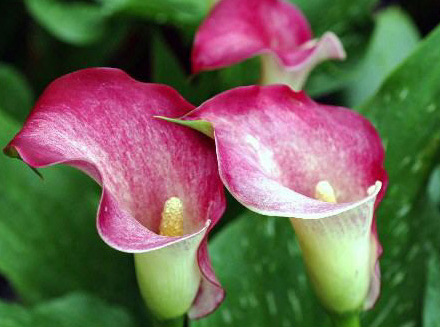
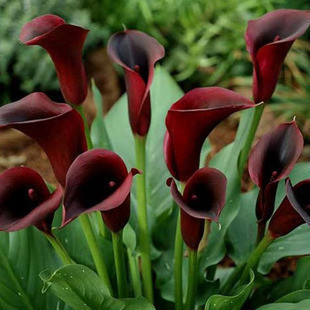
Colored calla lilies (Zantedeschia spp.) are brightly colored with an elegant form, and both their leaves and flowers have extremely high ornamental value. Colored calla lilies originate from Africa and prefer warmth; they need ample light in winter and should be protected from direct sunlight in summer. Below is an introduction to the cultivation methods for colored calla lilies.
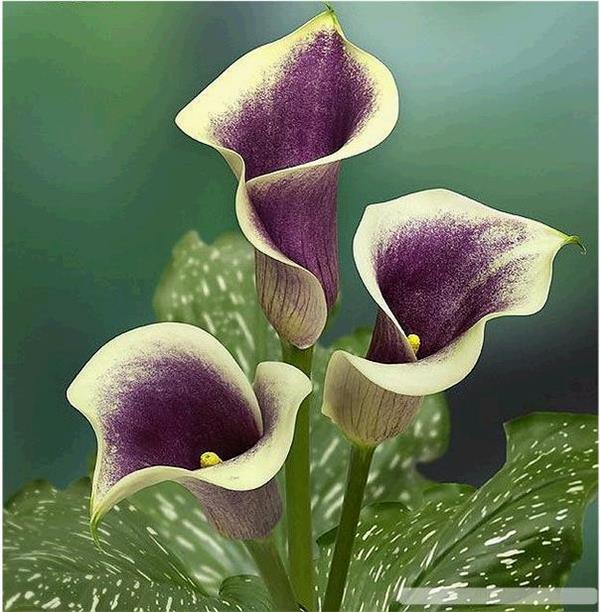
The cultivation techniques for potted colored calla lilies are as follows:
Potting Essentials
Pretreatment: After the tubers arrive, gibberellin or benzylaminopurine (BAP) can be used to increase the number of flowers. Soak in 50-100 ppm gibberellin or benzylaminopurine for 5-10 minutes, remove and dry in the sun. Gibberellin treatment has little effect on flower stalk length but causes leaves to become long and narrow, affecting ornamental value; soak in 500 ppm chlorothalonil plus 500 ppm ridomil for 2 minutes, remove and dry in the sun. This step is particularly important for the prevention and control of rhizome rot and soft rot; when planting, the growing point should face upward; cover with soil to a depth of about 5 cm; water thoroughly with clean water after planting.
Water Management
The tubers need plenty of water. Water regularly in the early growth stage, but do not let the soil become too wet. Once the leaves emerge and the plants enter the vigorous growth stage, follow the principle of watering when dry and withholding when wet. Generally water in the morning; if the weather is too hot, water in the afternoon.
Using drip irrigation can maintain moisture very well and is more suitable in windy weather. If spray irrigation is to be used, the spacing of the sprinkler heads must be precise to ensure even water distribution. The sprinkler heads must be 1 m above the plants, and the irrigation system must have sufficient pressure (at least 4 kg of pressure). When plants receive too much or too little water, their disease resistance decreases, especially their resistance to soft rot.

Fertilizer Management
Colored calla lilies are flowers with low fertilizer requirements, and different types require different fertilizer levels. Use a balanced fertilizer with an NPK ratio of 20-20-20 or 12:10:10, applied once a week at a nitrogen concentration of 100 ppm, or about twice a week at a nitrogen concentration of 200 ppm.
Dwarfing Treatment
Potted colored calla lily varieties are usually 30-50 cm tall. Whether to carry out dwarfing treatment can be decided according to the specifications of the planting pot and market demand. Ancymidol and paclobutrazol are effective on colored calla lilies. Dwarfing treatment significantly controls leaf length but has little effect on flower stalk elongation.
Pest and Disease Control
A detailed spray schedule must be followed throughout the entire growing season, mainly using systemic insecticides. The main pests of colored calla lilies are thrips and aphids. Controlling them is particularly important because aphids can transmit viruses.
Spraying should begin after sprouting, once every 7-10 days. After flowering ends, spray once every 3 weeks. The following chemicals are relatively suitable for colored calla lilies: diazinon, deltamethrin, mavrik (fluvalinate), acephate, and granular chemicals such as disyston (systemic fungicides). These chemicals begin to work under moist conditions; after being absorbed by the roots, they are translocated upward through the plant and can control aphids and thrips. These chemicals are all hazardous materials and must be used with special care. Choosing to mix or rotate multiple pesticides can prevent pests from developing resistance. Note that the entire plant must be sprayed.

Tuber Disease Control
Colored calla lilies are easily infected from the roots by Pythium and Rhizoctonia, and symptoms only appear on the above-ground parts two weeks after infection, manifesting as yellowing leaves, wilting, and curling. Under moist conditions, bacterial soft rot is very likely to occur. After planting, use root fungus cleaner and ridomil every 2-4 weeks at a concentration of 0.5 g root fungus cleaner and 0.5 g ridomil per 1 liter of water, applying as a root drench once.
Pythium can be controlled with furalaxyl, but make sure it is harmless to the plants, and do not spray insecticides within one week after application. Pathogens can be transmitted through irrigation and contaminated surface water. Water sources must be strictly checked, and targeted treatment should be taken if contamination is found.
Disease Control During Flowering
In humid or rainy seasons, disease spots on flower heads are very common. Susceptible diseases include gray mold and Alternaria wilt. Spray a protective fungicide (such as chlorothalonil, captan, thiram, mancozeb, and tolylfluanid) once every 7-10 days to ensure that chemical residue remains on the flowers.
When the disease is relatively severe, promptly spray a therapeutic fungicide (it must be able to withstand light rain and be usable when it is cooler at night). Such fungicides include root fungus cleaner, iprodione, and prochloraz (Sportak). However, each one should only be used 2-3 times per season, and spraying should be done 2-3 days before rain in the wet season. Apart from during the flowering period, spraying Kocide (copper hydroxide) once every 10 days can provide very good protection (100 g/100 L).

Bacterial soft rot is a particularly serious problem on colored calla lilies. Good tuber management will help control the occurrence of bacterial soft rot, especially during lifting and storage. When the soil temperature is above 23°C, plants are susceptible to infection.
During the growing stage, plants are susceptible to soft rot when their resistance weakens. Many factors can weaken plant resistance, such as initial pathogen infection, excessive moisture or dryness, chemical injury and fertilizer burn, excessively high soil salinity, damage from pre-emergence herbicides, excessively high soil temperature, or unsuitable climatic conditions. Once infected with bacterial soft rot, the pathogen is very difficult to eradicate. A protective "BTAPO" can be used as a drench, along with regular foliar spraying of Kocide (copper hydroxide). Studies show that weak resistance and bacterial soft rot are the two main problems in colored calla lily cultivation. Bacterial soft rot occurs most easily under high humidity and high temperature conditions. There are now many practical measures available to avoid these problems:
Use cultivation soil or substrate with good drainage and high oxygen content, because bacterial soft rot is a facultatively anaerobic bacterium;
Do not plant too sparsely, so that the leaves can provide shade and reduce soil temperature;
Keep the soil slightly acidic and maintain a high calcium concentration in the tubers. Using gypsum can increase calcium content without raising the pH value. Prevent humans and animals from damaging the tubers.
When the disease is relatively severe, promptly spray a therapeutic fungicide (it must be able to withstand light rain and be usable when it is cooler at night). Such fungicides include root fungus cleaner, iprodione, and prochloraz (Sportak). However, each one should only be used 2-3 times per season, and spraying should be done 2-3 days before rain in the wet season. Apart from during the flowering period, spraying Kocide (copper hydroxide) once every 10 days can provide very good protection (100 g/100 L).
Bacterial soft rot is a particularly serious problem on colored calla lilies. Good tuber management will help control the occurrence of bacterial soft rot, especially during lifting and storage. When the soil temperature is above 23°C, plants are susceptible to infection.
During the growing stage, plants are susceptible to soft rot when their resistance weakens. Many factors can weaken plant resistance, such as initial pathogen infection, excessive moisture or dryness, chemical injury and fertilizer burn, excessively high soil salinity, damage from pre-emergence herbicides, excessively high soil temperature, or unsuitable climatic conditions. Once infected with bacterial soft rot, the pathogen is very difficult to eradicate. A protective "BTAPO" can be used as a drench, along with regular foliar spraying of Kocide (copper hydroxide). Studies show that weak resistance and bacterial soft rot are the two main problems in colored calla lily cultivation. Bacterial soft rot occurs most easily under high humidity and high temperature conditions. There are now many practical measures available to avoid these problems:
Use cultivation soil or substrate with good drainage and high oxygen content, because bacterial soft rot is a facultatively anaerobic bacterium;
Do not plant too sparsely, so that the leaves can provide shade and reduce soil temperature;
Keep the soil slightly acidic and maintain a high calcium concentration in the tubers. Using gypsum can increase calcium content without raising the pH value. Prevent humans and animals from damaging the tubers.
When the disease is relatively severe, promptly spray a therapeutic fungicide (it must be able to withstand light rain and be usable when it is cooler at night). Such fungicides include root fungus cleaner, iprodione, and prochloraz (Sportak). However, each one should only be used 2-3 times per season, and spraying should be done 2-3 days before rain in the wet season. Apart from during the flowering period, spraying Kocide (copper hydroxide) once every 10 days can provide very good protection (100 g/100 L).
Bacterial soft rot is a particularly serious problem on colored calla lilies. Good tuber management will help control the occurrence of bacterial soft rot, especially during lifting and storage. When the soil temperature is above 23°C, plants are susceptible to infection.
During the growing stage, plants are susceptible to soft rot when their resistance weakens. Many factors can weaken plant resistance, such as initial pathogen infection, excessive moisture or dryness, chemical injury and fertilizer burn, excessively high soil salinity, damage from pre-emergence herbicides, excessively high soil temperature, or unsuitable climatic conditions. Once infected with bacterial soft rot, the pathogen is very difficult to eradicate. A protective "BTAPO" can be used as a drench, along with regular foliar spraying of Kocide (copper hydroxide). Studies show that weak resistance and bacterial soft rot are the two main problems in colored calla lily cultivation. Bacterial soft rot occurs most easily under high humidity and high temperature conditions. There are now many practical measures available to avoid these problems:
Use cultivation soil or substrate with good drainage and high oxygen content, because bacterial soft rot is a facultatively anaerobic bacterium;
Do not plant too sparsely, so that the leaves can provide shade and reduce soil temperature;
Keep the soil slightly acidic and maintain a high calcium concentration in the tubers. Using gypsum can increase calcium content without raising the pH value. Prevent humans and animals from damaging the tubers.
When the disease is relatively severe, promptly spray a therapeutic fungicide (it must be able to withstand light rain and be usable when it is cooler at night). Such fungicides include root fungus cleaner, iprodione, and prochloraz (Sportak). However, each one should only be used 2-3 times per season, and spraying should be done 2-3 days before rain in the wet season. Apart from during the flowering period, spraying Kocide (copper hydroxide) once every 10 days can provide very good protection (100 g/100 L).
Bacterial soft rot is a particularly serious problem on colored calla lilies. Good tuber management will help control the occurrence of bacterial soft rot, especially during lifting and storage. When the soil temperature is above 23°C, plants are susceptible to infection.
During the growing stage, plants are susceptible to soft rot when their resistance weakens. Many factors can weaken plant resistance, such as initial pathogen infection, excessive moisture or dryness, chemical injury and fertilizer burn, excessively high soil salinity, damage from pre-emergence herbicides, excessively high soil temperature, or unsuitable climatic conditions. Once infected with bacterial soft rot, the pathogen is very difficult to eradicate. A protective "BTAPO" can be used as a drench, along with regular foliar spraying of Kocide (copper hydroxide). Studies show that weak resistance and bacterial soft rot are the two main problems in colored calla lily cultivation. Bacterial soft rot occurs most easily under high humidity and high temperature conditions. There are now many practical measures available to avoid these problems:
Use cultivation soil or substrate with good drainage and high oxygen content, because bacterial soft rot is a facultatively anaerobic bacterium;
Do not plant too sparsely, so that the leaves can provide shade and reduce soil temperature;
Keep the soil slightly acidic and maintain a high calcium concentration in the tubers. Using gypsum can increase calcium content without raising the pH value. Prevent humans and animals from damaging the tubers.