How to Grow and Care for the Elephant Bush (Portulacaria afra)
To know how to grow the elephant bush, you first need to understand its basic situation. The elephant bush, also known as the jade plant, purslane tree or ginkgo wood, can be used as medicine and is non-toxic. The elephant bush likes a warm, dry environment with plenty of sunlight; it tolerates drought and partial shade but not waterlogging. It can grow in shaded spots, but the distance between stem nodes will lengthen, the leaves will be large and thin with no gloss, which affects its ornamental value. In summer, when temperatures are high, shade it appropriately to prevent scorching by the blazing sun, and pay attention to ventilation.
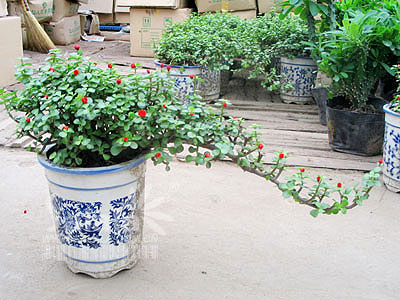
During the growing season, water by the rule of "don't water until dry, and water thoroughly when you do", avoiding water accumulating in the pot, otherwise it will cause root rot. Apply a diluted, well-rotted liquid fertilizer once every 15 to 20 days. Because it sprouts readily, it should be pruned and its buds pinched off regularly to keep the tree shape graceful.
In winter, place it indoors in a spot with plenty of sunlight, stop fertilizing, and control watering. The temperature is best kept above 10°C; at around 5°C the plant will not die, but a large number of leaves will drop. Repot once every 2 to 3 years in spring; the potting soil can be a sandy soil of medium fertility with good drainage and aeration.
When repotting, give the plant one heavy pruning, cutting off weak branches and other branches that affect the tree shape, and trim away part of the root system, remove 1/2 to 1/3 of the original soil, and replant it with fresh potting soil.
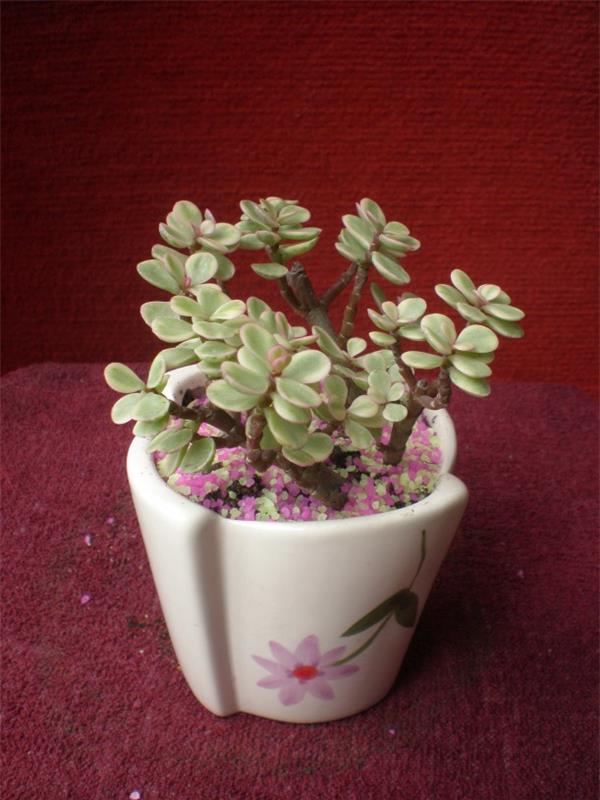
Points to note and a few tips for growing the elephant bush:
1. Scatter a few soybeans in the growing soil; this improves the soil and also releases nitrogen fertilizer;
2. Remember not to leave it indoors for long periods; the soil is best mixed with sawdust, decayed charcoal and similar materials;
3. Pay attention to observing and recording when you water; the roots are fleshy roots and rot easily with too much water;
4. In winter, keep the room temperature no lower than 10 degrees so it can overwinter safely;
5. Give it plenty of sun, but the sunlight must not be too intense; about three hours a day is enough.
The elephant bush is often grown as a potted plant for ornamental display; it is simple yet full of charm, and is a flower loved by many gardening enthusiasts.
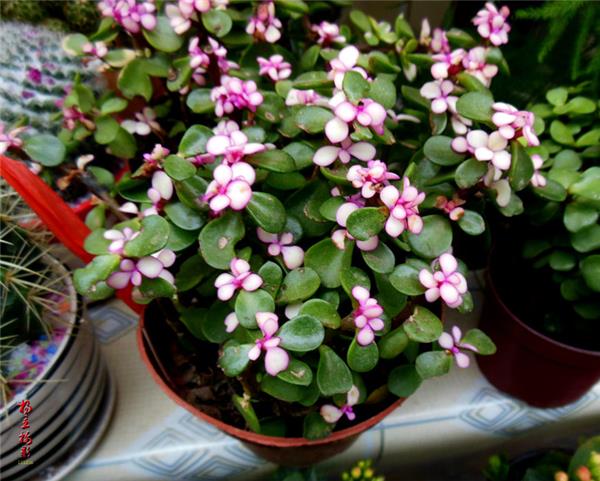
The elephant bush is commonly propagated by cuttings, which can be done in all four seasons, but spring and autumn are best, as roots form quickly and the survival rate is high. Generally, take a leafy side branch from a plant with good growth vigor and many side branches; the cutting should be 8-12 cm long. Leave it in a cool, ventilated place to dry for 1-2 days so the cut surface is slightly dry, then insert it into a propagation sand bed; you can also pick a leaf from the main stem, let the cut dry slightly, insert it into the sand bed, and keep it at 20-25°C with suitable humidity; roots will form in about half a month.
For a potted elephant bush, it is best to use a potting soil of 2/3 leaf mold and 1/3 garden soil mixed with a small amount of river sand; to aid drainage, also place some crushed stone or tiles at the bottom of the pot. From spring to autumn, water once every 1-2 days, and avoid water accumulating in the pot.
In the hot summer, when temperatures reach above 30°C, the plant enters a dormant or semi-dormant state, so watering must be controlled. At the same time, do a good job of shading and cooling; you can spray water on the ground around the pot 2-3 times a day, and pay attention to ventilation. In winter, reduce the frequency of watering appropriately and keep the potting soil slightly dry.
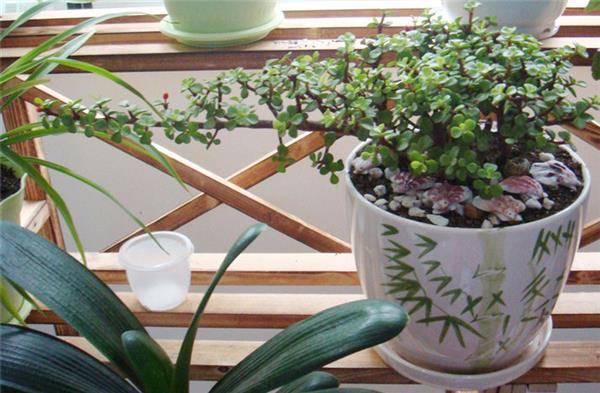
Cultivation and management are relatively simple; generally no fertilizer is applied, but if growth is too weak, you can add some potassium-containing liquid fertilizer or, during the growing season, add a diluted, well-rotted cake fertilizer water once a month. The optimum growing temperature for the jade plant is 15-25°C, and the overwintering temperature should be kept above 7°C; below 5°C it is prone to cold damage. The intense heat of summer and strong direct sunlight are unfavorable to the plant's growth. In winter, move the pot to a sunny spot in a shed or greenhouse so the leaves stay fresh and green. Generally repot once every 1-2 years; the soil needs to be loose, fertile and well-drained.
Is the elephant bush toxic?
The elephant bush is also known as the purslane tree. As for the question of whether the elephant bush is toxic, it is not easy to explain from a scientific standpoint, because few experts have done experiments in this area, but we can infer from common sense. Below let us infer whether the elephant bush is toxic. The elephant bush is a plant of the genus Portulacaria in the purslane family, the same family as the purslane we often eat as a wild vegetable, and of course it looks very similar; the difference is that the elephant bush is a succulent shrub. We all know that most plants in the spurge family are toxic (this has been studied by experts), whereas purslane is edible, so it can be seen that although the elephant bush cannot be said to be edible, on the whole it is also non-toxic. The above is a simple piece of reasoning, and quite unscientific. In fact, many plants are toxic, such as the dumb cane, crown of thorns, narcissus and hyacinth that we commonly grow; all are toxic flowers, yet many gardening enthusiasts grow them, because the toxicity of these plants only harms people if eaten. So gardening enthusiasts should not be overly concerned about whether a plant is toxic; as long as you do not eat it during care (mainly aimed at households with small children), it is fine.
Does the elephant bush bloom?
Many gardening enthusiasts are very curious about whether the elephant bush actually blooms, because at flower markets we can always see small red flowers growing on the elephant bush; it really is "a spot of red in the green forest", which truly makes people very happy. Based on general growing experience, this plant does not bloom; the flower seller simply inserts a special small paper flower (fake) into the branches; when watered, the petals open, and normally they are closed. Its relative the jade plant (Crassula ovata) does bloom occasionally, but that too is extremely rare!
But some gardening enthusiasts explain that the elephant bush does bloom, but in China, because of soil, water and climate reasons, no one has seen it bloom; in its place of origin it does bloom, with small red flowers covering the branches. There is also a saying that the elephant bush does bloom, and the flowers look like bunches of grapes, but very small, and they wither once they finish blooming. If interested gardening enthusiasts want to, they can seriously investigate and verify this; only after investigating does one have the right to speak, to fill this gap regarding the elephant bush or resolve the doubt.
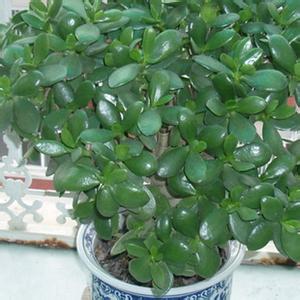
The elephant bush is a perennial evergreen succulent shrub with fleshy stems, purple-brown to light brown, and branches that are nearly horizontal; new branches turn purplish-red under conditions of ample sunlight, and green if there is insufficient light. It is not cold-tolerant, and tolerates partial shade and drought. The soil should be a well-drained sandy loam. The winter temperature should not be lower than 10°C. It likes a warm, dry environment with plenty of sunlight.
But many gardening enthusiasts grow them, because the toxicity of these plants only harms people if eaten, so gardening enthusiasts should not be overly concerned about whether a plant is toxic; as long as you do not eat it during care (mainly aimed at households with small children), it is fine.
Does the elephant bush bloom?
Many gardening enthusiasts are very curious about whether the elephant bush actually blooms, because at flower markets we can always see small red flowers growing on the elephant bush; it really is "a spot of red in the green forest", which truly makes people very happy. Based on general growing experience, this plant does not bloom; the flower seller simply inserts a special small paper flower (fake) into the branches; when watered, the petals open, and normally they are closed. Its relative the jade plant (Crassula ovata) does bloom occasionally, but that too is extremely rare!
But some gardening enthusiasts explain that the elephant bush does bloom, but in China, because of soil, water and climate reasons, no one has seen it bloom; in its place of origin it does bloom, with small red flowers covering the branches. There is also a saying that the elephant bush does bloom, and the flowers look like bunches of grapes, but very small, and they wither once they finish blooming. If interested gardening enthusiasts want to, they can seriously investigate and verify this; only after investigating does one have the right to speak, to fill this gap regarding the elephant bush or resolve the doubt.
The elephant bush is a perennial evergreen succulent shrub with fleshy stems, purple-brown to light brown, and branches that are nearly horizontal; new branches turn purplish-red under conditions of ample sunlight, and green if there is insufficient light. It is not cold-tolerant, and tolerates partial shade and drought. The soil should be a well-drained sandy loam. The winter temperature should not be lower than 10°C. It likes a warm, dry environment with plenty of sunlight.