How to grow a sago palm well? A detailed guide to cultivation methods
The sago palm is a fairly common ornamental plant in everyday life. It gets its name because its trunk is as hard as iron and it thrives on iron-rich fertilizer, and it is often planted in the south. It can be seen in the courtyards of many households, so how should a sago palm be grown to suit its growth best, and what is worth noting in the cultivation methods for the sago palm?
The sago palm is properly called cycad (Cycas revoluta), also known as jia pine and phoenix pine, and it is a precious and ancient relict plant. The sago palm purifies the air around it, and it is grown in many households, so how do you grow a sago palm? What are the cultivation methods for the sago palm? These are all questions people care about. Below are the sago palm cultivation methods compiled by the editor.
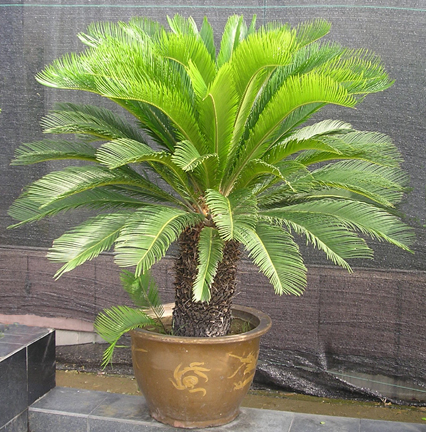
The sago palm is a tropical plant that likes a warm and relatively humid climate. Its cold tolerance is very poor, so it is generally planted in the south and is relatively rare in the north.
Cultivation methods for the sago palm
Environment in the cultivation methods for the sago palm: The sago palm should be planted in a place with plenty of sunlight, that is humid and warm, and that has good ventilation. If the winter is relatively cold, the plant should be wrapped with plastic bags or straw bundles; for potted plants, most of the branches and leaves can be cut off and the plant placed in a sunny, wind-sheltered spot.
Watering in the cultivation methods for the sago palm: The sago palm likes moist soil, so loose, fertile, slightly acidic sandy soil is best for its growth. When watering, follow the principle of "water after the soil dries, dry and wet alternately," meaning water after the soil dries and do not let the surrounding soil become waterlogged, otherwise the roots of the sago palm are prone to rot.
Fertilizing in the cultivation methods for the sago palm: During the vigorous stage of growth and reproduction, the sago palm needs regular fertilizer to meet its nutritional needs. Fertilizing is mainly based on nitrogen fertilizer and potassium fertilizer, and it is best to apply light fertilizer frequently. To make the sago palm's leaves dark green and glossy, an appropriate amount of ferrous sulfate solution can be added during fertilizing.
Pruning in the cultivation methods for the sago palm: To keep the sago palm's shape attractive and well balanced, the old yellowed leaves from the previous year can be pruned each year when new leaves grow.
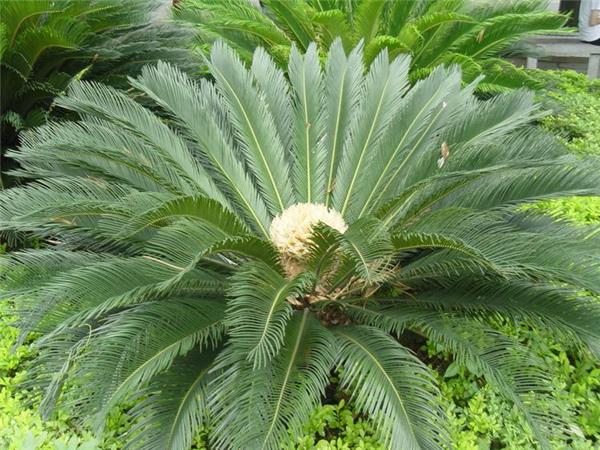
Pest and disease control in the cultivation methods for the sago palm: Its branches and trunk are relatively hard, so pests are rare. If scale insect damage is found, in mild cases wash and remove the insects by hand, and in severe cases spray the leaf surfaces with a 1% concentration of ferrous sulfate.
The sago palm is a dioecious plant, and female and male plants differ in flowering time and form, so how should a sago palm be grown to be more favorable for propagation? In fact, sago palm propagation is mainly by stem segments, because its seeds are large and have thick coats and will only germinate when many requirements are met.
Growth characteristics of the sago palm
The sago palm likes sunlight and grows best in a warm, humid environment with clear air. It is not tolerant of severe cold, so it mainly grows in areas north of the Yangtze River basin. For potted sago palms in the north, strong winds and blazing sun should be avoided in spring and autumn. In extreme summer heat, avoid waterlogged soil. Alkaline soil easily turns the leaves yellow, while acidic soil is best for growth. It has a strong tolerance for fertilizer, and poor, barren soil is not good for growth and will not produce new shoots. The sago palm has a very long lifespan but grows very slowly, increasing by at most 2 cm per year.
Morphological characteristics of the sago palm
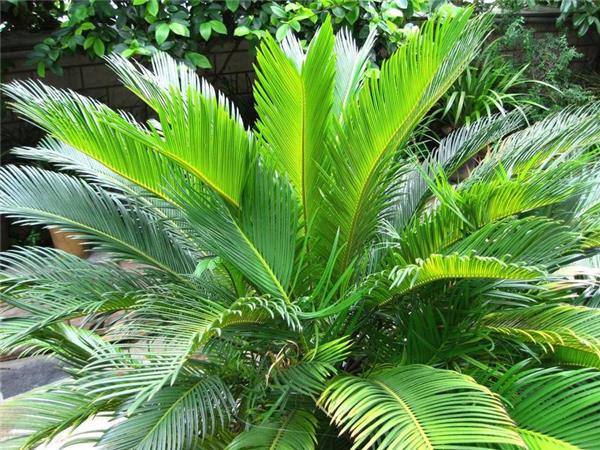
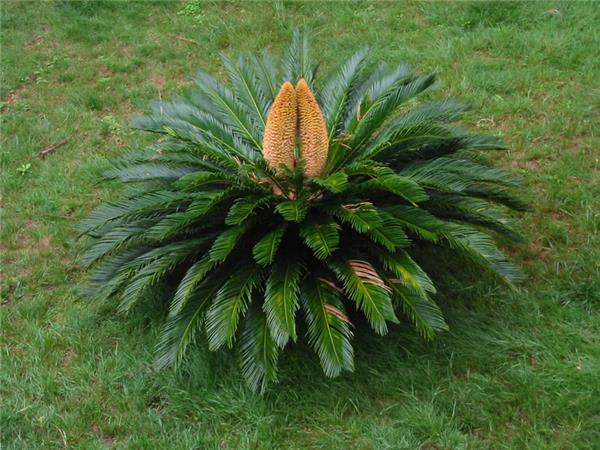
Cycas revoluta - the sago palm can grow up to 8 m tall, equivalent to more than 2 stories. In pots, the stem system is not as developed, reaching at most 2-3 m in height. The sago palm's trunk is thick and cylindrical. Its surface is covered with tightly packed dark brown, shriveled leaf bases and leaf scars. On old plants of many years, small stems often sprout from adventitious buds on the trunk, called suckers. The fibrous root system is fleshy. The sago palm does flower, generally in July and August. It is dioecious; the male flower is yellow and its inflorescence is cone-shaped. Its female inflorescence is oblate, like a palm shape. After flowering it can produce ovoid, slightly flattened, vermilion, highly glossy seeds.
When the sago palm is about 1 m tall, it begins to sprout suckers. Propagation is mostly done by separating and planting these suckers. Once 1 or 2 small stems have grown, or grown joined together, they can be cut away from the mother plant and planted in a substrate of half vermiculite and half humus soil, kept at 40% moisture content, and cared for in a high-temperature, lightly shaded environment; the following spring they can sprout fibrous roots and bud clusters. If the leaves do not extend for a long time, a plastic film can be put over them to encourage growth. If the suckers are cut away from the mother plant too early for cultivation, initial growth is very slow. It is best to let the suckers grow on the mother plant for 2 to 3 years before separating and planting them, as they will then root and sprout more easily.
The sago palm is often grown indoors, so potting is the most attractive and best choice. When potting, however, pots of different sizes should be chosen according to the size of the plant, and loose, fertile, highly breathable, humus-rich, slightly acidic sandy soil should be used. A layer of crushed stone and tile pieces should be laid at the bottom of the pot for drainage, and the drainage hole should be made a little larger. This can prevent root rot. After intervals of time, additional organic liquid fertilizer should be applied. Environments in different regions will vary somewhat, and acidic solution should be applied in alkaline soil. In summer, keep the pot soil moist; in winter, place it in a greenhouse for cultivation.
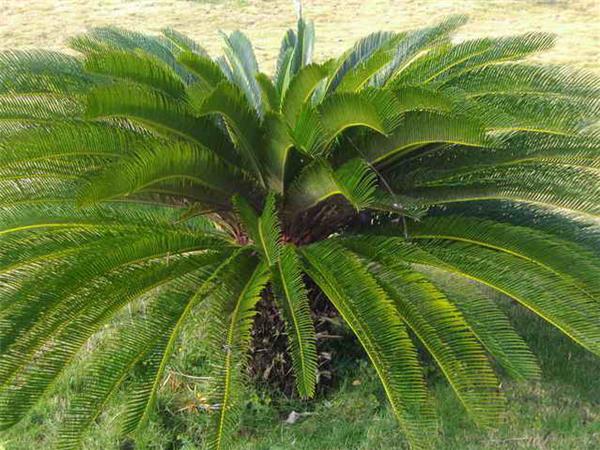
Summary: That is all for the cultivation methods of the sago palm. The editor believes that after reading this article you will certainly know how to grow a sago palm. Whether potted or planted in a courtyard, the sago palm's emerald green color and imposing plant shape can add a touch of vigorous life to your home.
The sago palm is often grown indoors, so potting is the most attractive and best choice. When potting, however, pots of different sizes should be chosen according to the size of the plant, and loose, fertile, highly breathable, humus-rich, slightly acidic sandy soil should be used. A layer of crushed stone and tile pieces should be laid at the bottom of the pot for drainage, and the drainage hole should be made a little larger. This can prevent root rot. After intervals of time, additional organic liquid fertilizer should be applied. Environments in different regions will vary somewhat, and acidic solution should be applied in alkaline soil. In summer, keep the pot soil moist; in winter, place it in a greenhouse for cultivation.
Summary: That is all for the cultivation methods of the sago palm. The editor believes that after reading this article you will certainly know how to grow a sago palm. Whether potted or planted in a courtyard, the sago palm's emerald green color and imposing plant shape can add a touch of vigorous life to your home.