What are the common types of herbaceous plants?
Herb, is a general term for a class of plants, but it is not a unit in the scientific classification of plants. The concept corresponding to herbaceous plants is woody plants. People usually call herbaceous plants "grass" and woody plants "trees", but there are occasional exceptions, such as bamboo, which belongs to herbaceous plants, but people often regard it as a kind of tree.
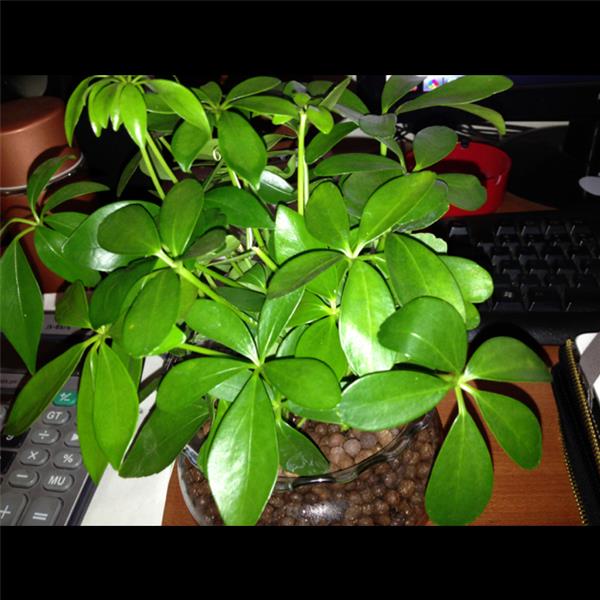
Herbaceous plants
The xylem of the plant body is relatively undeveloped to undeveloped, and the stem is succulent and relatively soft. According to the length of the life cycle of herbaceous plants, they can be divided into:
1. Annual herb (annual): plants that can complete their life cycle within one growing season, that is, plants that bloom and set seed in the same year and then die, such as rice, soybean, tomato, etc.
2. Biennial herb (biennial): plants that in the first growing season (autumn) only grow vegetative organs, and in the second growing season (spring) bloom and set seed and then die, such as winter wheat, sugar beet, broad bean, etc.
3. Perennial herb (perennial herb): herbaceous plants that can live for more than two years. In some plants, the underground parts are perennial, such as perennial roots or modified organs such as rhizomes, bulbs, and tuberous roots, while the aboveground parts die every year, and in the spring of the following year new shoots grow again from the underground parts, bloom and set seed, such as lotus root, onion, taro, sweet potato, dahlia, etc.; in addition, some plants have both aboveground and underground parts that are perennial, and after blooming and setting seed, the aboveground parts still do not die and can set seed many times, such as Chinese evergreen, dwarf lilyturf, etc.
Among herbaceous plants, the habits of annual, biennial, and perennial sometimes vary with changes in geographic latitude and cultivation practices. For example, wheat and barley are biennial herbs when sown in autumn, but become annual herbs when sown in spring; another example is cotton and castor, which are annual herbs in the Jiangsu-Zhejiang area, but can grow into perennial herbs in the lower-latitude south.
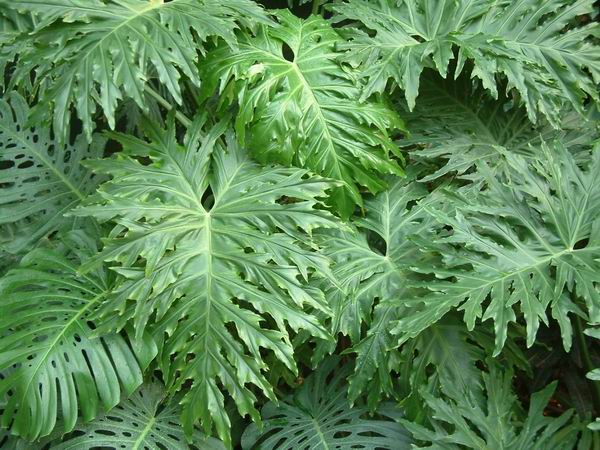
Woody plants
Woody plants include various trees and shrubs grown for flowers, foliage, fruit, and branches and trunks; herbaceous plants include a large number of flowers and lawn groundcover plants. The ecological benefits of a plant community composed of trees, shrubs, and lawns are extremely significant, so in urban landscape plant design, a reasonable combination of trees, shrubs, and grass should be considered. Because trees have a large amount of green biomass, they have functions and landscape effects such as providing shade and shelter from rain, reducing noise, and absorbing dust
Woody plants include various trees and shrubs grown for flowers, foliage, fruit, and branches and trunks; herbaceous plants include a large number of flowers and lawn groundcover plants. The ecological benefits of a plant community composed of trees, shrubs, and lawns are extremely significant, so in urban landscape plant design, a reasonable combination of trees, shrubs, and grass should be considered.
Because trees have a large amount of green biomass and have functions and landscape effects such as providing shade and shelter from rain, reducing noise, and absorbing dust, they are often used as street trees, specimen trees, or planted in groups in urban greening. The ecological benefits exerted by trees are the most obvious, and they are indispensable garden plants in urban greening. With the development of the social economy and the continuous improvement of urban construction standards, current tree planting has developed from the previous practice of mostly planting 2-year to 3-year-old saplings to using 4-year to 5-year-old trees with a diameter at breast height of 8 cm to 10 cm, or large trees more than ten years old with a diameter at breast height of about 20 cm for greening. However, special attention should be paid to selecting different transplanting methods according to the characteristics of different seedlings to improve the survival rate of seedling planting.
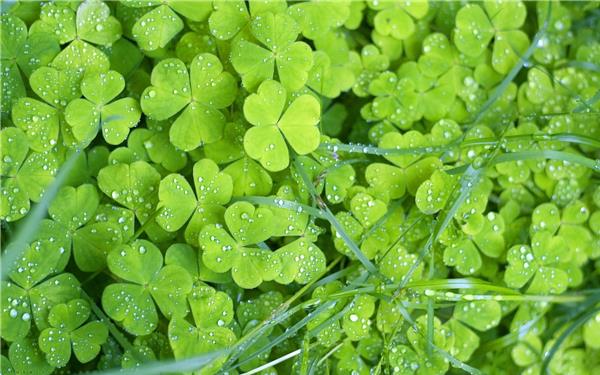
Shrubs: Shrubs can be mixed with trees, can create natural landscapes, or can be densely planted. At present, the most popular is dense planting of small shrubs for landscaping, and common applications can be summarized as:
① Replacing lawns as groundcover plants, pruning densely planted small shrubs to make them flat and uniform, and they can also follow the undulations of the terrain.
② Replacing herbaceous flowers to form color blocks and various patterns, using the different colors of the leaves, flowers, branches, and fruits of various small shrubs, and densely planting them into curves, color blocks, flower shapes, and other patterns with different meanings.
③ Full planting in flowerbeds, using small shrubs densely planted in flowerbeds of various shapes to form flower borders and flower terraces.
Herbaceous flowers: Herbaceous flower landscaping is the use of herbaceous flowers to create landscapes for people to enjoy. According to the form of application, it can be divided into 3 types: lawn inlay, three-dimensional beautification, and flowerbed flowers. Lawn inlay is decorating or creating flower borders in suitable positions on the lawn, making the lawn more colorful; the main forms of three-dimensional beautification include vertical greening decoration, flower columns, flower balls, hanging bags, etc.; flowerbed flowers use out-of-pot planting for decoration to ensure flowers throughout the year. Herbaceous flowers have the characteristics of rapid landscaping and prominent effects, especially perennial flowers, which also have the value of being planted once and enjoyed for many years. Herbaceous flower landscaping has the characteristics of high ornamental value, strong adaptability, simple management, and low investment, so it is widely used in landscaping in specialized gardens and in combination with buildings, roads, water bodies, etc.
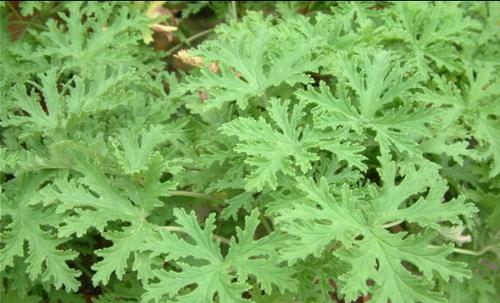
Lawn mainly refers to lawn planted and managed by people. It has ecological benefits such as improving the environment, purifying air, absorbing and retaining dust, killing bacteria and preventing disease, and maintaining soil and water. Planting lawn in urban central squares, rest parks, both sides of expressways, and commemorative sites can not only provide people with a place for public activities and rest, but also broaden the field of vision and ease the tension and crowding brought to people by urban development. Selecting excellent lawn as the main scene, and building flowerbeds within it, dotting it with specimen or clustered tree species, and planting ornamental color bands along its edges as a foil, can strengthen the landscaping atmosphere of the lawn.
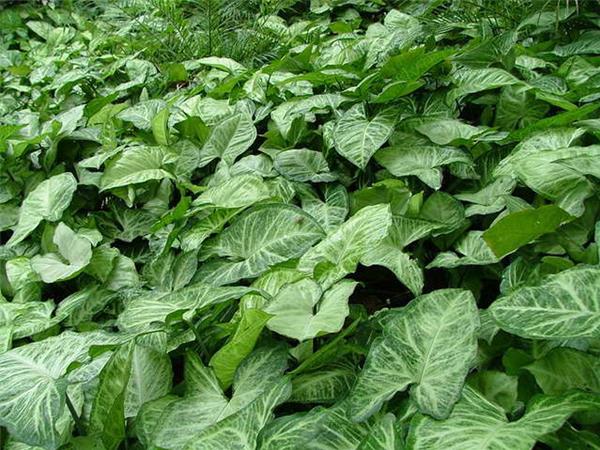
The most notable difference between herbaceous plants and woody plants:
lies in the structure of their stems. The stems of herbaceous plants are "herbaceous stems". The stems are densely filled with many relatively small vascular bundles of ground tissue, and between the vascular bundles are large numbers of parenchyma cells. The outermost layer of the stem is tough mechanical tissue. The vascular bundles of herbaceous plants are also different from those of woody plants. In the vascular bundles, the xylem is distributed on the outside while the phloem is distributed on the inside, which is completely opposite to that of woody plants. In addition, the vascular bundles of herbaceous plants do not have cambium and cannot grow continuously, so trees become thicker year by year, while grass and bamboo do not have this ability. Compared with woody stems, herbaceous stems are a more evolved feature.
Lawn mainly refers to lawn planted and managed by people. It has ecological benefits such as improving the environment, purifying air, absorbing and retaining dust, killing bacteria and preventing disease, and maintaining soil and water. Planting lawn in urban central squares, rest parks, both sides of expressways, and commemorative sites can not only provide people with a place for public activities and rest, but also broaden the field of vision and ease the tension and crowding brought to people by urban development. Selecting excellent lawn as the main scene, and building flowerbeds within it, dotting it with specimen or clustered tree species, and planting ornamental color bands along its edges as a foil, can strengthen the landscaping atmosphere of the lawn.
The most notable difference between herbaceous plants and woody plants:
lies in the structure of their stems. The stems of herbaceous plants are "herbaceous stems". The stems are densely filled with many relatively small vascular bundles of ground tissue, and between the vascular bundles are large numbers of parenchyma cells. The outermost layer of the stem is tough mechanical tissue. The vascular bundles of herbaceous plants are also different from those of woody plants. In the vascular bundles, the xylem is distributed on the outside while the phloem is distributed on the inside, which is completely opposite to that of woody plants. In addition, the vascular bundles of herbaceous plants do not have cambium and cannot grow continuously, so trees become thicker year by year, while grass and bamboo do not have this ability. Compared with woody stems, herbaceous stems are a more evolved feature.