Purple Tulip Flower Meaning and a Detailed Guide to Growing Methods
Why do tulips have such a fascinating charm? Perhaps the several tulip bouquets recommended below can tell us the answer.
The Charm of Purple Tulips: Noble and Mysterious
Representative Bouquet - Fresh Flowers / Purple ☆Forbidden☆ Love Obsession
Flower Meaning: The elegant purple tulip makes people infatuated at first sight, unable to put it down, just like when I first met you!
The Charm of Red Tulips: Passionate and Joyful
Representative Bouquet - Fresh Flowers / Beloved
Flower Meaning: Loving you from the heart, loving you from feeling, remembering you even in my dreams, holding you, caring for you... you are the love of my life!
The Charm of Pink Tulips: Youthful and Bright
Representative Bouquet - Fresh Flowers / Romantic Pink Tulips
Flower Meaning: There is a kind of love, romantic and warm; there is a kind of beauty, overflowing with youth... I love you with only a sincere heart!
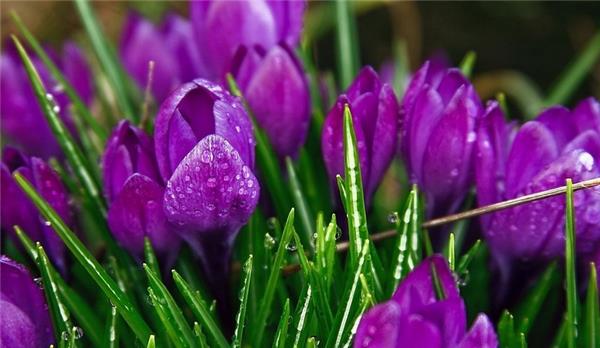
The tulip is the national flower of the Netherlands and has always been popular for its mystery and nobility.
Legend has it that in Europe there was a beautiful maiden who was admired by three handsome knights at the same time. One gave her a crown, one gave her a sword, and another gave her gold. The maiden did not know how to choose, so she asked the flower goddess for help. The flower goddess turned her into a tulip, the crown became the flower bud, the sword became the leaves, and the gold became the bulb. In this way she accepted the love of all three knights at once, and the tulip also became the embodiment of love.
The tulip, elegant and refined, fresh and timeless, is a fresh flower with a noble and mysterious temperament. As early as the 17th century, in the imperial gardens of the Ottoman Empire, it was specially planted for royalty and nobles to admire. Tulip flowers are brightly colored and highly varied; for example, a yellow flower sprinkled with red dots on the petals is called "the King's Blood"; a crimson flower with petals curled around each other is called "the Lover's Hot Kiss"; and a tulip so purple it is almost black is called "the Black Widow."

Tulips symbolize elegance, wealth, capability, and intelligence. The flower meaning of tulips is love, charity, fame, beauty, blessing, eternity, the expression of love, and eternal blessing. Tulips of different colors have different meanings and flower meanings. The most common tulips include yellow tulips, pink tulips, red tulips, and purple tulips. The flower meaning and symbolism of yellow tulips is elegance, preciousness, wealth, love, and friendship; the flower meaning and symbolism of pink tulips is beauty, passion, cherishing, friendship, and happiness; the flower meaning and symbolism of red tulips is the confession of love, the declaration of love, joy, and passion; the flower meaning and symbolism of purple tulips is noble love and endless love.

Flower Meaning - Origin and Development
The language of flowers first originated in ancient Greece. At that time, not only flowers but also leaves and fruit trees had certain meanings. In Greek mythology, there is a record of the story that the goddess of love created the rose when she was born, and from that era the rose became synonymous with love. The true popularity of the language of flowers came during the period of the French royal court. Nobles compiled folk materials about flowers into archives, which included information on the language of flowers, and such information was perfectly embodied in the garden architecture of the later court period. It then spread to the United Kingdom and the United States, created by some writers, mainly for publishing gift books, especially for the ladies of the upper class at that time to browse in their leisure time. The public acceptance of the language of flowers came around the 19th century. At that time, social customs were not yet very open, and expressing love in public was an embarrassing matter, so flowers given between lovers became the messenger of love. With the development of the times, flowers became a kind of gift for social occasions, and the more refined language of flowers represented the intention of the giver.
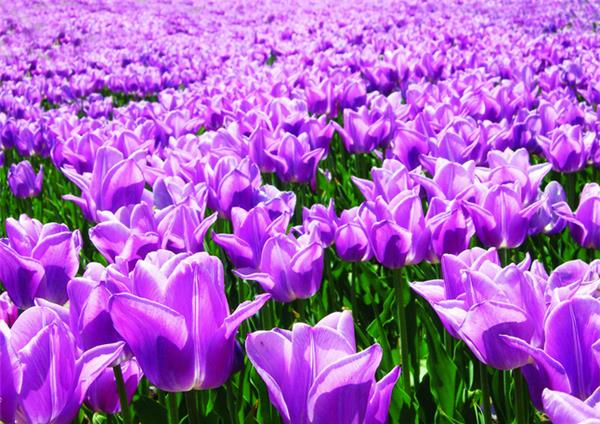
Tulip Growing Methods:
1. Soil: Tulips require planting soil that both retains water and is breathable, with salinity that is not too high and not too acidic. The pH value should be no less than 6. Using peat, decomposed soil, and sand mixed at 1:1:1 as the cultivation medium gives better results.
2. Sunlight: Sufficient sunlight exposure is essential for the growth of tulips. Insufficient light will cause poor plant growth, causing bud drop, weakening of the plant, lightening of leaf color, and shortening of the flowering period. However, within more than half a month after tulips are potted, they should be properly shaded to help the bulbs develop new roots. In addition, when sprouting, the elongation of flower buds is inhibited by light; after shading, it can promote the elongation of flower buds and prevent excessive vegetative growth and spindly growth in the early stage. After emergence, light should be increased to promote stem elongation, form flower buds, and promote coloring. After the flower buds are fully colored in the later stage, direct sunlight should be prevented to extend the flowering time.
3. Temperature: Tulips prefer a warm winter and a cool summer climate, with an optimum growth temperature of 9-13°C. They are highly cold-resistant and can withstand low temperatures of -35°C in winter.
4. Watering: After planting, water thoroughly so that the soil and bulbs can fully and closely combine to facilitate rooting. After sprouting, water should be properly controlled. When the leaves gradually extend, water can be sprayed on the leaf surface to increase air humidity. During the flower stem extraction stage and the bud stage, a sufficient water supply must be ensured to promote full flower development. After flowering, water should be properly controlled.
5. Fertilization: Tulips do not have high fertilizer requirements. If growth vigor is weak, some nitrogen fertilizer can be applied. After the root system develops well, apply 2 kg of calcium nitrate per 100 sq m, broadcast in three applications with an interval of more than one week each time.
6. Pests and Diseases: The pathogens of tulip pests and diseases can be carried by the bulbs and can also be carried by the soil to infect the bulbs. They mostly occur in high-temperature and high-humidity environments. The main diseases include stem rot, soft rot, color breaking disease, damping-off, and blind buds, while the pests are mostly aphids. Perform full soil disinfection before planting, choose virus-free bulbs for cultivation as much as possible, promptly dig out and destroy diseased plants when found, and during greenhouse growth, applying fungicide 1~2 times gives better results; maintain good ventilation and prevent high temperature and high humidity; when aphids occur, spray with 3% natural pyrethrin at 800 times dilution.
Spindly growth. After emergence, light should be increased to promote stem elongation, form flower buds, and promote coloring. After the flower buds are fully colored in the later stage, direct sunlight should be prevented to extend the flowering time.3. Temperature: Tulips prefer a warm winter and a cool summer climate, with an optimum growth temperature of 9-13°C. They are highly cold-resistant and can withstand low temperatures of -35°C in winter.
4. Watering: After planting, water thoroughly so that the soil and bulbs can fully and closely combine to facilitate rooting. After sprouting, water should be properly controlled. When the leaves gradually extend, water can be sprayed on the leaf surface to increase air humidity. During the flower stem extraction stage and the bud stage, a sufficient water supply must be ensured to promote full flower development. After flowering, water should be properly controlled.
5. Fertilization: Tulips do not have high fertilizer requirements. If growth vigor is weak, some nitrogen fertilizer can be applied. After the root system develops well, apply 2 kg of calcium nitrate per 100 sq m, broadcast in three applications with an interval of more than one week each time.
6. Pests and Diseases: The pathogens of tulip pests and diseases can be carried by the bulbs and can also be carried by the soil to infect the bulbs. They mostly occur in high-temperature and high-humidity environments. The main diseases include stem rot, soft rot, color breaking disease, damping-off, and blind buds, while the pests are mostly aphids. Perform full soil disinfection before planting, choose virus-free bulbs for cultivation as much as possible, promptly dig out and destroy diseased plants when found, and during greenhouse growth, applying fungicide 1~2 times gives better results; maintain good ventilation and prevent high temperature and high humidity; when aphids occur, spray with 3% natural pyrethrin at 800 times dilution.