What plant is the black-eyed Susan? An introduction to the black-eyed Susan flower
We all know about chrysanthemums, but they also come in many types, such as the black-eyed Susan, the daisy, the African daisy, the spray chrysanthemum, the cliff chrysanthemum, and so on. And today what we are going to talk about is this black-eyed Susan. Do you know why it is called the black-eyed Susan? This "black-hearted" is not that "black-hearted" - actually it is just because the center of its petals is black. So what are the flower language and planting techniques of the black-eyed Susan? Let's take a look below.
The black-eyed Susan is an annual or biennial herbaceous plant in the Asteraceae family, named for its black flower center. The black-eyed Susan has very brilliant flowers and is highly favored all over the world; it is an elegant and beautiful ornamental flower. The beauty of the black-eyed Susan is intoxicating. Do you know what kind of flower language it has? And how should the black-eyed Susan be cultivated?
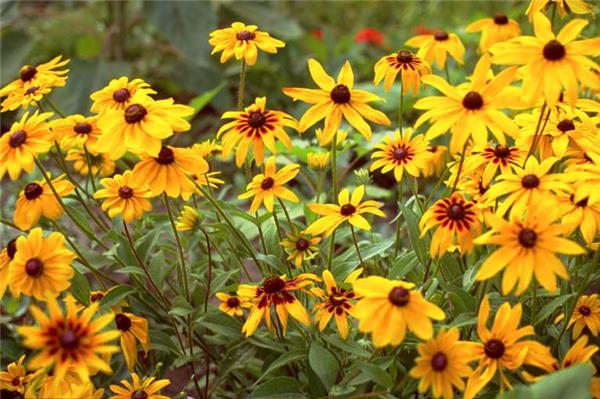
Planting the black-eyed Susan
Planting the black-eyed Susan: Propagation
The black-eyed Susan is commonly propagated by sowing, cuttings, and division. Both sowing and division can be carried out in spring and autumn; March in spring and September in autumn are the best sowing times, and division is generally done on perennial old plants. Usually, if sown in March in spring, it can bloom in June-July; if sown in September in autumn, it is planted out into pots in November and can bloom in May-June the following year. To ensure that the black-eyed Susan grows robustly with large, brightly colored flowers, it should be transplanted after 4-5 leaves have grown following sowing, and planted out in November, where it can overwinter in the open field. For cuttings, new shoots sprouting from the roots are commonly used as cuttings, and this can be done in both spring and autumn. In spring, it is done when the sprouts have grown to about 15cm; in autumn, it is done after the roots sprout following flowering.
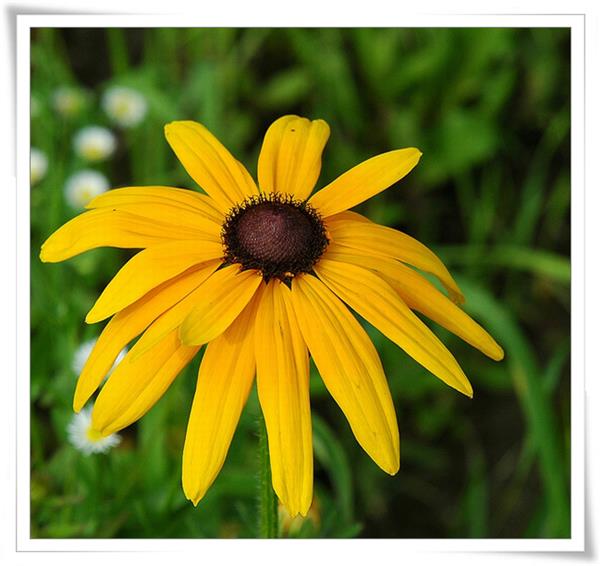
Planting the black-eyed Susan: Seedling raising
In production, the black-eyed Susan is often propagated by division and tissue culture. Division is generally carried out once every 3 years; in April-May, the old plants from greenhouse forcing cultivation are dug up and divided, with each plant retaining 4-5 leaves, and then replanted separately. Tissue culture, on the other hand, is a method of using biotechnology to select and rapidly propagate seedlings. Ordinary growers do not have the conditions for tissue propagation, so they can directly buy tissue-cultured commercial seedlings from specialty stores for planting. However, since these tissue-cultured seedlings are generally rather small, they need to be grown into larger seedlings before being planted out in the greenhouse.
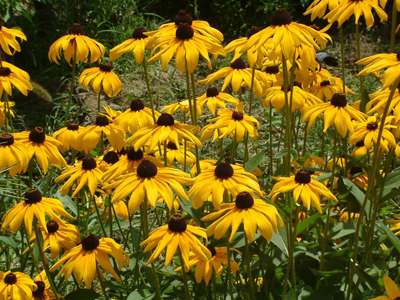
Planting the black-eyed Susan: Management
The black-eyed Susan likes a warm, sunny growing environment, and there should be sufficient light during the growth period. Its suitable germination temperature is 21°C-30°C, and it can be sown at this temperature in spring, summer, and autumn. Its suitable growth temperature is 10°C-30°C; during the day it should not exceed 26°C, and at night it should be kept at 10-15°C. Only at suitable temperatures can the black-eyed Susan continue to grow and bloom without going dormant. In winter, because the temperature is low and there is little sunlight, in order to prevent the black-eyed Susan's growth from being affected by insufficient light and low temperatures, it should be placed in a sunny spot indoors for care, and attention should be paid to keeping it warm. In summer, when the light is intense, cooling by shading should be used at this time to prevent the black-eyed Susan from going dormant due to high temperatures.
The black-eyed Susan likes a sunny, well-ventilated growing environment. It is cold-resistant and drought-resistant, highly adaptable, has no special requirements for soil, and is relatively easy to manage. It is often grown in the ground, and it is best to choose well-drained, breathable, loose, and fertile sandy loam for cultivation. The black-eyed Susan is not strict about fertilizer and water requirements. Generally, when it is growing well, it only needs an appropriate topdressing of nitrogen, phosphorus, and potassium fertilizers. For watering, the principle of "water when dry, stop when wet" should be followed, so that the flowers become even more beautiful. For black-eyed Susans grown as cut flowers, pinching can be done appropriately to extend their flowering period. For some perennial plants, forced division is needed to avoid affecting their growth vigor and flowering.
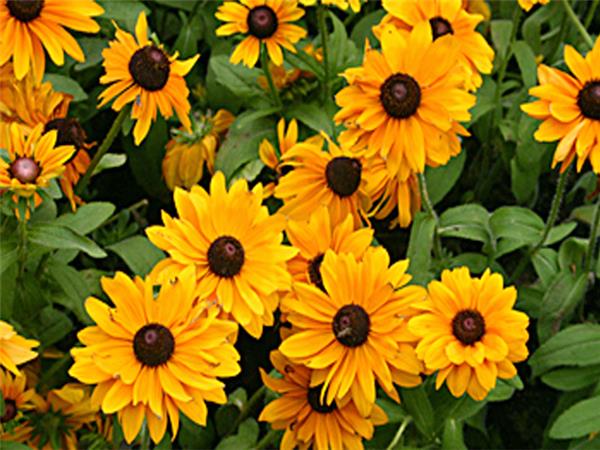
When the leaves of the black-eyed Susan grow too densely, the old leaves and diseased leaves on the outer layer of the plant should be removed promptly to improve its light and ventilation conditions, thereby reducing the occurrence of pests and diseases and the consumption of nutrients, and also making it more conducive to the development and growth of new leaves and flower buds, increasing its yield. The flowering period of the black-eyed Susan is from May to September. After each flowering period, some residual branches and rotten leaves should be pruned promptly to encourage it to bloom again. Of course, during cultivation we should also pay attention to drainage and ventilation, so that poor drainage does not cause root rot in the black-eyed Susan.
Basic introduction to the black-eyed Susan
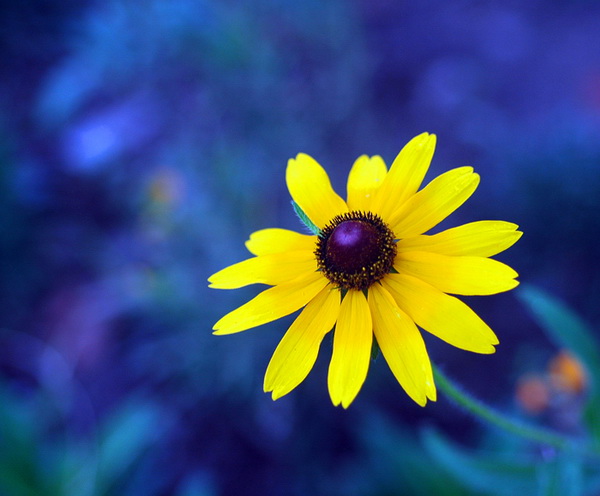
The black-eyed Susan, Asteraceae, Rudbeckia genus, annual or biennial herb. The flower center is raised and purple-brown, and the ray florets around it are golden yellow. The flowering period is from early summer to frost. Cultivated varieties have edge flowers in tung brown and chestnut brown, with double-flowered and semi-double-flowered types. The flower center has an olive-green "Irish Eyes", and there is a tetraploid with a flower head diameter of up to 15 cm. In addition to yellow, the flower colors include red flowers of various seasons and bicolor. Native to the eastern United States. Cold hardiness is not strong; in central China it can still be sown in autumn and overwinter in the open field. It can also be used as a cut flower.
Morphological characteristics:
The black-eyed Susan, Asteraceae, Rudbeckia genus, annual or biennial, plant height 60-100cm, flower head 8-9cm, double-flowered, ray florets yellow, sometimes with brown-yellow bands, tubular florets dark brown. The stem is relatively stout, covered with soft hairs, slightly branched, and winged. The alternate leaves are rough, from long elliptical to narrowly lanceolate, 10~15cm long, with the leaf base extending down to the stem in a wing-like manner, pinnately lobed, 5-7 lobes; the stem leaves are 3-5 lobed, with sparse serrations on the edges. Flower heads, about 2.5~5cm in diameter, borne in corymbs, with short stalks; ray florets neutral, 1.5~2cm long, yellow, brown-purple, or with two-colored stripes; tubular florets brown to purple, densely clustered into a spherical shape; sown in spring and autumn, flowering period August~October. From summer to autumn, cold-resistant and drought-resistant, easy to manage, planted in clumps or patches, for highway greening, flower beds and flower borders, and planting along grassland edges. It can also be used as a cut flower, overwinters in the open field, and can reproduce by self-sowing. The whole plant is hairy, with leaves emerging near the roots, upper leaves alternate, leaves spoon-shaped and broadly lanceolate, with coarse teeth on the leaf margins. Flower heads.