Is the Crassulaceae Guanyin Lotus (Sempervivum) Toxic? Detailed Propagation Methods
The Guanyin Lotus (Sempervivum) has become famous in recent years as an indoor plant, and because of its shape resembling a lotus throne, its succulent texture, and the appealing purple-red tips of its leaves, its sales have surged. Today let's take a look at the propagation methods for the Crassulaceae Guanyin Lotus and whether the Crassulaceae Guanyin Lotus is toxic.
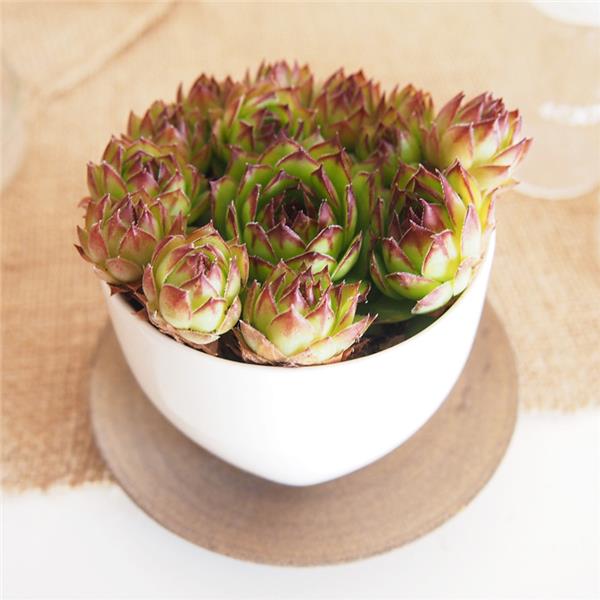
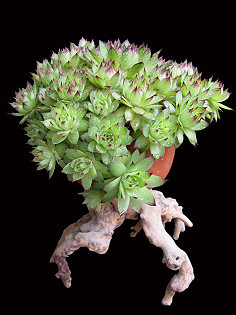
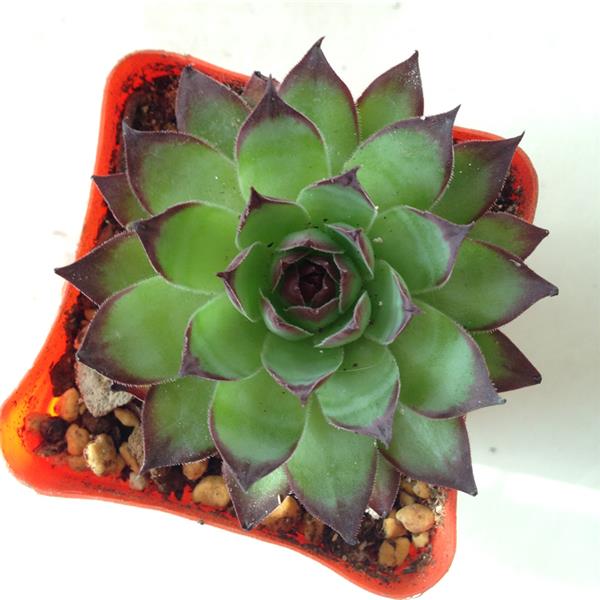
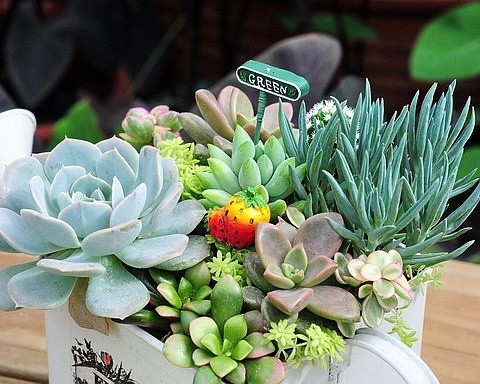
The Crassulaceae Guanyin Lotus has a dignified plant form, like a blooming lotus, with richly varied leaf colors and extremely distinctive purple-red leaf tips. It is suitable for small to medium potted plants or combination plantings. Grown in flower pots of different styles, its ornamental effect also varies greatly: planted in cartoon-style pots, it is lively and cute, and very popular with children; planted in purple clay pots or blue-and-white porcelain pots, it is dignified and elegant, and much favored by middle-aged and older people; while planted in small wooden pots, it is stylish and natural, and very popular with young people. The Crassulaceae Guanyin Lotus plant has a rosette-shaped leaf disc, and there are many varieties, with leaf disc diameters ranging from 3 cm to 15 cm. The fleshy leaves are spoon-shaped with pointed tips, and depending on the variety, the leaf color may be gray-green, dark green, yellow-green, reddish-brown, and so on. The tips of the leaves may be green, red, or purple. Currently, the more popular varieties on the market are those with purple leaf tips, and the leaf margins have fine dense serrations. A well-developed plant will produce a ring of small rosettes below the large rosette, and in addition, in late spring each year it will send out red stolons similar to those of spider plants from the lower part of the leaf cluster, with small rosette-shaped leaf clusters growing at the front ends of the stolons. The small flowers of Sempervivum are star-shaped and pink.
Leaf cuttings: Lay a complete mature leaf flat on moist sandy soil, with the leaf surface facing up and the leaf back facing down. There is no need to cover it with soil. Place it in a cool, shady spot. After about 10 days, small leaf clusters and new roots will grow from the base of the leaf. Bury the root system in the soil. After that, let it get plenty of sunlight, water and fertilize appropriately, and gradually it will grow into a robust new plant.
Stem cuttings: Single leaves, tiller shoots, or terminal shoots can be used. There is no limit to the length of the cuttings taken, but after the cut surface has dried, remove the lower leaves and insert them into a sand bed. After insertion, they generally take root in about 20 days. The cutting medium must not be too wet, otherwise the cut surface is prone to yellowing and rotting. When the roots are 2-3 cm long, pot them up. Leaf cuttings can also be used.
Division: Best done in spring. Cuttings are commonly used for propagation. Indoor cuttings can be taken in all four seasons, with August to October being better, as rooting is fast and the survival rate is high. Single leaves, tiller shoots, or terminal shoots can be used as cuttings. There is no limit to the length of the cuttings taken, but after the cut surface has dried, insert them into a sand bed. After insertion, they generally take root in about 20 days.
Pest and disease control: Rust disease, leaf spot disease, and root-knot nematodes are common. They can be controlled by spraying with 75% chlorothalonil wettable powder at 800 times dilution, and root-knot nematodes can be controlled with 3% carbofuran granules. Among insect pests, the black weevil is harmful; use 25% carbaryl wettable powder at 500 times dilution for spraying to kill them.
There are two kinds of plants called Guanyin Lotus: one is the Crassulaceae Guanyin Lotus, and the other is the Araceae Guanyin Lotus. Of these two Guanyin Lotuses, one is toxic and one is not. The Crassulaceae Guanyin Lotus is not toxic, while the Araceae Guanyin Lotus is toxic.
The Crassulaceae Guanyin Lotus is not toxic. If it is Araceae, then it is toxic. The "Guanyin Lotus" that flower enthusiasts buy to keep at home for ornament actually includes many types; "Guanyin Lotus" is merely a common name for many kinds of plants. Generally speaking, they mainly belong to two families, Crassulaceae and Araceae. Crassulaceae plants are not toxic, but Araceae plants are basically all toxic.
The Guanyin Lotus that flower enthusiasts refer to belongs to a plant in the Crassulaceae genus Sempervivum, and it is not toxic. This kind of "Guanyin Lotus" is generally also called Sempervivum, Guanyin Zuolian, Fo Lianzuo, and so on. The toxic Guanyin Lotus, on the other hand, is also called black-leaf taro or black-leaf Guanyin Lotus, and is a foliage plant in the Araceae genus Alocasia. Distinguishing these two plants is actually quite simple: Crassulaceae plants have relatively thick leaves with a better texture to the touch, while Araceae plants have relatively thin leaves. In addition, Araceae plants usually have fleshy tubers in the underground part, and the plant height is much taller than that of Crassulaceae.
The Uses of Guanyin Lotus
Guanyin Lotus has a slight effect on absorbing toxic indoor gases, collecting dust, sterilizing, purifying the air, and filtering turbid air, and indoors it can slightly increase humidity. To emphasize again, the succulent-type Guanyin Lotus only has the effect of slightly absorbing toxic gases and slightly increasing humidity. In fact, Guanyin Lotus can be used as medicine, with effects such as dispelling wind and dampness and relieving pain. Its most important use is in treating typhoid diarrhea, rheumatism, rhinitis, and various skin diseases.
During care, also pay attention. Be sure to prevent children and uninformed people from accidentally eating it or taking it in through other means. Once accidentally ingested, in mild cases there may be swelling of the tongue and throat, vomiting and diarrhea, and in severe cases suffocation and cardiac paralysis. If poisoning occurs from accidental ingestion, immediately take egg white, flour paste, drink a large amount of sugar water, or receive an intravenous injection of glucose saline.
The Uses of Guanyin Lotus
Guanyin Lotus has a slight effect on absorbing toxic indoor gases, collecting dust, sterilizing, purifying the air, and filtering turbid air, and indoors it can slightly increase humidity. To emphasize again, the succulent-type Guanyin Lotus only has the effect of slightly absorbing toxic gases and slightly increasing humidity. In fact, Guanyin Lotus can be used as medicine, with effects such as dispelling wind and dampness and relieving pain. Its most important use is in treating typhoid diarrhea, rheumatism, rhinitis, and various skin diseases.