What are the basic characteristics of Siphonostegia chinensis? This article gives you a detailed introduction
Siphonostegia chinensis is an annual herbaceous plant of the genus Siphonostegia in the family Scrophulariaceae, reaching a height of 30-80 cm. Next, let us take a look at an introduction to the characteristics of Siphonostegia chinensis.
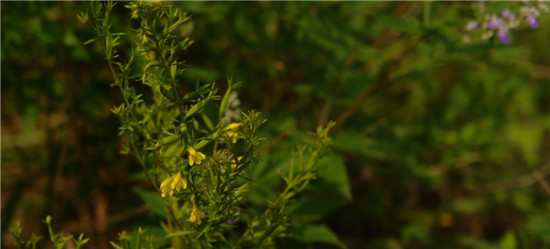
The leaves of Siphonostegia chinensis are opposite, and the leaf blades are bipinnately parted, with the segments narrowly linear. The flowers are opposite on the upper part of the stem and branches, forming loose racemes. The corolla is two-lipped, with the upper lip slightly purplish and the lower lip yellow. The flowers are opposite on the upper part of the stem and branches, forming loose racemes. The corolla is two-lipped, with the upper lip slightly purplish and the lower lip yellow. It grows on mountain slopes, hills, in grass clusters and other places, and is distributed both in China and abroad. The whole plant can be used as medicine, and its traditional Chinese medicine name is also "Yinxingcao". It is harvested from the Beginning of Autumn to White Dew, cleaned of impurities, cut into sections, and dried in the sun or used fresh. It has the effects of clearing heat and draining dampness, cooling blood and stopping bleeding, and removing blood stasis and relieving pain.
Annual herb, plant height 30-70 cm. The whole plant is densely covered with rusty-colored short hairs. The root is branched. The stem is single, erect, mostly branched in the upper part, slightly angular, and the upper part of the stem is tinged with pale red. Leaves opposite; without stalks or with short petioles; leaf blades bipinnately parted, linear or linear-lanceolate, about 8 mm long and 1-2 mm wide.
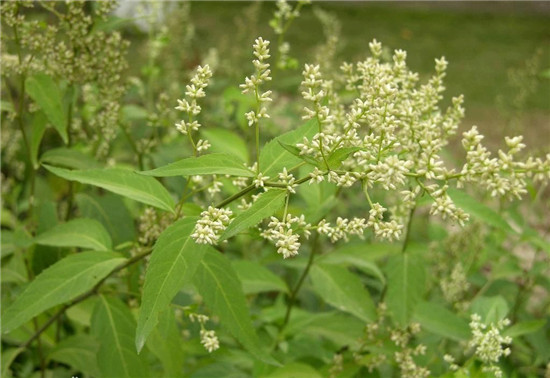
The flowers are opposite on the upper part of the stem and branches, forming loose racemes; the pedicels are very short, with 1 pair of linear bracteoles; the calyx tube is 1-1.5 cm long, with 10 prominent main veins, and 5 calyx teeth, which are 1/4-1/3 the length of the tube; the upper lip of the corolla is reddish purple and the lower lip is yellow, 2-2.5 cm long, the tube is straight, the upper lip is sickle-shaped and curved, the forehead is slightly rounded, the back is necessarily covered with long cilia, the lower lip is 3-lobed at the tip, the folds are raised high to form a palatal pouch, and the outside is covered with short soft hairs; stamens 4, didynamous, the filaments are hairy at the base and connate with the corolla tube in the lower part; the style is long, slightly thickened and curved at the tip. The capsule is broadly ovate, slightly flattened and oblique at the tip, enclosed in the persistent calyx. Seeds black. Flowering period July-August, fruiting period August-October.
Siphonostegia chinensis is an annual herbaceous plant of the genus Siphonostegia in the family Scrophulariaceae, reaching a height of 30-80 cm. The leaves are opposite, and the leaf blades are bipinnately parted, with the segments narrowly linear. The flowers are opposite on the upper part of the stem and branches, forming loose racemes. The corolla is two-lipped, with the upper lip slightly purplish and the lower lip yellow. The flowers are opposite on the upper part of the stem and branches, forming loose racemes. The whole plant can be used as medicine, and its traditional Chinese medicine name is also "Yinxingcao". It is harvested from the Beginning of Autumn to White Dew, cleaned of impurities, cut into sections, and dried in the sun or used fresh. It has the effects of clearing heat and draining dampness, cooling blood and stopping bleeding, and removing blood stasis and relieving pain.
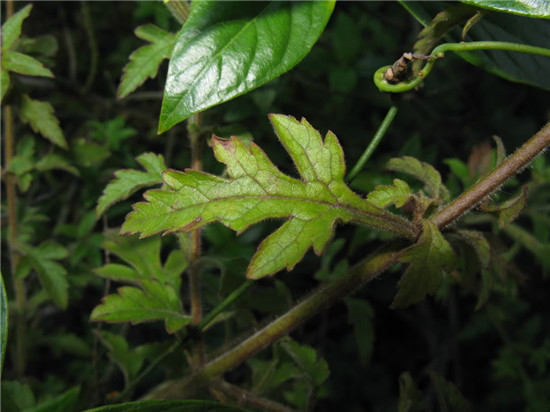
Siphonostegia chinensis is the whole plant of Siphonostegia chinensis, a plant of the genus Siphonostegia in the family Scrophulariaceae. Siphonostegia chinensis is bitter in taste and cold in nature, and can clear heat and drain dampness, cool blood and stop bleeding, and remove blood stasis and relieve pain. It mainly treats icteric hepatitis, cholecystitis, favism, urinary calculi, difficult urination, hematuria, hemafecia, and postpartum blood stasis abdominal pain; for external use, it treats traumatic bleeding, burns and scalds.
When the water decoction of Siphonostegia chinensis was given to mice by gavage at 10 g/kg and 5 g/kg, and carbon tetrachloride was used to cause liver injury, the two dosage groups of Siphonostegia chinensis could approximately lower serum ALT, showing a significant difference compared with the control group. Gavage administration of the decoction of Siphonostegia chinensis (6 g/kg), or gavage administration of the total alkaloids (350 mg/kg) and total flavonoids (2 g/kg) extracted from Siphonostegia chinensis, could all significantly lower the high serum ALT in rats caused by gossypol acetate, but had no obvious effect on carbon tetrachloride-induced liver injury. Gavage administration of the concentrated decoction of Siphonostegia chinensis had an obvious choleretic effect on anesthetized dogs and rats.
Through experiments, the water decoction of Siphonostegia chinensis was given to mice by gavage at 10 g/kg. The results showed that it had a significant effect of lowering serum cholesterol in normal mice, thus indicating that Siphonostegia chinensis has the effect of lowering serum cholesterol. Siphonostegia chinensis also has an antibacterial effect. In test tubes, the water decoction of Siphonostegia chinensis has varying degrees of antibacterial effect on Staphylococcus aureus, Bacillus anthracis, beta-hemolytic Streptococcus, Corynebacterium diphtheriae, Salmonella typhi, Pseudomonas aeruginosa and Shigella dysenteriae.
The above is the full content of the basic characteristics of Siphonostegia chinensis and the introduction to the features of Siphonostegia chinensis that I have summarized for everyone. I hope this article can help everyone. Please also continue to follow us.