What flower is the spider flower? An introduction to the spider flower
The spider flower belongs to the Cleomaceae family and the genus Cleome. It is native to tropical regions of South America and is now widely cultivated around the world. Next, let us take a look at what the spider flower is.
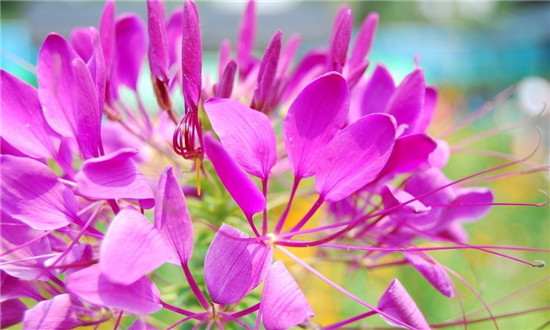
The spider flower is a relatively popular flower, with a plant height of about 50cm and a terminal raceme. However, its flower buds all bloom from the inside outward, and the flower color changes on its own, from white to light red, then light purple. Finally, it becomes pinkish-white. It is very charming. The formed flower shape is just like a butterfly. The spider flower is native to tropical regions of South America, and many families place it on dining tables. Whether grown in pots or planted in the ground, it is an excellent floral product.
Because the spider flower resembles a butterfly when in full bloom, it is called the butterfly flower. It is often arranged in flower beds in cities and is a very good pollution-resistant flower. So how should the spider flower be grown?
Humidity: The spider flower has relatively high humidity requirements, generally maintained at around 80%, especially when it blooms in summer, when spraying is needed in the market to maintain humidity. However, it is recommended not to overdo it; too much can easily cause disease.
Temperature: Generally in the early growth stage, the spider flower grows at around 20°C. Especially after cuttings, the temperature must not be too high; if too high, it easily rots, while if too low, it is not easy for roots to develop.
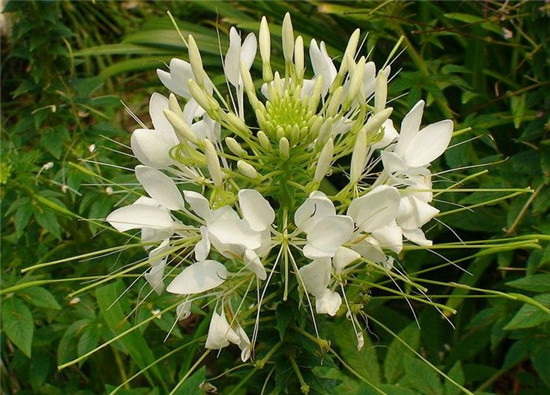
Light: The spider flower needs light at the right time. Generally, appropriate shading is provided at noon, while during cuttings, the light should be suitable, which is beneficial for rooting.
The spider flower likes a sunny, dry and warm environment. Its root system is relatively developed, but it is not cold-tolerant and likes a ventilated environment, so the main steps in cultivation are watering and keeping warm. Potted spider flowers use pots of about 25cm, which is beneficial for root growth. It is suitable for acidic soil with a pH of around 6.5. As for fertilizer, ordinary water-soluble fertilizer is enough. It is generally recommended to apply light fertilizer, in small amounts but more frequently.
Propagation and cultivation of the spider flower
Propagate by raising seedlings from seeds. The fruit is slender and matures successively from late summer to early autumn. It can be collected in stages. The seeds are very small. After harvesting and drying in the shade, put them in bags and store them in a cool indoor place or in the refrigerator. Early-maturing seeds can be sown immediately after collection, and flowers can be viewed in late autumn and early winter.
Generally, the seeds are stored over winter and sown in early spring of the following year, with flowers viewed in summer, or sown in late spring, with flowers viewed in summer and autumn. When the seeds germinate, the temperature must be above 20°C. In early spring, sowing must be done in a plastic tunnel to keep warm so that germination is uniform. If the temperature is suitable, they can germinate about 1 week after sowing.
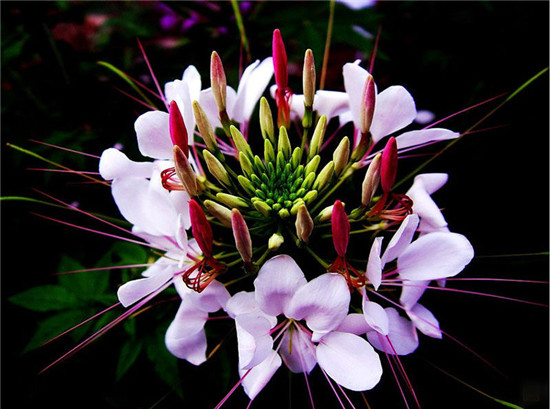
The growth period requires relatively high temperatures, and the suitable temperature for growth is 20-32°C. When the seedlings have 2-4 true leaves, they can be separated and planted out. The root system is developed, and the survival rate after transplanting is high. Apply sufficient base fertilizer when planting, and apply topdressing 2-3 times during bud formation and the flowering period, which can prolong the flowering period.
For those used as potted plants, remove the terminal buds at the seedling stage and control the application of nitrogen fertilizer so as to dwarf the plant. For those used as cut flowers, plant them slightly densely and remove the side buds to promote the development of the terminal inflorescence. The whole plant has sticky hairs and consumes relatively little water. Except for the flowering period, when water demand is relatively high, at the seedling stage it can be left unwatered or watered less, making it relatively easy to manage.
Key points of propagation and cultivation: it can self-sow and propagate. Sow from March to April, and germinate in 10-14 days. Seedlings grow slowly, so pay attention to weeding and thinning. When they grow to 5-6 cm tall, they can be planted out. It can tolerate drought, but grows better when given relatively high air humidity. Water every day in midsummer, and water thoroughly. Apply thin fertilizer once at the initial planting stage. Control fertilization in the mid-growth stage to keep the plant shape moderate and attractive. It does not need special soil; sandy soil with good drainage and containing humus is best. It likes warmth, tolerates heat, and is not cold-tolerant. Summer is the growth period, and the plant dies when frost occurs. It likes sunlight and is slightly tolerant of semi-shade.
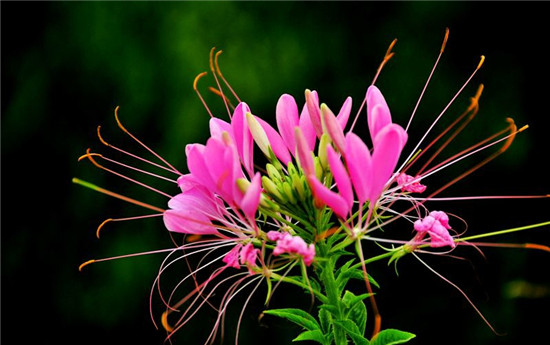
Horticultural uses: The spider flower has long and sturdy flower stalks, and the raceme forms an abundant flower ball, with red and white colors complementing each other, and the shades are appropriate. In particular, its long-clawed petals and long stamens extending beyond the corolla resemble a spider, and also look like dragon whiskers, which is quite interesting. When the spider flower opens, the petals slowly spread, and the long claws go from curved to popping out from the flower, in a process just like a movie fast-motion sequence played slowly. When planted in the ground, it can be planted beside courtyard walls or under trees. When potted, it can be placed on a windowsill or desk, and the plant shape should be controlled so that it does not grow too tall.
The above is all the content I have summarized for you on what the spider flower is. I hope this article can help everyone. Please also continue to follow us.