A Detailed Guide to the Planting Methods and Care Techniques of Dianthus superbus
Dianthus superbus is a perennial herbaceous plant of the genus Dianthus in the family Caryophyllaceae. It is an excellent material for flower beds and flower borders, and can also be grown in pots or used as a cut flower. Let us take a look together at how to grow Dianthus superbus.
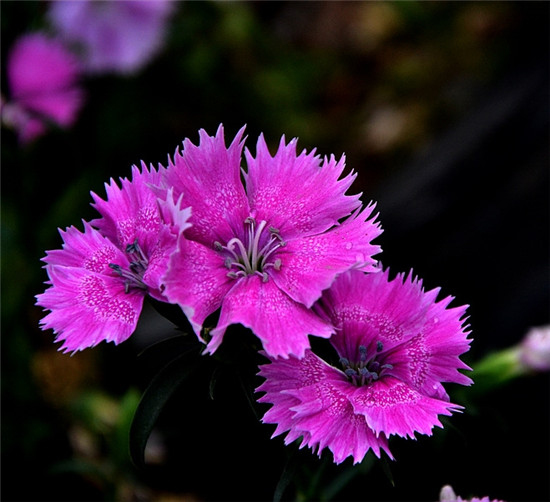
Dianthus superbus is a perennial herbaceous plant of the genus Dianthus in the family Caryophyllaceae. Its stems are clustered, its leaves are lanceolate, and its flowers are borne in cymes. It is an excellent material for flower beds and flower borders, and can also be grown in pots or used as a cut flower. The whole plant is used medicinally and has the effects of promoting menstruation and inducing diuresis.
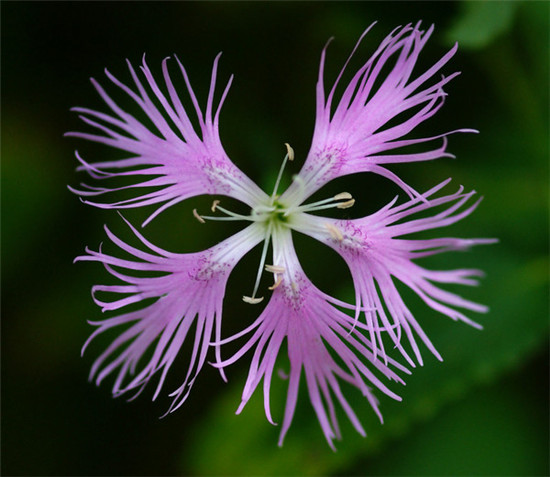
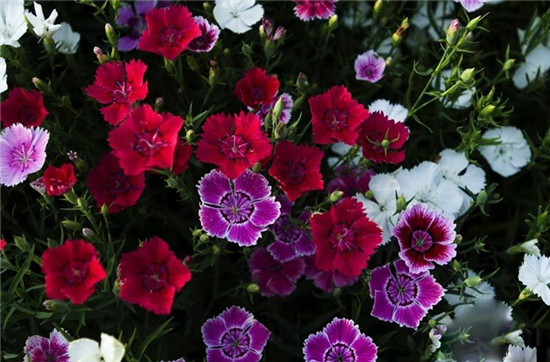
Height 30-60 cm, stems clustered, upright, dichotomously branched in the upper part, nodes swollen. Leaves simple, opposite, linear to linear-lanceolate, apex gradually pointed, base forming a short sheath clasping the stem, margin entire or finely toothed, both surfaces glaucous. Flowers solitary or several gathered in loose cymes, white, red, or various shades of red and purple, fragrant. Bracts 4-6, broadly ovate, apex acute or acuminate, about 1/4 the length of the calyx tube; calyx cylindrical, slender, apex 5-lobed; petals with apex deeply and finely divided into thread-like segments, throat bearded; stamens 10; ovary 1-locular, styles 2. Capsule long cylindrical, dehiscing by 4 teeth, with persistent calyx. Seeds flat, black, with a wing wider than the seed along the margin. Flowering period May to July, fruiting period July to October.
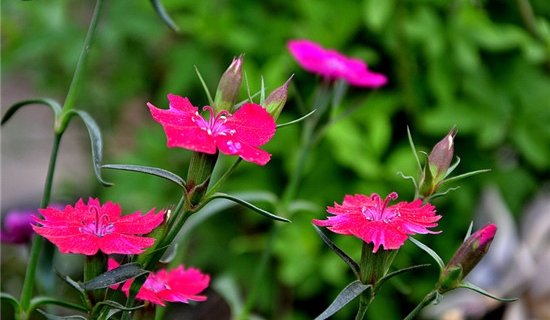
Perennial herb, 50-60 cm tall, sometimes taller. Stems clustered, upright, green, hairless, branched in the upper part. Leaf blades linear-lanceolate, 5-10 cm long, 3-5 mm wide, apex sharply pointed, midvein very prominent, base connate into a sheath, green, sometimes glaucous. Flowers 1 or 2 borne at the tips of branches, sometimes axillary below the apex; bracts 2-3 pairs, obovate, 6-10 mm long, about 1/4 of the calyx, 4-5 mm wide, apex long-pointed; calyx cylindrical, 2.5-3 cm long, 3-6 mm in diameter, often tinged with a purplish-red blush, calyx teeth lanceolate, 4-5 mm long; petals 4-5 cm long, claw 1.5-3 cm long, enclosed within the calyx tube, limb broadly obovate, margin fringed-lobed to the middle or above the middle, usually pale red or tinged with purple, rarely white, throat with silky-hairy scales; stamens and styles slightly exserted. Capsule cylindrical, equal to or slightly longer than the persistent calyx, apex 4-lobed; seeds flat ovate, about 2 mm long, black, glossy. Flowering period June to September, fruiting period August to October.
Growth habits: It prefers a warm and humid environment and is tolerant of severe cold. It is best planted in fertile sandy loam or clay loam.
Planting method: Propagation by seed. It can be planted in spring, summer, and autumn, with spring planting being relatively better. First select the site, apply sufficient base fertilizer, plow and make beds, sow in drills with a row spacing of 27 cm, draw a 1 cm shallow furrow and sow the seeds evenly, level with a hoe, and cover with a thin layer of soil. At a temperature of 18-20 degrees, seedlings emerge in about 7 days.
Field management: After emergence, thin out the crowded seedlings. During the growing period, loosen the soil, hoe weeds, and water in a timely manner to keep the soil moist. When the seedlings are 10-15 cm tall, apply 10 kg of urea per mu. During the flowering season, appropriately increase the frequency of watering. If harvesting twice, water before harvesting, and do not water within 2-3 days after harvesting to prevent drowning the plants. Before overwintering, irrigate with frozen water and cover with ring fertilizer; after the thaw in the following spring, crush the manure lumps and rake them level to facilitate greening up.
Main pests and diseases: Pests include green maggots and armyworms, which damage stems and leaves, and can be killed with a 1000-2000 times dilution of 50% fenitrothion emulsifiable concentrate. In the rainy season, waterlogged low-lying areas are prone to root rot and lodging, so attention must be paid to drainage.
Pharmacological effects of Dianthus superbus
1. Diuretic effect: Dianthus superbus has a certain diuretic effect on rabbits and both anesthetized and unanesthetized dogs. Gastric gavage of 2 g/kg of a decoction of Dianthus superbus spikes can increase the urine volume of saline-retaining rabbits to 156.6% within 6 hours, and chlorides to 268.2%. The diuretic effect of a decoction of stems and spikes of Dianthus superbus is similar to that of pure spikes but slightly weaker. A decoction of Dianthus superbus increases urine volume in anesthetized dogs by 1-2.5 times, and in unanesthetized dogs by 5-8 times. The effect of Dianthus superbus on potassium excretion is greater than on sodium. The potassium content in Dianthus superbus is 500 mg%, and its diuretic and potassium-excreting effect may be related to this.
2. Effect on intestinal tract: In experiments on isolated rabbit intestine, in situ intestinal tract of anesthetized dogs, and chronic intestinal fistula of dogs, it was observed that a decoction of Dianthus superbus has a significant excitatory effect on the intestinal tract. In isolated rabbit intestine it mainly manifests as increased tension, while in the in situ intestinal tract of anesthetized dogs and chronic intestinal fistula of dogs it manifests as enhanced intestinal peristalsis, with no great effect on tension. The spikes of Dianthus superbus have a slightly stronger effect than the stems and spikes. Diphenhydramine and papaverine can antagonize this effect.
3. Effect on the cardiovascular system: Dianthus superbus has a strong inhibitory effect on isolated frog hearts and rabbit hearts. A decoction of Dianthus superbus spikes has a hypotensive effect on anesthetized dogs, which may be caused by cardiac inhibition.
4. Effect on Schistosoma: A 10% decoction of Dianthus superbus can kill Schistosoma worms within 8-12 minutes in a test tube; 4 ml of a 100% decoction given to rabbits infected with Schistosoma once a day for four consecutive weeks, although the diseased rabbits all died one after another, showed a reduced residual worm rate, slower weight loss, and improved liver changes compared with the control group. There are also reports that Dianthus superbus has no effect in killing Schistosoma in vitro, and in in vivo tests using its maximum tolerated dose or 1/2 of the median lethal dose, it had no effect on reducing the mortality rate or killing adult worms in mice infected with Schistosoma to varying degrees. Dianthus superbus has an inhibitory effect on Staphylococcus aureus, Escherichia coli, Salmonella typhi, Shigella flexneri, and Pseudomonas aeruginosa.
The above is the entire content of the methods for growing Dianthus superbus that I have summarized for everyone. I hope this article can help everyone. Please also continue to follow us.
It was found that the residual worm rate was reduced, weight loss was slow, and liver changes improved. There are also reports that Dianthus superbus has no effect in killing Schistosoma in vitro, and in in vivo tests using its maximum tolerated dose or 1/2 of the median lethal dose, it had no effect on reducing the mortality rate or killing adult worms in mice infected with Schistosoma to varying degrees. Dianthus superbus has an inhibitory effect on Staphylococcus aureus, Escherichia coli, Salmonella typhi, Shigella flexneri, and Pseudomonas aeruginosa.The above is the entire content of the methods for growing Dianthus superbus that I have summarized for everyone. I hope this article can help everyone. Please also continue to follow us.