Detailed Guide to Ash Tree Planting Methods and Prices
Today's plants are not only highly ornamental but also of great practical value, and the ash tree (Fraxinus chinensis) is one of them. The ash tree is an excellent street tree and shade tree, as well as a valuable raw material for natural medicine and a material for furniture and construction. So exactly how do you plant ash trees, and what are ash tree prices? Let's take a look together.
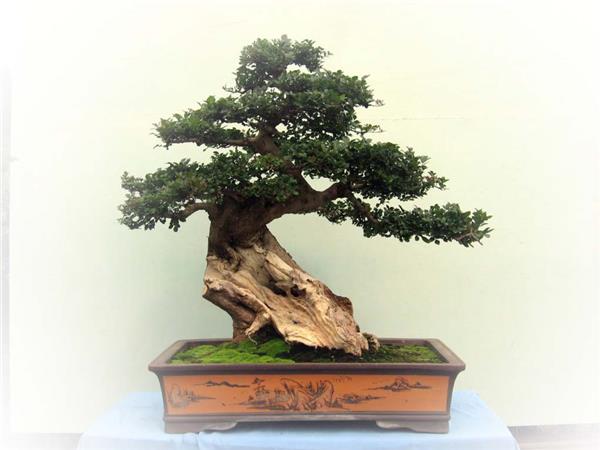
The ash tree is a deciduous tree with an oval crown and yellowish-brown bark. The twigs are smooth and hairless. The odd-pinnate compound leaves are opposite, ovate or ovate-lanceolate. The panicles are lateral or terminal on current-year branches, large and loose; the elliptical inflorescences are terminal and lateral, drooping. The flowering period is March to May; the fruit ripens in October. This tree species has a well-proportioned form, a straight trunk, and luxuriant, bright green foliage that turns orange-yellow in autumn, making it an excellent street tree and shade tree. The wood is tough and resistant to water and moisture, used for making furniture, farm tools, plywood, etc.; the branches can be woven into baskets; the bark is called "Qinpi" and is used in traditional Chinese medicine as a heat-clearing drug.
How to Plant Ash Trees
1. Irrigation and drainage. During the seed germination period of ash trees, the seedbed surface should be kept moist, and irrigation should be done in small amounts but frequently; after the seedlings emerge completely and the cotyledons fully unfold, entering the vigorous growth stage, the irrigation amount should be larger and the frequency less, irrigating once every 2-3 days, thoroughly soaking the soil each time. Irrigation should preferably be done in the morning and evening. In autumn during rainy periods, drainage should be done promptly.
3. Topdressing. Ash tree fertilization should be mainly based on base fertilizer; to make the seedlings grow quickly and robustly, chemical fertilizers should be applied as a supplement during the peak growth season. Apply nitrogen fertilizer during the seedling stage of ash trees; during the fast-growth period, apply more nitrogen fertilizer, potassium fertilizer, or a combination of several fertilizers; in the late growth stage, stop applying nitrogen fertilizer and apply more potassium fertilizer. Topdressing should mainly use quick-acting fertilizers, in small amounts but frequently.
4. Thinning. To adjust the density of ash trees, thinning and replanting are needed. In nursery beds for growing ash trees from seed, thinning is generally done twice: the first time when the seedlings have all emerged and grown two pairs of true leaves, and the second time when the leaves begin to overlap each other. Thinning should keep the superior and remove the inferior, and is best done after rain when the soil is moist.
5. Pest and disease control. Ash trees have strong adaptability to urban environments and are tolerant of saline-alkali soil, waterlogging, harmful gases, and pests and diseases. The main disease occurring in urban plantings is ash gummosis. The main disease of ash trees is sooty mold, and the main pests are leaf roller caterpillars and longhorn beetles; the former damages tender leaves, while the latter bores into branches and trunks. When pests and diseases are discovered, they should be eliminated promptly.
5 cm ash tree price --- 80 yuan/tree
6 cm ash tree price --- 120 yuan/tree
8 cm ash tree price --- 240 yuan/tree
10 cm ash tree price --- 300 yuan/tree
12 cm ash tree price --- 450 yuan/tree
15 cm ash tree price --- 800 yuan/tree
18 cm ash tree price --- 1200 yuan/tree
20 cm ash tree price --- 2000 yuan/tree
25 cm ash tree price --- 3000 yuan/tree
Precautions for Planting Ash Trees
Ash seeds have a long dormancy period; when sowing in spring, germination must be promoted first. The methods for promoting germination include low-temperature stratification and rapid high-temperature germination promotion.
Choose a spot with relatively high terrain, good drainage, and shelter from wind and shade, and dig a trench. In principle, the depth of the trench should be below the frozen soil layer and above the groundwater level. The trench width is 80 cm, and the trench length depends on the quantity of seeds. The ratio of ash seeds to wet sand is 1:2-3. First spread a 10 cm thick layer of wet sand on the bottom of the trench, then thoroughly and evenly mix the seeds with wet sand and place them into the trench. The thickness of the seed-sand mixture is 50-70 cm; add wet sand 10 cm from the ground surface, then cover with soil so that the top forms a ridge shape. Place a sorghum stalk bundle every 0.7-1 m to facilitate ventilation. The general treatment time is 60-80 d.
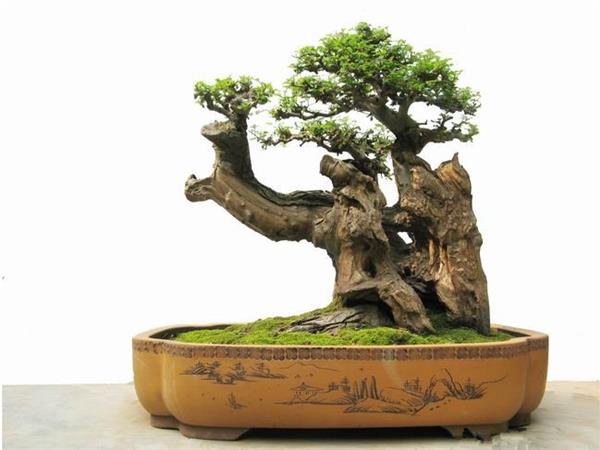
Growing Ash Tree Seedlings
Sowing and seedling cultivation: Spring sowing should be done early, generally from late February to early March. Drill sowing in furrows, using 3-4 kg of seed per 667 sq m, at a depth of 4 cm. The depth should be uniform; the furrow should be opened, sown, and covered with soil in succession, with a soil cover thickness of 2-3 cm. To ensure close contact between soil and seeds, press down after covering with soil.
Cutting propagation and seedling cultivation: This is done from late March to early April in spring. Before cutting, carefully prepare the land and apply sufficient base fertilizer to make the soil loose and moisture-sufficient. Select 1-year-old sprout branches from healthy young mother trees that grow rapidly and are free of pests and diseases. Generally, the branch thickness should be 1 cm or more, and the length 15-20 cm. The upper cut should be a flat cut, and the lower cut should be horseshoe-shaped. Insert 2-3 cuttings per hole, spreading the cuttings apart, with a row spacing of 40 cm and a plant spacing of 20 cm. For spring planting, deep burying is preferable, firming the soil and leaving few tips exposed, planting 4000 cuttings per 667 sq m.