Is Dieffenbachia Poisonous? Care Methods Explained
Dieffenbachia, also known as dumb cane, is a plant in the genus Dieffenbachia of the family Araceae. This genus has about 30 native species, mainly distributed in tropical America. Next, let us take a look at how to grow Dieffenbachia and whether it is a poisonous plant.
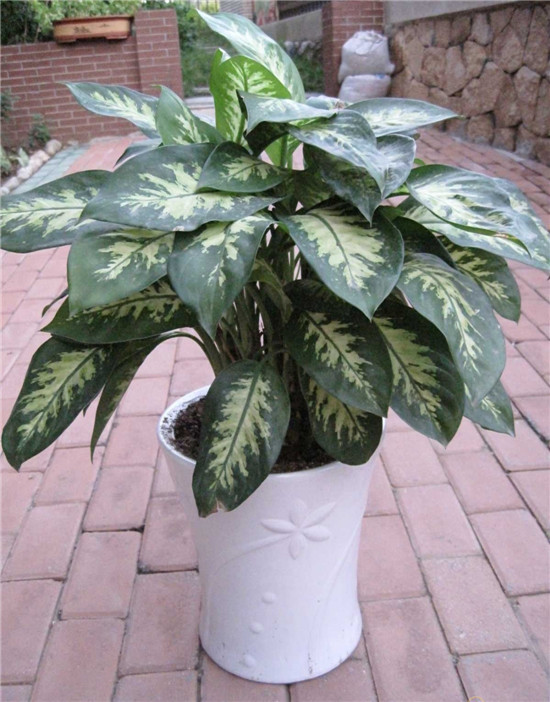
Dieffenbachia was introduced to the United Kingdom in the 1860s and quickly spread throughout Europe, the Americas and Oceania. It is widely cultivated around the world, and there are many cultivated varieties, which have entered countless households.
Dieffenbachia has deep green leaves with clear, glossy markings; it is stately yet elegant. It is relatively shade-tolerant and easy to care for, and can survive long-term under ordinary conditions, making it an ideal foliage plant for indoor greening and decoration.
Dieffenbachia is an evergreen plant of the family Araceae, grown mainly for its foliage. The zebra plant gets its name because the markings on its leaves closely resemble the stripes on a zebra; it is also known as silver vein aphelandra, and is an evergreen shrub or perennial herbaceous plant of the genus Aphelandra in the family Acanthaceae. The sap of the leaves is highly toxic and can make a person mute, so caution is needed.
Morphology: perennial shrub-like upright herb. The stem is thick and green. The leaves are oblong and mostly clustered at the top of the stem; the leaves are very large, with green leaves mixed with irregular white or golden-yellow patches, bright and strikingly different from other plants, with high ornamental value. The spadix inflorescence grows in the leaf axils at the top of the stem and rarely blooms.
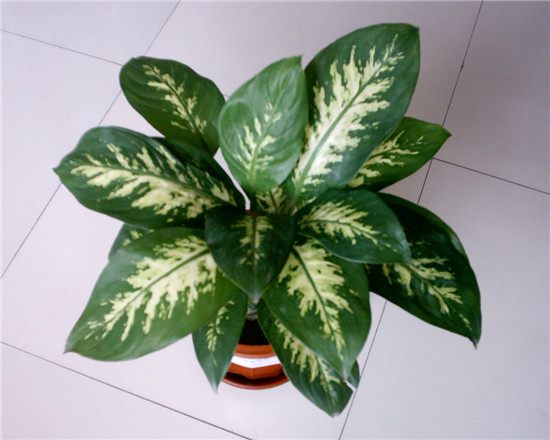
Decorative use: young plants in small pots can be placed on a desk or windowsill for viewing. Medium-sized potted plants can be placed in a corner of the living room or beside the sofa as decoration, filling the room with natural vitality.
Light: tolerant of semi-shade, avoid excessively strong sunlight, but overly dark light will also cause the leaves to fade.
Water: likes moisture, water more during the growing period from March to August. In summer, sprinkle water frequently to increase environmental humidity.
Temperature: likes high temperatures, not cold-tolerant, optimal growing temperature 20-30°C. The minimum overwintering temperature is above 12°C. Once frozen, the leaves turn yellow and wither, and the terminal bud dies.
Fertilizer: apply nitrogen fertilizer monthly during the growing period to promote rapid growth, and apply fertilizer water once every two weeks from March to August. Reduce fertilizing after autumn.
Soil: requires loose, fertile, well-drained soil.
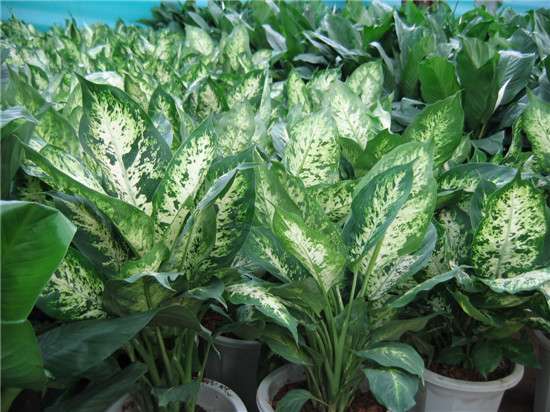
Propagation: cutting propagation. It can be done in spring and summer; take 10-15 cm long young shoots, insert them into a yellow sand medium, they will root in 20-30 days, and afterwards repot into new pots depending on the size of the plant.
Dieffenbachia is suitable for growing in sheltered places, and soil management is also a key factor affecting the growth of Dieffenbachia. If we decide to plant Dieffenbachia, we should choose a flower pot that can drain water, because the soil we use to grow Dieffenbachia needs good drainage, while the soil should remain loose and fertile.
Dieffenbachia can be propagated by division and by cuttings. Division propagation is suitable in spring each year; if handled well, Dieffenbachia can resume growth after 10 days. For cutting propagation, it should be done in summer when the temperature is better, to ensure the survival rate of Dieffenbachia.
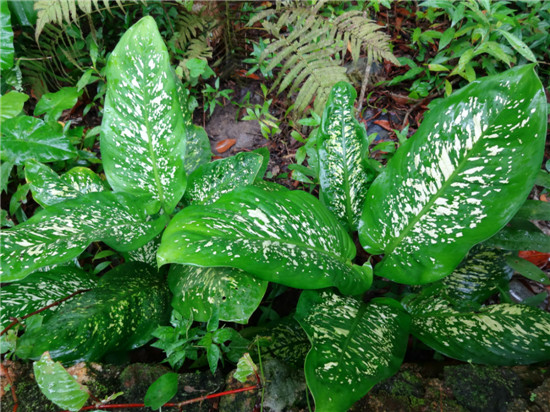
Planting Dieffenbachia needs to be done with caution, because Dieffenbachia is indeed poisonous. The sap of Dieffenbachia is toxic; if Dieffenbachia is accidentally eaten, it causes severe pain in the tongue, making it impossible to speak. Skin contact will also cause a reaction, with itching and obvious pain. We need to be very careful during the planting process.
The above is all the content I have summarized for you on how to grow Dieffenbachia and whether it is a poisonous plant. I hope this article can help everyone. Please also continue to follow us.