What are the propagation methods for nasturtium?
Nasturtium, also called golden lotus or money lotus, is a herbaceous plant of the Tropaeolaceae family. It is semi-trailing and can climb, and it is annual, biennial, or perennial. Next, let us take a look at growing nasturtium.
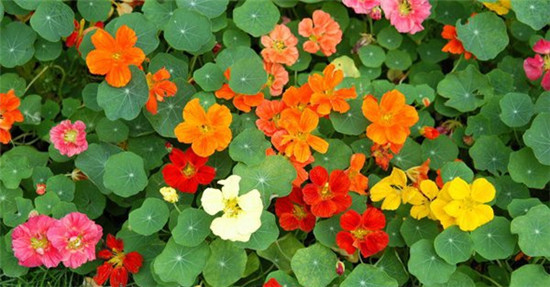
Nasturtium is native to South America. It likes warmth and moisture, dislikes high summer heat, is not tolerant of waterlogging, and is very easy to cultivate. It is a perennial trailing herbaceous plant. The plant height is between 30 cm and 70 cm, and the leaves are pentagonal with three-part deep divisions. The leaves are lush and the flowers are beautiful, with flower colors including orange-red, creamy yellow, purple-red, and so on. When nasturtium blooms, the flowers look like colorful butterflies dancing, very beautiful and moving.
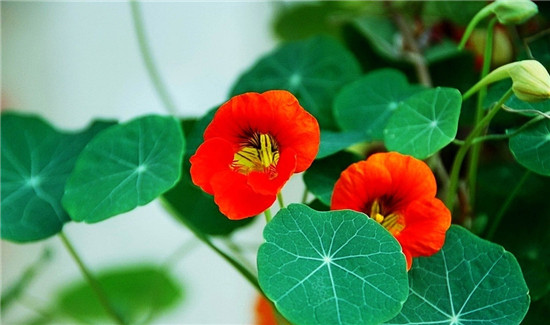
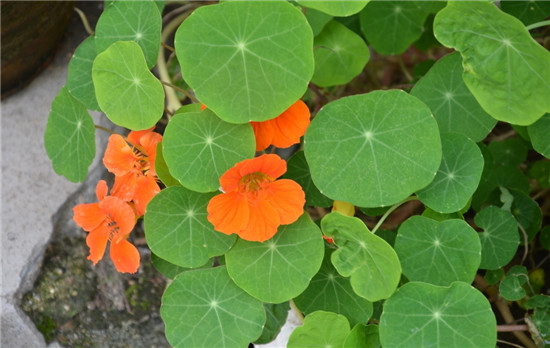
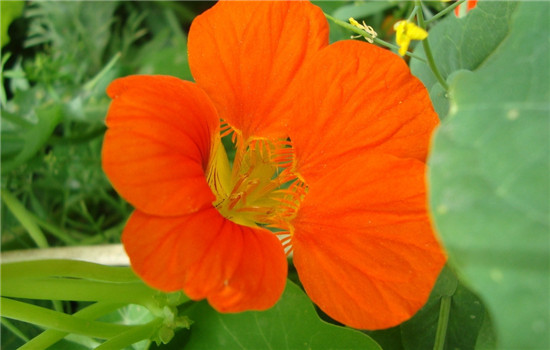
Its leaves resemble lotus leaves. A single flower stalk bears only one flower, with five petals. Flower colors include yellow, orange, pink, orange-red, creamy white, purple-red, black, and bicolor, among others. Nasturtium is called the "Longjing beyond the Great Wall," and there is a folk saying, "Better to savor three flowers than drink two liang of tea." After brewing, not only is the tea clear and bright, but it also has a faint fragrance. Nasturtium has the effects of clearing heat and detoxifying, nourishing the liver and brightening the eyes, and refreshing the mind.
Nasturtium also has beauty and skincare benefits. It is said that nasturtium once made Empress Dowager Xiao's skin fine and white and her complexion radiant, so it was called beauty-nourishing nasturtium and listed as a palace tribute. Emperor Kangxi of the Qing Dynasty once wrote a poem: "Far away from the desert, a lone root awaits appraisal, clear fragrance enters through the railing, proper color aligns with the heart, open and upright north of Anshan, uneven west of Jiuling, once sheltered from the summer heat in fiery winds, so pure and lofty that few can reach it."
How to grow nasturtium
1. Soil: Potted nasturtium likes soil that drains easily, is rich in nutrients, and is good for root respiration. It fears waterlogging and must not have standing water. The potting soil can be made by mixing garden soil, leaf mold, compost soil, and sand in a 4:4:1:1 ratio.
2. Light: Nasturtium needs sufficient light. In summer, it must not receive direct sunlight and should be placed in a cool, well-ventilated place. In North China, place it indoors in mid-October in a spot that receives sunlight. Nasturtium grows according to light conditions, so the plant should be rotated continuously to receive even light.
How to grow nasturtium 3. Watering: Nasturtium likes moisture but is not tolerant of waterlogging. Soil moisture should be kept at 50%. During the growing period, water little but often. In spring and autumn, water once every 1-2 days; in summer, water once a day, and in the evening spray water on the nasturtium leaves. During the bud stage, reduce the frequency of watering, and increase the amount as appropriate.
4. Temperature: The most suitable temperature for nasturtium is 18-24°C. It fears high temperatures, and when summer temperatures are too high it does not bloom easily. Above 35°C, growth slows or stops. Nasturtium is not cold-tolerant and can only survive 0°C for a short time. In winter, the temperature should be above 10°C to help it overwinter. Keeping the winter temperature at 12-16°C together with suitable fertilizer and water can maintain nasturtium's growth.
5. Fertilizing: During the growing period, nasturtium can be given 20% decomposed soybean cake water once a month. During the flowering period, apply 0.5% superphosphate or decomposed chicken and duck manure water once every half month. After the flowers fall, apply 30% decomposed soybean cake water once. Nasturtium does not need fertilizing in summer. At the end of autumn, apply a compound overwintering fertilizer once, which helps with cold resistance and growth the following year.
6. Pests: Nasturtium rarely suffers from pests and diseases. Diseases generally include leaf miners, which cause leaves to curl or fall off. In addition, there are aphids and whiteflies, which can be controlled by spraying pesticide. Diseases generally include mosaic disease and ringspot disease. You can spray insecticide to prevent aphids, clear the surrounding weeds, and pull up diseased plants and burn them.
Nasturtium sowing methods
(1) Germination: Soak nasturtium seeds in room-temperature clean water for 1 day, place them in a plastic box lined with two layers of moist paper towels, cover with a layer of paper towel, spray it wet, then cover with the lid to germinate. In a greenhouse, the seeds will show white sprouts in 3 days, then plant them in soil.
(2) Seedling raising: Prepare soil. For nasturtium, use a mix of peat, vermiculite, and perlite at 1 part each, and plant in small black square pots. After 3-5 days, they will sprout.
(3) Pinching and topping: When nasturtium grows to its 5th or 6th leaf, to promote flowering, you can pinch out the growing tip and leave 4 large leaves.
(4) Planting out: When the outdoor temperature rises to 10°C, prepare to plant out the nasturtium. In addition to the previous seedling soil, mix in 10% granular chicken manure fertilizer and 10% vermicompost as base fertilizer, and then pinch and top once more.
Nasturtium transplanting and planting-out method: First put less than 1/2 of the soil into an 18 cm pot. Sow seeds that have sprouted after germination into the soil. After the cotyledons open, add 1 cm of soil. When true leaves grow, add another 1 cm of soil. After that, gradually add soil until it reaches the plant's shoulder. This not only prevents nasturtium from becoming leggy and lodging, but also controls water and fertilizer.
The above is all the content I have summarized for you on nasturtium propagation methods. I hope this article can help everyone. Please also continue to follow us.
The above is all the content I have summarized for you on nasturtium propagation methods. I hope this article can help everyone. Please also continue to follow us.