What roles does the Japanese banana tree play in a home environment?
The Japanese banana tree is a large evergreen perennial herbaceous plant. In summer, large pale yellow flowers emerge from its leaf clusters. Let us now take a look at the household uses of the Japanese banana tree.
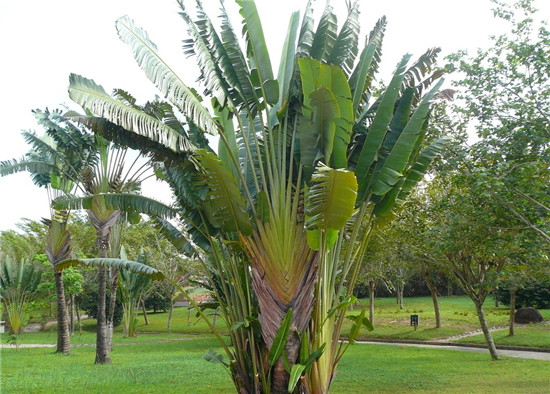
Japanese banana tree (green sky, fan immortal, sweet banana, heavenly mat, board banana), family Musaceae, genus Musa. A large evergreen perennial herbaceous plant. The stem reaches 3-4 m tall, unbranched, growing in clumps. The leaves are large, up to 3 m long and about 40 cm wide, oblong-elliptical, with a thick midrib and parallel veins on both sides; the leaf surface is light green and the underside is powdery white. In early summer, large pale yellow flowers emerge from the leaf clusters.
"Spreading like a tree, yet its substance is not wood, rising tall and draping shade" - this is how earlier people vividly described the form, substance and posture of the Japanese banana. The Japanese banana is best planted in a corner of a small courtyard, or by a wall by the window, or beside a rockery. It is not suitable for planting in rows; it is better planted as scattered points or in clumps of a few plants, forming a green canopy like a cover, bringing a sudden sense of coolness in the hot summer.
Generally, the Japanese banana tree is propagated by division. When late autumn comes, its leaves slowly wither, and at this time we need to prune away the dead leaves for it and mound soil to protect the roots. Wrap its remaining stalk with straw, starting from the base of the stalk and working upward.
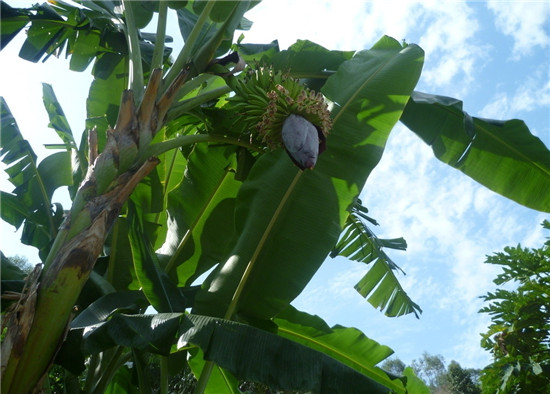
Then in early April of the following year, remove the straw from it. When many young shoots have grown from its roots, it can be propagated by division. When transplanting, remember to apply some organic fertilizer into the pit as a base fertilizer.
It is most suitable for planting in a corner of a small courtyard or by a wall by the window, and can also be planted beside a rockery. However, it is not suitable for planting in rows; it is best planted as scattered points or in clumps of a few plants, so that it will form a green canopy like a cover, making people feel the coolness even in the scorching summer.
Medicinal value
The Japanese banana and the banana belong to the same family and look similar, but its fruit is inedible and it has certain medicinal value. Its nature and flavour are sweet, very cold, and non-toxic.
Functions and indications
1. All kinds of swelling and toxins. Mash the Japanese banana root and apply it to the affected area.
2. Migratory red rubella. The treatment is the same as above.
3. Wind-fire toothache and toothache from decay. Take one bowl of juice from the Japanese banana root, heat it and use it as a gargle.
4. Wasting-thirst, vexing heat in the bones and joints. Mash the Japanese banana root to extract juice and drink one or two ge at any time.
5. Bloody strangury with painful urination. Take equal parts of Japanese banana root and false daisy, decoct in water and take. Take twice a day.
6. Swelling and toxins at the initial stage. Burn the Japanese banana leaves until they retain their nature, grind into powder, and mix with ginger juice to apply.
7. Heart impediment pain. Burn the Japanese banana flowers until they retain their nature and grind into powder. Take two qian each time, taken with salt water.
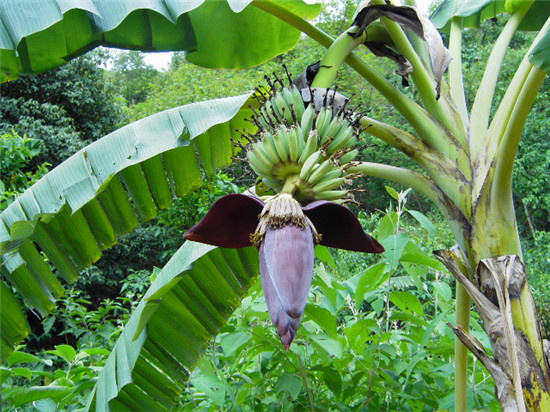
Propagate by division. When the banana leaves wither in late autumn, prune away the dead leaves and mound soil to protect the roots. Wrap the remaining stalk with straw from the base of the stalk upward. By early April of the following year, remove the straw again. When many young shoots have grown from the roots, division propagation can be carried out. When transplanting, apply organic fertilizer into the pit as a base fertilizer.
During the growing period, yellow leaves should be pruned away at any time, so as to avoid wasting nutrients in vain and affecting the appearance. If planted in the same spot for too long, it is prone to the phenomenon of no longer thriving, and the planting spot should be changed. Usually no particularly careful management is needed.
The above is all the content of the household uses of the Japanese banana tree that I have summarized for everyone. I hope this article can help everyone. Please also continue to follow us.