Complete Guide to the Plantain Tree: A Comprehensive Introduction to the Plantain Tree
The plantain tree is a fairly common ornamental plant, with large, lush green leaves. Let us take a closer look at a detailed introduction to the plantain tree.
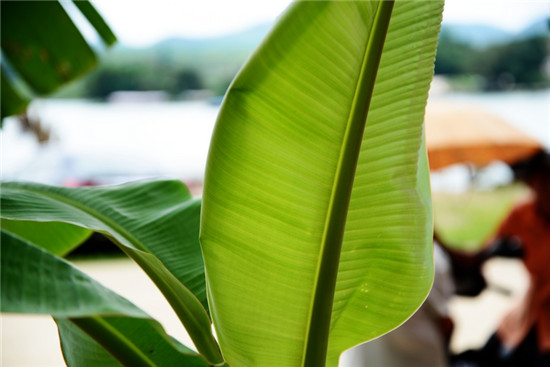
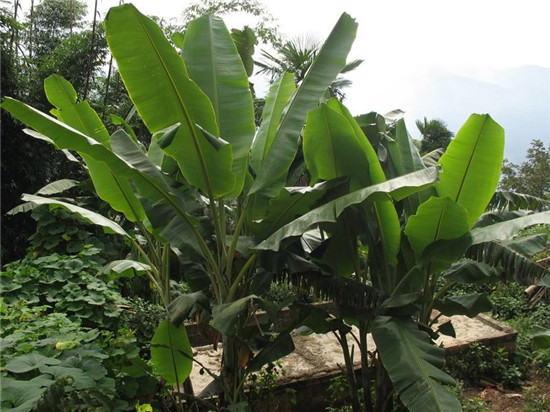
Family Musaceae, genus Musa. A large evergreen perennial herb. The stem reaches 3-4 m tall, unbranched, growing in clumps. The leaves are large, up to 3 m long and about 40 cm wide, oblong-elliptical, with a thick midrib and parallel veins on both sides; the upper leaf surface is light green and the underside is powdery white. In early summer, large pale yellow flowers emerge from the leaf cluster. "Spreading like a tree, yet its substance is not wood, rising tall and draping shade" - this is how earlier writers vividly described the form, substance and posture of the plantain.
Morphological characteristics of the plantain tree:
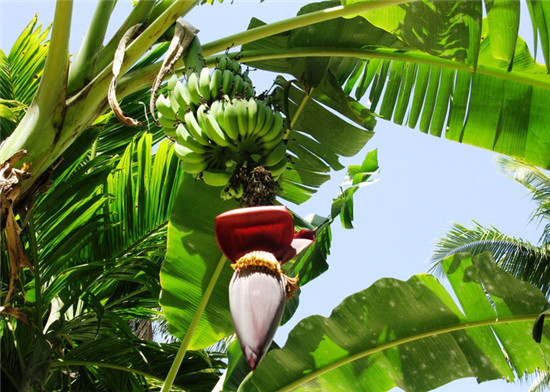
A tall herbaceous plant, solitary and unbranched, fruiting once or several times. Leaves spirally arranged, with a thick midrib and numerous pinnate parallel veins; the young leaf is rolled into a tube in the bud. Flowers usually unisexual, occasionally bisexual, borne in 1 or 2 rows clustered within colored large bracts. The inflorescence is erect, pendulous or semi-pendulous.
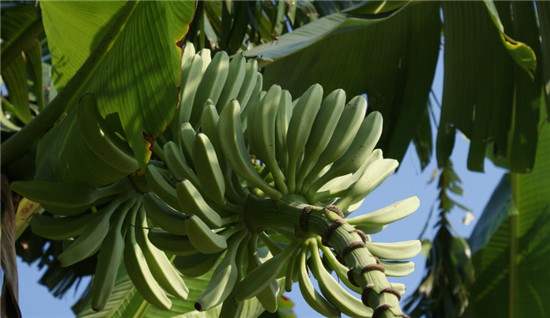
Male flowers are borne within the upper bracts, female flowers (occasionally bisexual flowers) within the lower bracts. The connate tepals are in the outer whorl, with 5 (3+2) teeth at the apex or deeply divided into 3 strips, the middle lobe flanked on each side by a small lobe or none, the outer teeth or tooth divisions with or without appendages. The free tepals are in the inner whorl, oblong to nearly round, entire or with a tail-like tip or with 3 points; in the latter case the lateral lobes are nearly round and the middle lobe is narrow and long with a long tip.
Cultivation techniques for the plantain tree:
During the growing period, yellow leaves should be cut off at any time, as they waste nutrients and affect the appearance. In the same spot, planting for too long tends to cause poor regrowth, so the planting site should be changed. Usually no particularly careful management is needed.
Cultural symbolism of the plantain tree:
It is often associated with loneliness and sorrow, especially the feelings of parting. In the south there is a string and bamboo music piece "Rain Beating the Plantain", expressing a desolate tone. Li Qingzhao once wrote: "Who planted the plantain tree before the window, its shade filling the courtyard. Its shade filling the courtyard, leaf by leaf, heart by heart, unfurling and rolling with feeling." She poured out all her grief and melancholy at once, resentful toward the plantain.
Wu Wenying's "Tang Duo Ling": "Where does sorrow come from? It is autumn on the parting heart. Even without rain, the plantain rustles." Ge Shengchong's "Dian Jiang Chun": "How much idle sorrow, dreams follow the plantain rain." Rain beating the plantain is desolate enough in itself, and a dream-soul following the sound of rain on the plantain leaves makes it feel even more sorrowful.
Main value of the plantain tree
The plantain is most suitable for planting in a corner of a small courtyard or by the wall beside a window, or beside a rockery. It should not be planted in rows; scattered planting or planting in clumps of a few plants is best, forming a canopy of green shade that brings a sudden sense of coolness in the heat of summer.
The plantain and the banana belong to the same family and look similar, but its fruit is not edible; it has a certain medicinal value. Its nature and flavor are sweet, very cold, and non-toxic.
Functions and main indications
1. All kinds of swelling and toxic lesions. Mash the plantain root and apply to the affected area.
2. Migratory red rubella. The treatment is the same as above.
3. Wind-fire toothache and toothache from decay. Take one bowl of juice from the plantain root, heat it and use it as a gargle.
4. Wasting-thirst, with vexing heat in the joints. Mash the plantain root for its juice and drink one or two ge at any time.
5. Bloody strangury with painful urination. Take equal parts plantain root and Hanliancao (Eclipta prostrata), decoct in water and take. Take twice a day.
6. Swelling and toxic lesions at their first onset. Burn the plantain leaf until its nature is retained, grind to a powder, and apply mixed with ginger juice.
7. Pain of heart blockage. Burn the plantain flower until its nature is retained and grind to a powder. Take two qian per dose, swallowed with salt water.
The above is the full content of the complete guide to the plantain tree that I have summarized for you. I hope this article can help everyone. Please also continue to follow us.