Detailed Guide to Cultivating Malus baccata (Siberian Crabapple) and Photo Appreciation
In fact, Malus baccata (Siberian Crabapple) is quite common in our daily life - it is the white-flowered crabapple, and I believe many people have been drawn in by its flowers and fragrance. Today, the editor will introduce the cultivation techniques for Malus baccata and photos of Malus baccata. Let's take a look together.
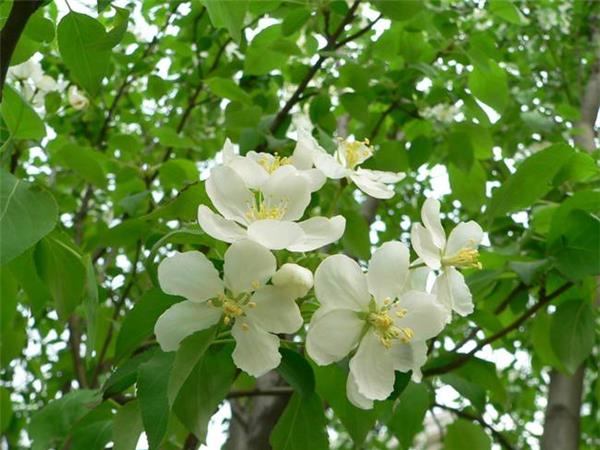
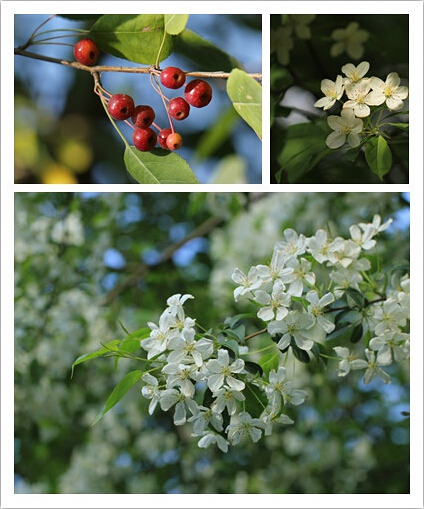
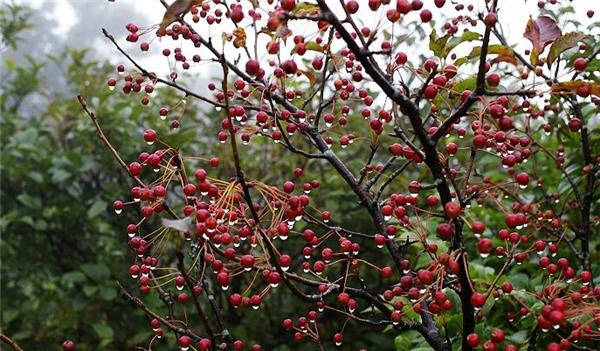
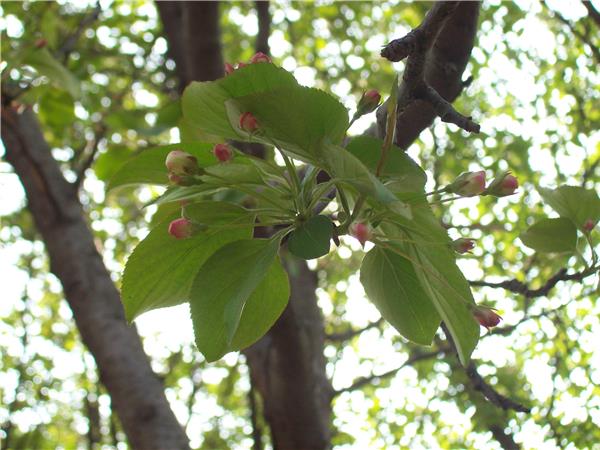
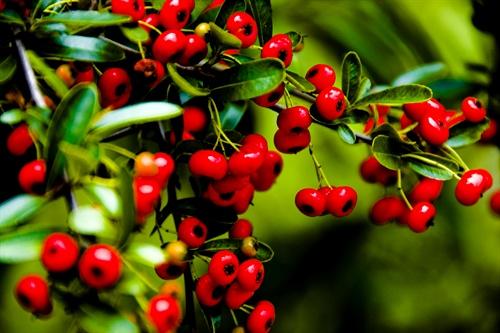
Malus baccata is a tree. Also known as: shandingzi, shandingzi. The trunk is grayish-brown, smooth, and not prone to cracking. New shoots are yellowish-brown and hairless. Young shoots are green with a slight reddish-brown tinge. The leaves are elliptical, with a gradually pointed tip and a wedge-shaped base, and the leaf margins have fine, sharp serrations. It bears umbel-like inflorescences with white flowers and obovate petals; the fruit is nearly spherical, red or yellow, with the stalk cavity and calyx cavity slightly sunken, and the sepals deciduous; the flowering period is April to June, and the fruiting period is September to October. It likes light, is cold-resistant, drought-resistant, has a deep root system, and a long lifespan. Malus baccata has a relatively attractive tree form, strong stress resistance, fast growth, and a large shade area, with spring flowers and autumn fruit, so it can be used as a street tree or a landscaping species. Shandingzi is the best raw material for winemaking and preparing pure green beverages, and its bark can be used as a dye. The shandingzi tree is also a grafting plant for fruit trees.
Cultivation Techniques for Malus baccata
1. Seed stratification treatment
2. Sowing and seedling-stage management
March 20 to 30 is the best sowing time. Before sowing, first make a seedling bed, plow deeply and harrow level, and make a 1.0 m x 10 m bed with a height of 10 cm. Irrigate thoroughly, then disinfect the bed surface with a 1:1 mixture of 40% quintozene powder and 65% zineb powder. Mix 8 g/sq m of the chemical with 4 kg of fine soil, blend evenly, and spread it on the bed surface. Take the stratified seeds together with the sand and evenly scatter them on the bed surface, then cover the seeds with a 1:1 mixture of fine soil and fine sand, covering with 0.5 cm of soil, at a sowing rate of 100 g/sq m. Finally, use locust tree branches to form arches and cover them with ordinary plastic film 1.2 m wide. About 7 days after sowing, the seedlings begin to emerge. Control the daytime temperature not to exceed 30°C, and keep the nighttime temperature not lower than 12°C, maintaining the bed surface soil moist. When the seedlings grow 3-6 leaves, they can be transplanted; if too late, it will affect seedling growth and be even less favorable for survival. From 15-20 d before transplanting, pay attention to controlling watering and ventilate to harden the seedlings. Remove the plastic film 7 days before planting, and spray once with 1000-fold Miaojundi solution to control damping-off. At the same time, add foliar fertilizer and spray together to promote seedling growth. Pull out weeds promptly when found.
The nursery site should be chosen in a leeward, sunny, flat area with convenient irrigation and drainage and a groundwater level below 1-1.5 m, in sandy loam or light clay loam. Combine deep plowing and land preparation, apply 3000-5000 kg/666.7 sq m of organic fertilizer, then make ridges with a row spacing of 60 cm. Open furrows 15 cm deep on the ridges, then pour water into the furrows, and plant the seedlings on both sides of the furrows to form large ridges with double rows, with a plant spacing of 6-7 cm. After planting, immediately earth up and close the ridges to help the seedlings recover. After that, irrigate or spray water about once every 4 days, and keep the soil from drying out within 30 days. 10 days after transplanting, promptly spray once a mixture of 1000-fold 50% carbendazim solution and 1000-fold imidacloprid solution to control diseases and pests. Later, decide whether to treat again according to the occurrence of diseases and pests. In addition, during the seedling stage, weeds should also be removed promptly, the soil loosened, and 1 soil topdressing or foliar fertilizer spray applied according to seedling growth.
1. Watering and fertilizing. Watering should keep the potting soil moist. In dry and midsummer weather, it is also necessary to spray water on the leaves and the ground to increase air humidity, which is beneficial to growth. Avoid water accumulation in the pot and rain exposure, otherwise root rot is likely. In winter, the potting soil is better kept slightly dry. Every 7 days, spray the leaves and the surrounding environment with clean water, which both increases humidity and keeps the leaves clean. During the growth period, apply dilute cake fertilizer water about once every 10 days; during the bud stage, apply a quick-acting phosphorus fertilizer as a topdressing. When fertilizing, note that the fertilizer liquid should not splash onto the leaves; do not fertilize during the flowering period or in winter and summer.
2. Light and temperature. The suitable temperature for the growth of Malus baccata is 18-20°C, in an environment with good ventilation and scattered light. In high-temperature seasons, measures such as shading, ventilation, and water spraying are needed; in winter, it is best to keep the room temperature above 10°C, and it can be placed in a sunny spot. When grown at home, during the growing season it should be placed outdoors in scattered light 1-2 times a week, and in winter it should be placed in a sunny, wind-sheltered spot.
3. Tying and repotting. Because Malus baccata plants are relatively tall, supports such as thin bamboo are needed to hold up the branches and prevent lodging. At the same time, every spring it is necessary to repot, change the soil, and prune the branches, cutting off weak branches, overlapping branches, and damaged roots. For plants that have already bloomed for 2-3 years and are too tall, short pruning should be carried out, leaving only 6-10 cm of the stem to let it sprout new branches again.
3. Tying and repotting. Because Malus baccata plants are relatively tall, supports such as thin bamboo are needed to hold up the branches and prevent lodging. At the same time, every spring it is necessary to repot, change the soil, and prune the branches, cutting off weak branches, overlapping branches, and damaged roots. For plants that have already bloomed for 2-3 years and are too tall, short pruning should be carried out, leaving only 6-10 cm of the stem to let it sprout new branches again.