What is the flower language and symbolic meaning of snapdragon?
In recent years, snapdragons have become widely popular, whether as potted ornamental plants or as cut flower plants, they are much loved by people. And snapdragons are not only brightly colored with beautiful flower shapes, but also carry excellent symbolic meanings. Below let us learn together what the snapdragon flower language is? What about the snapdragon blooming period? When do snapdragons bloom?
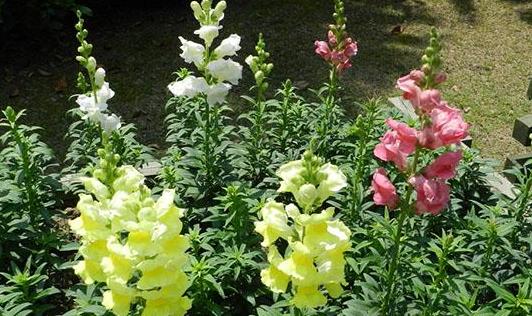
Snapdragon symbolism
Snapdragons symbolize having gold and surplus, prosperity and liveliness, and are an auspicious flower.
Red snapdragon flower language: good fortune ahead;
Pink snapdragon flower language: blooming flowers and full moon, good luck and happiness;
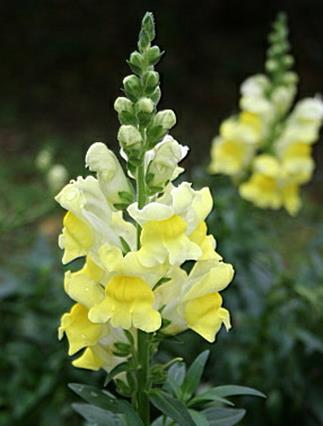
Yellow snapdragon flower language: gold and silver filling the hall;
Purple snapdragon flower language: great popularity and prominence;
Variegated snapdragon flower language: huge profits from a small investment.
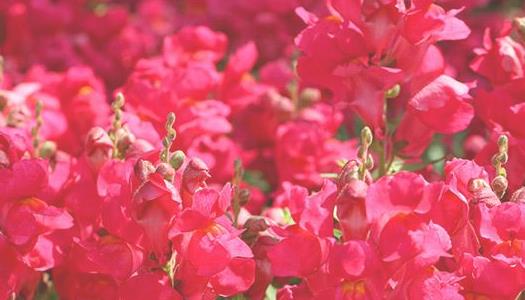
When is the snapdragon blooming period
When seedlings are raised in cold frames in early spring or sown in spring and summer, they can bloom in June-July or September-October; of course, this situation will not grow as well as autumn sowing, and the blooming period is shorter. Generally speaking, sowing snapdragon seeds in autumn brings flowers the following year, and after light pruning they can bloom continuously until late autumn, with very beautiful flowers.
In addition, for those used as cut flowers in winter, they are often sown in late summer, cultivated in the open field, moved into a greenhouse when autumn turns cool, and kept at 22°C during the day and above 10°C at night in both autumn and winter, and they can also bloom successively in December. Strictly speaking, the suitable temperature for snapdragon blooming is 15-16°C, and it is a light-loving herbaceous plant. Under sufficient sunlight, the plants are dwarf, compact in clumps, grow neatly, are uniform in height, bloom uniformly, and have bright flower colors.
The charm of snapdragons
Snapdragons have unusual flower shapes, elegant and rich patterns, and a long blooming period, making them one of the most common herbaceous flowers in gardens. Internationally they are widely used for potted plants, flower beds, windowsills, planting troughs and indoor landscape arrangements, and in recent years they have also been used for cut flower appreciation. Therefore, the improvement of snapdragon varieties has progressed very rapidly, with the United States developing fastest so far; in addition to dwarf varieties, semi-dwarf varieties and tall-stemmed varieties, there are now ultra-dwarf varieties with a plant height of 10 cm, and many belong to tetraploid varieties.
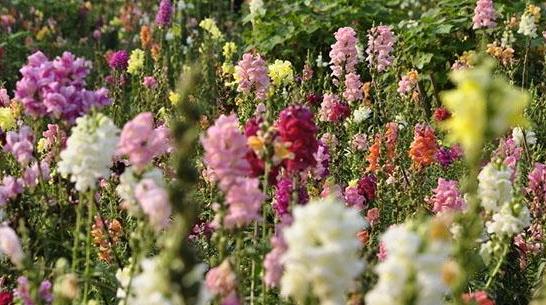
Snapdragon legend
Snapdragon - gold and silver filling the hall
Legend has it that a goldfish fell in love with a boy. The boy came to the lake to fish every day, and the goldfish would punctually watch the boy underwater whenever he came. One day the goldfish waited for the boy, but the boy never appeared again. After a long time, a flower shaped like a fish grew by the lake, gazing toward the lake and waiting for the boy to appear.
Red snapdragon - good fortune ahead
Caesar, leader of the ancient Roman Republic, wore a wreath of fiery red snapdragons before every expedition and after every victory. Caesar believed this flower could bring courage and victory to him and his soldiers.
White snapdragon - lively and bustling
It is said that Princess Elisabeth of the Bourbon dynasty loved horticulture and cultivation from childhood and was skilled in the art of flower arranging. After the French Revolution broke out, the princess still went her own way. Even when she was executed by the revolutionaries, she still had her garden on her mind and calmly said to the executioner, would you like to go see my garden? It is much more beautiful than this world. The plank beneath the princess's feet was removed, yet not a trace of pain could be seen on her face.
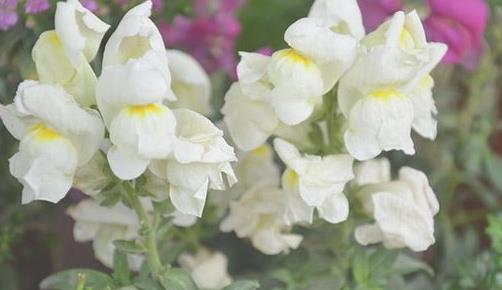
How to grow snapdragons
1. Sow at the right time
Snapdragons can be propagated by sowing and cuttings, but sowing propagation is the main method, and sowing is usually best in mid-September. The sowing substrate uses sterilized humus soil or peat soil, generally using a shallow pot with a 30 cm diameter. Before sowing, fill the pot with soil, leaving 1-2 cm at the rim. Then gently press the pot soil level and sow. After sowing, cover with a thin layer of fine soil, then gently firm it with a wooden board so that the seeds and soil are closely combined. After sowing, place the pot in a water basin and let water seep upward from the bottom until the entire soil surface is moist, then cover the pot surface with glass to reduce water evaporation, and finally place the pot in a shady place.
2. Management after sowing
Management after sowing is mainly water management; watering should be even, and the pot surface should not be allowed to become too dry or too wet. Remove the glass at night to allow ventilation, then cover it again during the day to prevent water evaporation. After sowing, the seeds can sprout and emerge in 7 or 8 days. After the seedlings emerge, the glass can be removed to let them receive light.
3. Transplanting
When the seedlings grow 4-5 true leaves, they can be moved into flower pots with a diameter of 8-12 cm, and the pot soil should preferably use a mixture of 7 parts humus soil and 3 parts garden soil. When watering the seedlings, a watering can is suitable, and watering should continue until thoroughly soaked. As the seedlings gradually grow, change the pot once more and plant them permanently in flower pots with a diameter of 20-24 cm.
4. Temperature and humidity
Snapdragons are relatively cold-tolerant and also tolerate semi-shade. They can withstand low temperatures above -5°C, but below -5°C they are prone to freezing to death. Snapdragons tolerate moisture and fear drought. During maintenance and management, watering must follow the principle of "water when dry, stop when wet," spraying water once about every 2 days.
5. Reasonable fertilization
Fertilizer and water management should be strengthened. Fertilization should pay attention to the combination of nitrogen, phosphorus and potassium. Snapdragons have root nodules and have their own nitrogen-fixing ability, so under normal circumstances there is no need to apply nitrogen fertilizer; appropriately increasing phosphorus and potassium fertilizer is enough. During the growing period, apply fermented oil residue water once every half month together with watering. When flower buds appear, spraying with a 1-2% potassium dihydrogen phosphate solution is even better. Before each fertilization, loosen the soil and remove weeds.
6. Suitable pruning
When snapdragon seedlings grow to about 10 cm, pinching can be done to reduce plant height, increase the number of side branches, and increase flowers. When pruning, cut off diseased and weak branches, dead old branches and overly dense branches. After each blooming, cut off the branches that have already bloomed to encourage new branches to sprout and continue blooming.
Precautions for growing snapdragons
1. The cultivation substrate should choose loose, fertile, well-drained culture soil, or evenly mix leaf mold, peat and plant ash. Before planting, apply some dry livestock manure or cake fertilizer powder, and add a little bone meal or superphosphate as base fertilizer.
2. After planting, water thoroughly, and afterward water whenever the pot soil becomes dry
3. After planting, water thoroughly, and afterward water whenever the pot soil becomes dry
4. After blooming, water thoroughly once, and apply a dilute liquid fertilizer once about every 10 days until flower buds form. Usually pay attention to moderate watering, and in summer provide appropriate shading and cooling.
Summary: Snapdragon flowers are very beautiful, which is why they are so loved, and the meanings snapdragons represent are also very beautiful, which makes them even more beloved. The above text introduces the snapdragon flower language and the snapdragon blooming period. We hope the above content is helpful to everyone.
When watering the seedlings, a watering can is suitable, and watering should continue until thoroughly soaked. As the seedlings gradually grow, change the pot once more and plant them permanently in flower pots with a diameter of 20-24 cm.4. Temperature and humidity
Snapdragons are relatively cold-tolerant and also tolerate semi-shade. They can withstand low temperatures above -5°C, but below -5°C they are prone to freezing to death. Snapdragons tolerate moisture and fear drought. During maintenance and management, watering must follow the principle of "water when dry, stop when wet," spraying water once about every 2 days.
5. Reasonable fertilization
Fertilizer and water management should be strengthened. Fertilization should pay attention to the combination of nitrogen, phosphorus and potassium. Snapdragons have root nodules and have their own nitrogen-fixing ability, so under normal circumstances there is no need to apply nitrogen fertilizer; appropriately increasing phosphorus and potassium fertilizer is enough. During the growing period, apply fermented oil residue water once every half month together with watering. When flower buds appear, spraying with a 1-2% potassium dihydrogen phosphate solution is even better. Before each fertilization, loosen the soil and remove weeds.
6. Suitable pruning
When snapdragon seedlings grow to about 10 cm, pinching can be done to reduce plant height, increase the number of side branches, and increase flowers. When pruning, cut off diseased and weak branches, dead old branches and overly dense branches. After each blooming, cut off the branches that have already bloomed to encourage new branches to sprout and continue blooming.
Precautions for growing snapdragons
1. The cultivation substrate should choose loose, fertile, well-drained culture soil, or evenly mix leaf mold, peat and plant ash. Before planting, apply some dry livestock manure or cake fertilizer powder, and add a little bone meal or superphosphate as base fertilizer.
2. After planting, water thoroughly, and afterward water whenever the pot soil becomes dry
3. After planting, water thoroughly, and afterward water whenever the pot soil becomes dry
4. After blooming, water thoroughly once, and apply a dilute liquid fertilizer once about every 10 days until flower buds form. Usually pay attention to moderate watering, and in summer provide appropriate shading and cooling.
Summary: Snapdragon flowers are very beautiful, which is why they are so loved, and the meanings snapdragons represent are also very beautiful, which makes them even more beloved. The above text introduces the snapdragon flower language and the snapdragon blooming period. We hope the above content is helpful to everyone.