How to grow Ixora? Detailed guide to cultivation methods and precautions
The Ixora, with its attractive plant shape, dense blooms and extremely rich flower colors, offers flowers to enjoy all year round and is an important potted woody flowering plant, now widely used by people for potted display. But do you know exactly what the cultivation methods and precautions for Ixora are? Let us take a look together.
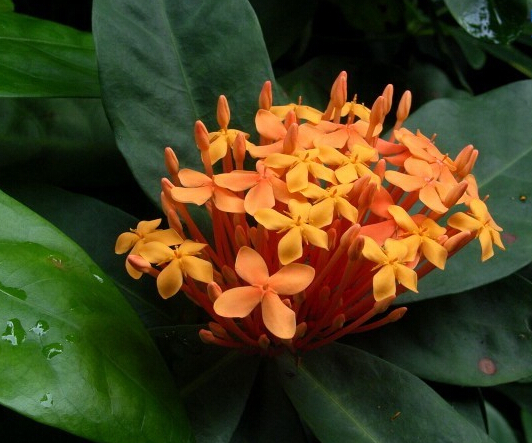
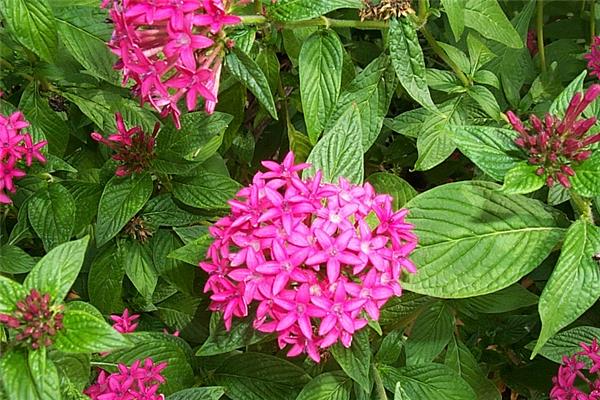
Ixora is also called Yingdan, Chinese ixora, hundred-day red, Shandan, Yingdan flower, water hydrangea, and hundred-day red. It has an attractive plant shape, dense blooms and rich flower colors, with flowers to enjoy all year round, and is an important potted woody flowering plant. It is the national flower of Myanmar. The plant is low-growing, with elegant flowers and leaves and rich colors, including red, orange, yellow, white and bicolor. Ixora has a relatively long flowering period, and can bloom from March to December every year.
Cultivation methods for Ixora
1. Soil: The best soil is fertile, loose, well-drained acidic sandy loam. For potting, use a mixed soil of culture soil, peat soil and coarse sand, with a pH of 5-5.5 being suitable.
2. Watering: Ixora likes moisture and fears dryness. During the growth period of stems and leaves, it needs sufficient water, and keeping the pot soil moist is beneficial for shoot sprouting and leaf growth. However, being too moist for a long time easily causes part of the root system to rot, affecting growth and flowering. If the soil is too dry or alternately dry and wet, and water supply is not timely, leaf drop will occur.
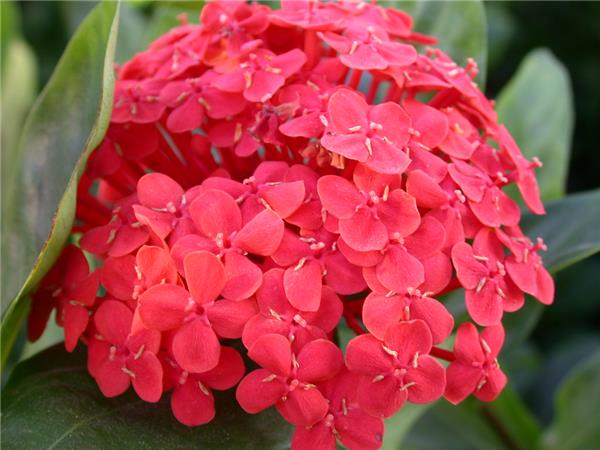
4. Temperature: The suitable growth temperature for Ixora is 15-25°C, from March to September it is 24-30°C, and from September to the following March it is 13-18°C. In winter the temperature should not be lower than 0°C, as too low a temperature makes it susceptible to freezing damage. On the contrary, Ixora is tolerant of high temperatures and grows normally above 32°C. Overall, Ixora has relatively strong adaptability to temperature.
5. Fertilizing: During the growth period, apply once every half month a liquid fertilizer made by mixing nitrogen, phosphorus, potassium, ferrous sulfate and horseshoe slices in a ratio of 1:1:1:2:3, adding water, and then decomposing and fermenting it.
6. Pruning: Pruning is mostly carried out in spring after the plants are moved outdoors, mainly to properly thin out the branches of the plant to facilitate ventilation and light penetration. In addition, appropriate pinching during the flowering period can make it produce more buds and flowers.
8. Propagation: Ixora is best propagated by cuttings. This method is easy to root, and the adult plants flower very quickly. Cuttings should be taken in March and April each year, and two-year-old branches that have already become woody are best. About 35 days after cutting, the Chinese ixora will take root, and after 60 days the seedlings can be transplanted into pots.
Precautions for growing Ixora
Ixora likes a warm, humid and sunny environment. It is not cold-tolerant, tolerates semi-shade, and does not tolerate waterlogging or strong light. The suitable growth temperature for Ixora is 15-25°C, from March to September it is 24-30°C, and from September to the following March it is 13-18°C. In winter the temperature should not be lower than 0°C, as too low a temperature makes it susceptible to freezing damage. On the contrary, Ixora is tolerant of high temperatures and grows normally above 32°C.
Overall, Ixora has relatively strong adaptability to temperature. Ixora likes moisture and fears dryness. During the growth period of stems and leaves, it needs sufficient water, and keeping the pot soil moist is beneficial for shoot sprouting and leaf growth. However, being too moist for a long time easily causes part of the root system to rot, affecting growth and flowering. If the soil is too dry or alternately dry and wet, and water supply is not timely, leaf drop will occur.
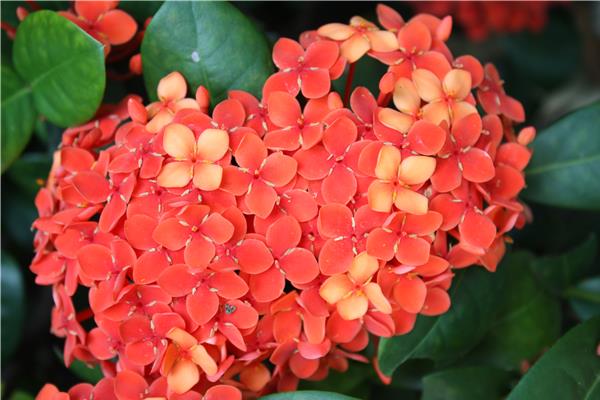
The cultivation soil for Ixora is best as fertile, loose, well-drained acidic sandy loam. For potting, use a mixed soil of culture soil, peat soil and coarse sand, with a pH of 5-5.5 being suitable.
The flower language of Ixora
The flower language and symbolic meaning of Ixora: striving to be first. As the saying goes, the moon is not full for a hundred days, and a flower is not red for a hundred days, but the national flower of Myanmar, Ixora, is precisely because of its relatively long flowering period called "hundred-day red" by people.
Legend: When Ixora has not yet bloomed, it looks very much like tiny slender hairpins piercing straight into the blue sky; after blooming, its four petals spread flat into crosses. In ancient times, the cross pattern represented talismans for warding off evil and driving away demons and eliminating plague. Therefore, during the Dragon Boat Festival each year, the ordinary people rowing dragon boats, in order to ward off evil and drive away demons, eliminate plague and seek good fortune, inserted this flower together with calamus and mugwort on the dragon boats. Over time, it came to be called the dragon boat flower.
But the national flower of Myanmar, Ixora, is precisely because of its relatively long flowering period called "hundred-day red" by people.
Legend: When Ixora has not yet bloomed, it looks very much like tiny slender hairpins piercing straight into the blue sky; after blooming, its four petals spread flat into crosses. In ancient times, the cross pattern represented talismans for warding off evil and driving away demons and eliminating plague. Therefore, during the Dragon Boat Festival each year, the ordinary people rowing dragon boats, in order to ward off evil and drive away demons, eliminate plague and seek good fortune, inserted this flower together with calamus and mugwort on the dragon boats. Over time, it came to be called the dragon boat flower.