How to Make and Care for a Serissa Bonsai
Have you heard of the flower called Serissa? Though snow in June is uncommon, we can still encounter this plant called Serissa. Serissa is an evergreen small shrub in the Rubiaceae family, blooming in June. From a distance it looks as if wrapped in silver, like snow falling in June, elegant and lovely, hence its name. Below, the editor will tell you how to make and care for a Serissa bonsai.
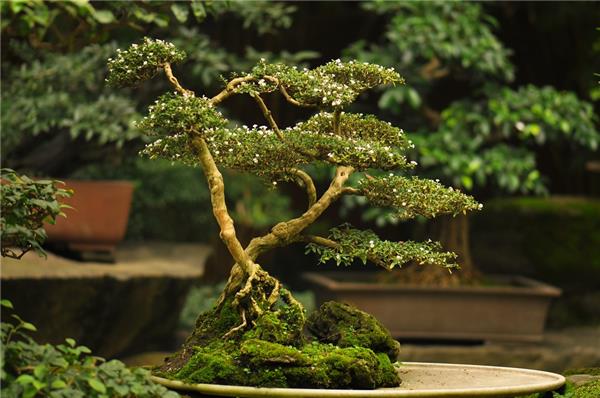
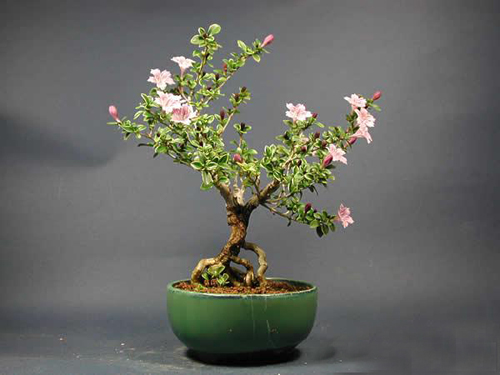
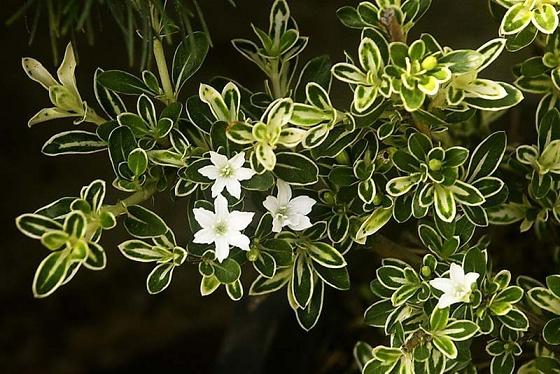
Belongs to the Rubiaceae family, genus Serissa. An evergreen small shrub with many dense branches. The leaves are small, opposite, slightly leathery, ovate or oblong-elliptic, with entire margins, and the surface is deep green. In summer, from June to July, small white flowers grow in the leaf axils or at the tips; the flowers are white with a red flush or pale pink-purple, solitary or clustered in groups, with funnel-shaped corollas. When in full bloom, they look like scattered snowflakes, hence the name "June snow."
Serissa likes sunlight and is also fairly shade-tolerant; it dislikes fierce winds and scorching sun, and in hot summer weather it should be given light shade. Serissa is best planted by division in spring, or propagated by cuttings during the plum rain season, and watered with weak tea. It is not strict about temperature; in South China it is evergreen, and in Southwest China it is semi-evergreen. It has strong drought tolerance and is not strict about soil. For potted Serissa, a humus-rich, loose, fertile, highly permeable, slightly acidic, moist growing medium will help it grow well.
Making a Serissa Bonsai
Making a Serissa bonsai roughly goes through the following stages: source of stock material, processing and shaping, transplanting into a pot, water and fertilizer management, light and temperature requirements, repotting and pruning, and pest and disease control. At present, there are two common Serissa varieties on the market: one is the clumping type with slightly reddish flowers shaped like trumpets, which is an inferior variety; the other is the single-trunk small-tree form with pure white double flowers, which is a superior variety.
2. Processing and shaping: use the "grow-out and trunk-chopping method," or the "combined pruning and wiring method." Wiring is usually done from winter, when the plant is semi-deciduous, until before buds break in spring; the main trunk and main branches of Serissa are wired with metal wire, and the small branches are shaped through fine pruning.
3. Transplanting into a pot: best done in February to March, using a relatively shallow purple clay pot or glazed pot; the pot color should be somewhat darker to contrast with the flower color. The potting soil should be a sandy loam rich in organic matter, loose and fertile, with good drainage and aeration.
4. Light and temperature requirements: during the growing season, Serissa should be placed in a spot with ample sunlight, warm and humid conditions, and good ventilation. In summer and early autumn it should be shaded by 50%-70%, and in winter in the north the room temperature should be kept at 5-12°C.
5. Water and fertilizer management: during the growing season, the Serissa bonsai should be watered frequently, and it should not be kept too dry or too wet for long periods. In summer, spray water on the leaves 1-2 times a day; in winter, reduce watering frequency and just keep the potting soil moist and slightly on the dry side. From April to May each year, apply 2-3 times a 0.5% concentration phosphorus-potassium fertilizer solution; in midwinter, apply 1-2 times a dilute organic fertilizer solution; do not fertilize in other seasons. Avoid applying concentrated fertilizer.
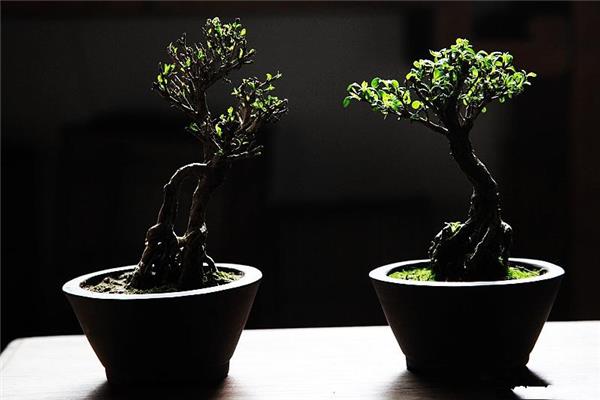
6. Repotting and pruning: repot once every 1-2 years, in spring during February to March or in late autumn, removing all the old soil and appropriately pruning the roots. Repotting can be combined with raising the roots to form exposed roots and increase ornamental value. Every year, from after the semi-deciduous period in winter until before buds break the following spring, carry out shaping and pruning: shorten long branches and water sprouts, thin out overly dense fine weak branches, and cut off diseased and pest-damaged branches as well as other messy branches that affect the ornamental effect; during the growing season, promptly pinch tips, remove buds, and thin out branches to maintain a graceful shape.
7. Pest and disease control: Serissa bonsai occasionally suffers from aphids and snails. Aphids can be killed by spraying a 500-600 times diluted essential balm solution; snails can be killed by spraying a 1500 times diluted 58% Fenglei Ji emulsifiable concentrate. It sometimes gets root rot; at the early stage of the disease, use a 600-1000 times diluted 12% copper abietate emulsifiable concentrate, or a 800 times diluted 50% Genfuling solution, to drench the roots and spray the leaves for control, spraying (drenching) once every 3-5 days, for 3-4 consecutive applications.
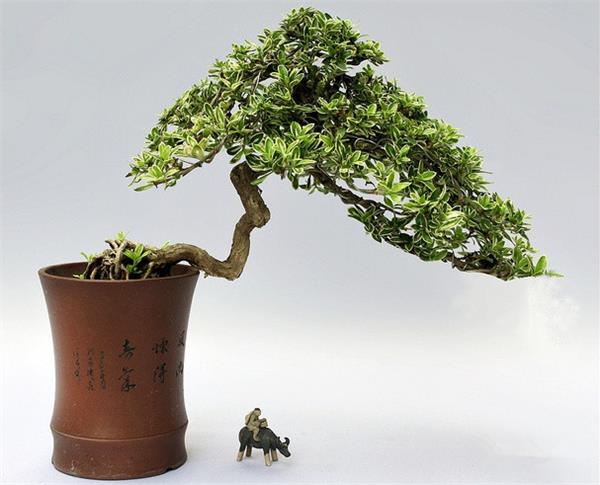
Making a Serissa bonsai takes considerable time, so care cannot be careless either, otherwise it will affect the bonsai's visual appeal. Only by understanding Serissa's growth habits can you better care for it.
Serissa likes sunlight and is also fairly shade-tolerant; it dislikes fierce winds and scorching sun, and in hot summer weather it should be given light shade. Serissa is best planted by division in spring, or propagated by cuttings during the plum rain season, and watered with weak tea. It is not strict about temperature; in South China it is evergreen, and in Southwest China it is semi-evergreen. It has strong drought tolerance and is not strict about soil. For potted Serissa, a humus-rich, loose, fertile, highly permeable, slightly acidic, moist growing medium will help it grow well.
For cultivating Serissa bonsai, soft mountain soil must be used, and it should be placed in a sunny spot; it cannot be kept indoors for long periods. During the growing season, fertilizer should be applied 1-2 times; the potting soil is best kept slightly dry, as too much or too concentrated fertilizer and water will cause leggy branches and leaves. In addition, to ensure the Serissa bonsai has a well-proportioned and full shape, pruning and shaping for artistic effect are also needed.
The Serissa bonsai should be kept in a fixed position and not moved around frequently, as Serissa is particular about phototropism. On summer days under scorching sun, shade it from above and keep it ventilated, spray water on its leaves 1 to 2 times a day, and maintain air humidity. In severe cold, it can be lightly wrapped with rice straw (at around -10°C) to prevent it from freezing to death.
It should be placed in a sunny spot and cannot be kept indoors for long periods. During the growing season, fertilizer should be applied 1-2 times; the potting soil is best kept slightly dry, as too much or too concentrated fertilizer and water will cause leggy branches and leaves. In addition, to ensure the Serissa bonsai has a well-proportioned and full shape, pruning and shaping for artistic effect are also needed.
The Serissa bonsai should be kept in a fixed position and not moved around frequently, as Serissa is particular about phototropism. On summer days under scorching sun, shade it from above and keep it ventilated, spray water on its leaves 1 to 2 times a day, and maintain air humidity. In severe cold, it can be lightly wrapped with rice straw (at around -10°C) to prevent it from freezing to death.