How to grow String of Pearls? Growing methods and things to note
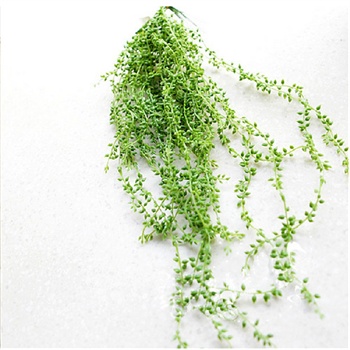
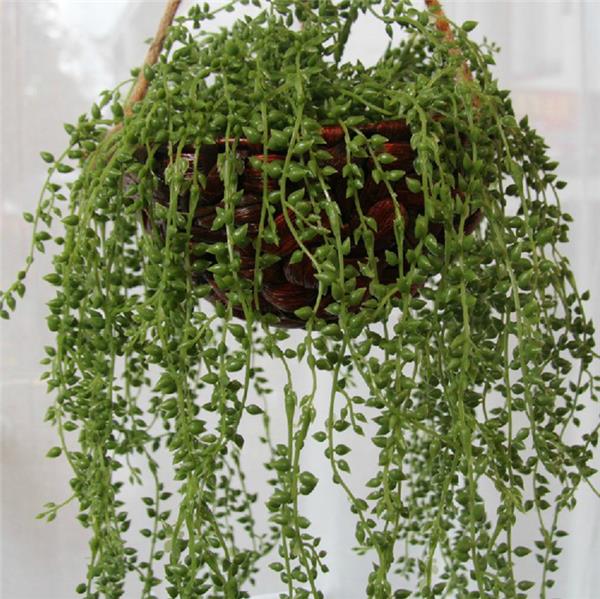
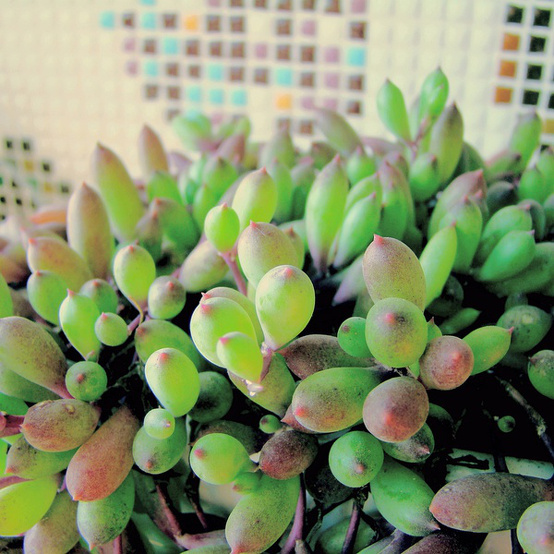
String of Pearls is a plant in the Asteraceae family, made up of strings of plump, emerald-green oval little leaves. Its stems grow downward, forming numerous trailing vines like beads. Its flowers are white or brown, and the buds are fine red strips, making it look like strings of pearls hanging down. Below, the editor will teach everyone how to grow String of Pearls.
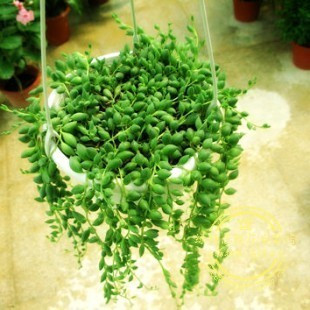
String of Pearls is also known as Jade Beads, Pearl Spider Plant, Buddhist Bead Spider Plant, Jade Beads, Green Bell, Green Bell and other names. It originates from southern Africa. Because it is a spider-plant-like plant, it is widely cultivated around the world. String of Pearls has a very strong ability to absorb toxic gases, so the spider plant also has the reputation of being a "green purifier." String of Pearls relatively likes warm, humid, and semi-shaded environments. It likes soil rich in organic matter, loose and fertile. It generally grows best in medium-light locations. But String of Pearls is still relatively adaptable, and is fairly drought-tolerant and cold-tolerant.
How to grow String of Pearls
When caring for String of Pearls, watering should prefer dry over wet; this is one of the keys to success. When the weather is dry, you can spray more water on the leaves and vines to make up for the lack of moisture and keep the beads green and plump. Avoid shade, avoid high temperature and high humidity. It relatively prefers semi-shade; exposure to strong sun may scorch the beads, while too weak light will make growth weak.
1. Because the leaves are fleshy and juicy, it is drought-tolerant. During cultivation, watering should prefer dry over wet; this is one of the keys to success. When the weather is dry, you can spray more water on the leaves and vines to make up for the lack of moisture and keep the beads green and plump. It relatively prefers semi-shade; exposure to strong sun may scorch the beads, while too weak light will make growth weak.
2. The plant's root system is very shallow, so it can be planted in a shallow pot. Generally, use a tile to cover the bottom hole, and spread a layer of coal cinder or coarse sand to increase air permeability and drainage (especially when using the commonly seen plastic pots for planting), and the soil is best leaf mold soil (fallen leaves of trees in autumn and winter mixed with a certain amount of broken soil and left exposed to rain and dew for a year before use, then mix in a certain amount of sand (soil-to-sand ratio about 1:3).
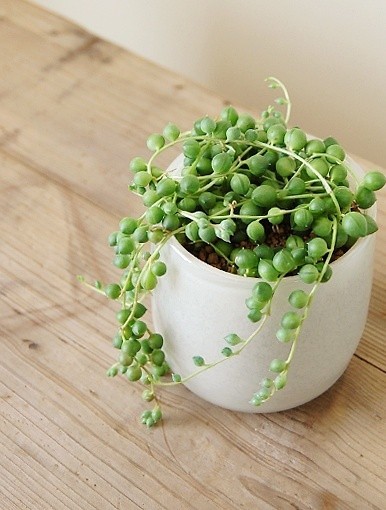
4. In spring and autumn, when growth is vigorous, fertilizer should be applied "lightly and frequently." Often spraying 1-3‰ nitrogen fertilizer and potassium dihydrogen phosphate on the leaf surface helps make the beads greener and plumper and improves ornamental value.
5. There are rarely pests or diseases. Aphids in spring are one of them; remove them promptly by hand or spray 1500-times omethoate to kill them. Mites in summer and autumn are another; they need to be killed with 1000-times dicofol. Pay attention to ventilation and increase leaf-surface humidity to reduce mite infection.
6. String of Pearls can be propagated by cuttings. The vines very easily produce aerial roots. In spring and autumn, cut off a few sections and bury half into sand or loose soil, keeping it moist but not waterlogged, and they will soon take root for planting (about half a month in spring and autumn, while rooting is not easy in winter and summer. When the potted plant is not even and full enough but has grown too long, this measure can be used to make up for it.)
1. Watering: String of Pearls has thick, juicy flesh and relatively strong drought tolerance, but its rot resistance is somewhat weak. Therefore, in daily watering, the principle of preferring dry over wet should be followed, especially in summer, which is most likely to cause root rot. When watering, it is best to use a spraying method. String of Pearls likes a semi-shaded environment; whether high temperature or excessive shade will affect its growth.
2. Fertilizing: Fertilizing needs to follow "light fertilizer, frequent application," applying fertilizer in multiple portions and small amounts. Generally, 1-3‰ nitrogen fertilizer and potassium dihydrogen phosphate are applied, which can promote leaf growth.
3. Environment: String of Pearls likes a warm, humid environment and grows best at 20-28°C. If the temperature is too high, the spider plant will adaptively go dormant. At this time, its need for water and fertilizer is very small, so watering and fertilizing can be reduced, otherwise it will cause root rot.
5. Soil: The soil is best leaf mold soil, which can provide the nutrients needed for plant growth. The soil requirements are not high; the most important thing is its air permeability and drainage.
The price of String of Pearls
String of Pearls is an ornamental plant, an ideal flower for hanging baskets at home, and it is also often used for indoor greening. Spider plants have the function of absorbing harmful toxic gases such as benzene and formaldehyde. The price of one pot of String of Pearls is between 10-35 yuan. Friends who want to grow potted plants at home can choose a pot of String of Pearls to place at home for viewing and to purify the air at home.
It must be killed with 1000-times dicofol. Generally, mites are caused by insufficient leaf-surface humidity and poor ventilation.
5. Soil: The soil is best leaf mold soil, which can provide the nutrients needed for plant growth. The soil requirements are not high; the most important thing is its air permeability and drainage.
The price of String of Pearls
String of Pearls is an ornamental plant, an ideal flower for hanging baskets at home, and it is also often used for indoor greening. Spider plants have the function of absorbing harmful toxic gases such as benzene and formaldehyde. The price of one pot of String of Pearls is between 10-35 yuan. Friends who want to grow potted plants at home can choose a pot of String of Pearls to place at home for viewing and to purify the air at home.