How to Grow Pitcher Plants: How to Care for the Cobra Lily
Nowadays many people like growing carnivorous plants such as pitcher plants and tropical pitcher plants (monkey cups), feeling that the life of these tiny plants is very lovable. Below, the editor will introduce how to grow pitcher plants and how to care for the cobra lily. We hope this helps everyone.
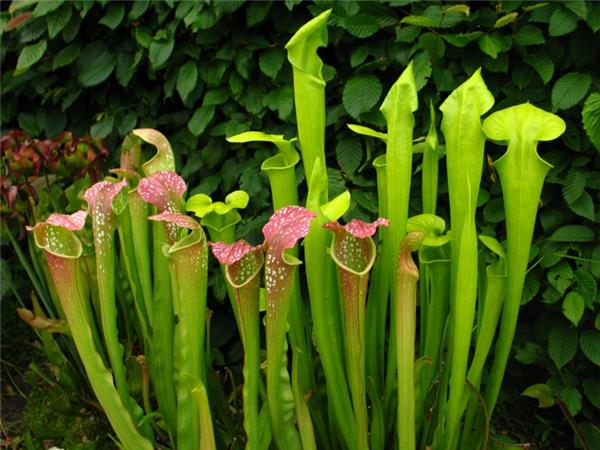
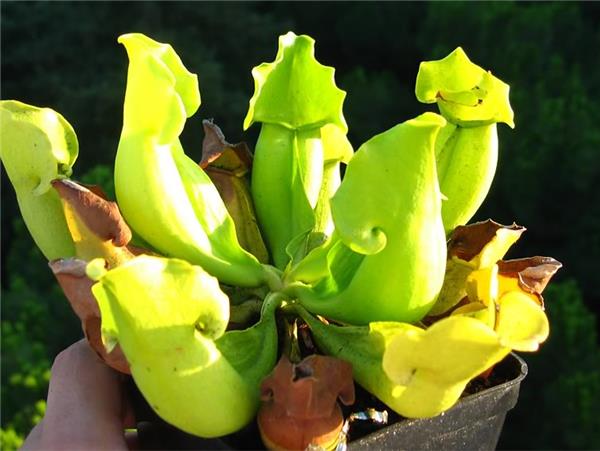
Pitcher plant (scientific name: Sarracenia purpurea), also known as purple pitcher plant, purse pitcher plant, dwarf pitcher plant. Family Sarraceniaceae, genus Sarracenia. A perennial evergreen herbaceous plant, with a plant height of 10-20 cm. No rosette. The leaves grow from the rhizome, and the leaves are of two types: the leaves that grow in spring are tubular, hollow like a small pitcher, with a lid leaf at the opening; the lid and the pitcher mouth have beautiful purple veining, and the exterior is green or red; the leaves that grow in midsummer are sword-shaped. The flowers are small, solitary, and purple. Capsule. It likes a warm, humid, and semi-shaded environment. It is relatively cold-tolerant, needs warmth in winter, and prefers coolness in summer; it is not tolerant of drought or high temperatures and is afraid of direct strong light. The optimum growth temperature in summer is 19-25°C, and the winter temperature should not be lower than 4°C. From November to early March of the following year is the dormant period, during which a certain humidity should be maintained and it must not be allowed to dry out. It likes loose, infertile acidic soil.
How to Grow Pitcher Plants
Temperature: It likes warmth in winter and coolness in summer. The suitable growth temperature is 10-20V, and it is relatively cold-tolerant. In winter, the plant is in its dormant period, and the temperature should not be lower than -5°C, but it is best to maintain a temperature above 8C. In summer, it is not tolerant of drought or high temperatures; the suitable growth temperature is 20-26°C. When temperatures are high, measures such as shading, misting the environment, and increasing ventilation should be used to create a relatively cool environment.
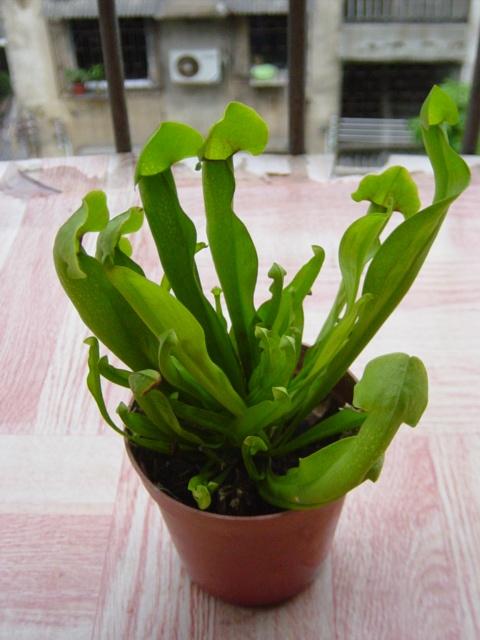
Watering: It likes a moist soil environment and is not tolerant of drought. During the growing period, water abundantly to keep the substrate moist. In winter, control watering; slightly moist is enough. In summer, prevent the water temperature from getting too high, otherwise it will cause root rot. Rainwater is preferable for watering; do not irrigate with water containing lime.
Environmental humidity: It likes a humid environment and is not tolerant of dryness. During the growing period, frequently spray water on the plant and around it to keep the environment moist. In summer, spraying more water on the leaf surface can lower the environmental temperature and also avoid the adverse effects of hot dry winds on the plant.
Fertilizing: In spring, apply a nitrogen-based fertilizer once every half month. You can water the roots with a 0.2%-0.3% fertilizer solution, or directly pour the diluted fertilizer solution into the pitcher to let it absorb it. For varieties with red leaves and red veins, pay attention to the balance of nitrogen, phosphorus, and potassium so that the leaf color is vivid and the ornamental value is improved. Do not apply nitrogen fertilizer alone or in excess, otherwise the leaf color will become pale and lose its green. Fertilizing should be light rather than concentrated; concentrated fertilizer easily causes fertilizer burn. During winter dormancy, fertilizing should be stopped.
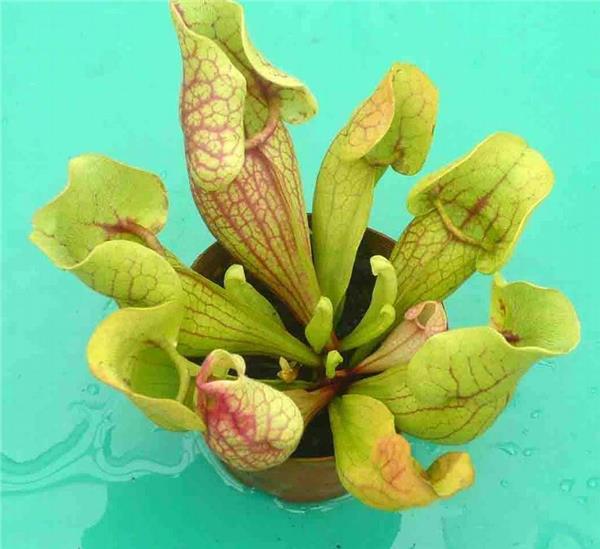
Pest and disease control: It is harmed by pests and diseases such as leaf spot disease, root rot, aphids, scale insects, and red spider mites.
How to Care for the Cobra Lily
1. Substrate
Peat, sand, sphagnum moss, peat, perlite, coconut husk, etc.
2. Watering
Soft water is needed for irrigation, such as rainwater, distilled water, reverse osmosis deionized water, etc. Tap water in some areas contains large amounts of minerals (especially calcium salts). These calcium salts will precipitate out and kill the plant. This is because most carnivorous plants have adapted to infertile acidic soil, so they are extremely calcifuge plants, and therefore they are very sensitive to nutrients in the soil.
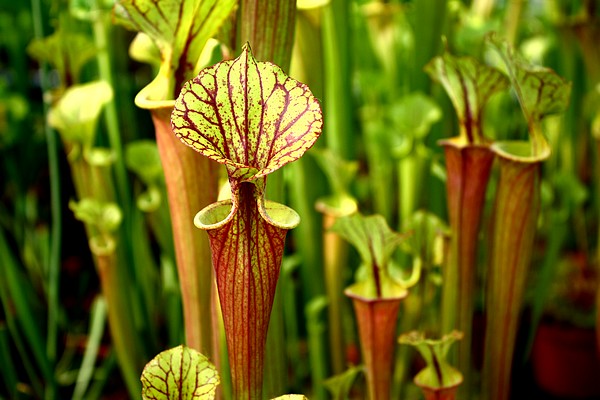
It is cold-tolerant and afraid of heat. In particular, the roots must be kept ice-cold, and there should be a large temperature difference between day and night; it can survive between -10 degrees and 30 degrees, and 15 to 27 degrees is the most suitable temperature for its growth. It likes strong light. When the temperature is not too high, it can be exposed to sunlight, and the top of the plant will show a red network pattern, which is very beautiful.
4. Pests and diseases
It is easily attacked by aphids or mealybugs. Minor infestations should be removed by hand, while larger infestations should be treated with insecticides as appropriate. Isopropyl alcohol is an effective insecticide against scale insects. Diazinon is also a broad-spectrum insecticide tolerated by most carnivorous plants. Malathion and acephate are likewise suitable for carnivorous plants.
Although pests are a problem, the biggest problem is gray mold. It develops in warm, humid environments and becomes a serious problem in winter. Placing it in a cool, well-ventilated environment and promptly removing diseased branches can suppress the development of gray mold to a certain extent. If this fails, fungicides should be used as appropriate.
Minor infestations should be removed by hand, while larger infestations should be treated with insecticides as appropriate. Isopropyl alcohol is an effective insecticide against scale insects. Diazinon is also a broad-spectrum insecticide tolerated by most carnivorous plants. Malathion and acephate are likewise suitable for carnivorous plants.
Although pests are a problem, the biggest problem is gray mold. It develops in warm, humid environments and becomes a serious problem in winter. Placing it in a cool, well-ventilated environment and promptly removing diseased branches can suppress the development of gray mold to a certain extent. If this fails, fungicides should be used as appropriate.