Cosmos Seed Planting Methods and Price Guide
Cosmos is very popular, but growing beautiful cosmos is not something you can do just any which way. Cosmos is a flowering plant that is not too difficult to grow, and many people cultivate it. Today, the editor will introduce how to plant cosmos seeds and the price of cosmos seeds.
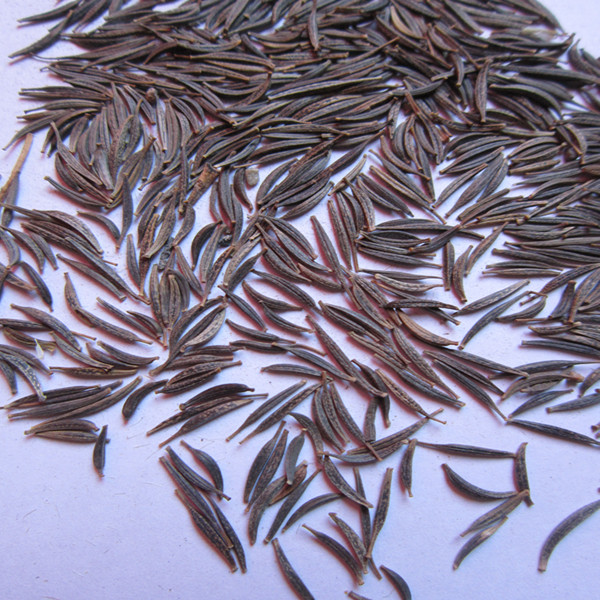
1. Cosmos Sowing Time
If you want it to bloom in summer, sow from February to March in early spring, and it is best to sow under conditions where both temperature and humidity can be controlled. If you plan to sow outdoors, sow in mid-April when the temperature is suitable; when the temperature is right, seedlings will emerge in about a week.
The sowing medium should be loose, organic-rich soil, and a certain amount of decomposed organic fertilizer should be applied before sowing. When sowing, mix the seeds evenly with a certain amount of sand and scatter them evenly over the seedbed, then cover with about 1 cm of soil. After sowing, maintain soil moisture and keep the temperature at around 18°C for germination.
2. Cosmos Seedling Stage Management
When the seedlings grow 4 to 5 true leaves, they can be transplanted into nutrient pots and pinched. During the seedling growth period, no additional topdressing is needed, so as to avoid excessive vegetative growth of branches and leaves, which affects flowering.
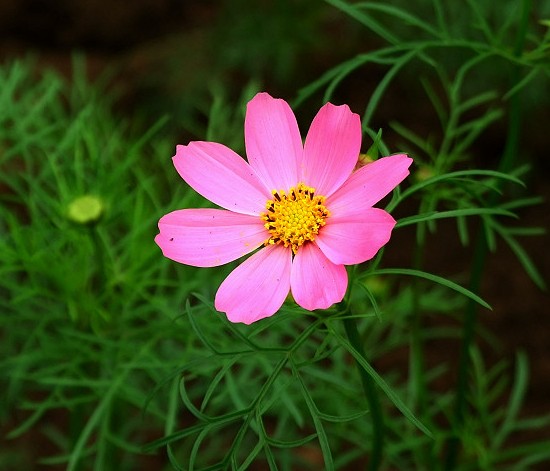
The cosmos plant is relatively tall, with slender stems and large, beautiful flowers. When exposed to wind or other harsh weather, it tends to lodge, affecting its ornamental value. Therefore, cosmos needs to be pinched multiple times throughout its growth process, and watering should be reduced. Doing so not only promotes branching but also dwarfs the plant, preventing lodging during growth.
4. Pest and Disease Control
The main pest and disease problem of cosmos is powdery mildew. Spider mites easily appear in hot, dry conditions (whether you like it or not, cosmos has a high probability of getting spider mites; even if you plant only two, spider mites may still appear). They should be detected and controlled early. Powdery mildew occurs on leaves, tender stems, flower buds, and flower buds and other parts; the diseased areas often grow a gray-white powdery mold layer, causing the growth and development of the affected plant to be hindered and the leaves to become twisted and deformed. In severe cases, the leaves dry up and the entire plant dies.
The control methods are: when planting, the density should not be too high, and good ventilation and light transmission should be maintained; after the disease occurs, diseased leaves and diseased plants should be promptly pruned and destroyed to strictly prevent reinfection; in the early stage of the disease, spray 15% triadimefon wettable powder at 1500 times dilution, or 10% lewubing wettable powder at 1200 to 1500 times dilution, alternating the two chemicals and spraying 2 to 3 times continuously. In the early stage of spider mite occurrence, spray 40% dicofol emulsifiable concentrate at 1000 to 1500 times dilution.

The price of cosmos seeds is relatively cheap, several tens of yuan per jin. For people who do not need to sow in large quantities, choosing to buy cosmos seeds online is a good option. Because online shopping allows you to freely choose the quantity of cosmos seeds you need and also to mix cosmos seeds of different colors, so the cosmos that blooms will be colorful and varied.
How to Grow Cosmos
1. Sowing
Cosmos seeds are the basis of its growth and reproduction. Sow cosmos seeds from April to June each year; there is no need to soak them before sowing, as this way the germination rate is higher. Sow 2 seeds every 20 to 30 cm; after sowing, cover with soil about 0.5 cm thick. Cosmos seeds take 1 week to germinate. When cosmos grows to have 4 to 6 leaves, cut off the stem tip, so that new shoots can sprout from the sides and new flowers can bloom. For plants grown in the ground and in flower pots, do not fertilize unless the growing conditions are extremely harsh.
2. Growth
Cosmos loves a warm and cool climate, and cosmos seeds grow best in an environment with ample sunlight. Therefore, place the flower pot in a place with sufficient light for care, and when watering, it is best to use a multi-hole spray can; do not water with a heavy stream, as this can wash out the newly sprouted seedlings from the seeds. The frequency of watering should not be too high either; keeping the soil moist is enough.

Cosmos stems are relatively thin and prone to lodging, so when sowing cosmos seeds at home, you can build supports, or pinch the tips multiple times in late spring and early autumn to promote more and denser branch sprouting and also inhibit its growth height, helping it maintain an upright plant shape. During the growth period of cosmos seeds, fertilizer and water need to be controlled; keeping the soil moist can make cosmos flowers lush. If fertilizer and water are controlled appropriately, flowers can be seen in 12 weeks.
4. Cycle
After the flowers fade and the fruits ripen, the cosmos plant also dies, and the cosmos seeds will automatically fall from the plant and sow themselves in the soil, continuing life. Of course, when the fruits mature, you can also pick the cosmos seeds and sow them again in a new round the following year. You can also select a section of a thick, strong top branch and cut it for cutting propagation, inserting it into a flower pot.
When Is the Best Time to Sow Cosmos
Cosmos often uses the sowing method of propagation. Sow in spring in April; germination is rapid, sprouting 7-10 days after sowing. It can also be propagated by softwood cuttings, rooting 15-18 days after insertion.
In late March to early April, sow the seeds in an open-field seedbed. It can also germinate at a relatively low soil temperature of 15°C, but if sown very early, it will grow into a giant plant 2 m tall and is prone to lodging due to typhoons or the weight of the plant. There are also early-blooming varieties that bloom 50 to 70 days after sowing, so sowing should be divided into early-blooming and autumn-blooming types.
Cosmos can also be sown from September to October; this is autumn sowing.

Cosmos seeds will automatically fall from the plant and sow themselves in the soil, continuing life. Of course, when the fruits mature, you can also pick the cosmos seeds and sow them again in a new round the following year. You can also select a section of a thick, strong top branch and cut it for cutting propagation, inserting it into a flower pot.
When Is the Best Time to Sow Cosmos
Cosmos often uses the sowing method of propagation. Sow in spring in April; germination is rapid, sprouting 7-10 days after sowing. It can also be propagated by softwood cuttings, rooting 15-18 days after insertion.
In late March to early April, sow the seeds in an open-field seedbed. It can also germinate at a relatively low soil temperature of 15°C, but if sown very early, it will grow into a giant plant 2 m tall and is prone to lodging due to typhoons or the weight of the plant. There are also early-blooming varieties that bloom 50 to 70 days after sowing, so sowing should be divided into early-blooming and autumn-blooming types.
Cosmos can also be sown from September to October; this is autumn sowing.