What are the cultivation methods for Sansevieria trifasciata 'Laurentii'?
Among the many varieties of Sansevieria, Sansevieria trifasciata 'Laurentii' is the one with the greatest ornamental value. Next, let us take a look at how to grow this most ornamental of plants well.
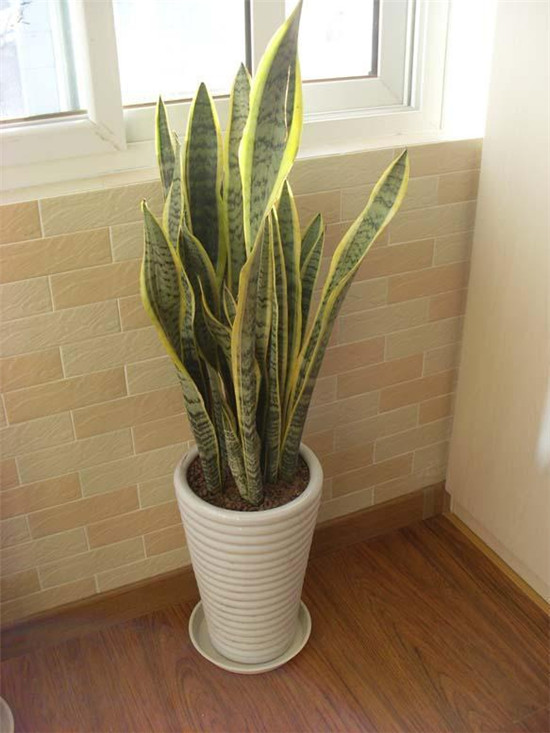
Sansevieria trifasciata 'Laurentii' is one of the more ornamental of the 60-plus species of Sansevieria. It is distributed in both tropical and subtropical regions. The leaves of Sansevieria trifasciata 'Laurentii' are firm and upright, with greyish-white and dark green tiger-tail-like horizontal banded markings alternating on the leaf surface; its bearing is resolute and unusual and interesting. It has many varieties, with considerable variation in plant form and leaf color, exquisite and distinctive. It has strong adaptability to the environment and is a tenacious plant, widely cultivated and used, and a common indoor potted foliage plant. It is suitable for decorating studies, living rooms and office spaces, and can be enjoyed for a long time.
Types of Sansevieria trifasciata 'Laurentii':
The leaves of Sansevieria trifasciata 'Laurentii' are 70-80 cm long, with golden-yellow margins along the leaf edges.
Sansevieria trifasciata 'Hahnii', also called dwarf snake plant or bird's nest sansevieria, grows only 10 cm tall, with short, broad leaves that curl and overlap in a rosette arrangement; the leaves are 7-10 cm long and 2.5-3 cm wide, dark green on the surface, with transverse greyish-white tiger-stripe markings.
The leaf margins of Sansevieria trifasciata 'Golden Hahnii' have broad golden-yellow to milky-white edges; sometimes the entire leaf is golden-yellow or milky-white, with only a small part in the center remaining green. Its other characteristics are the same as those of Sansevieria trifasciata 'Hahnii'.
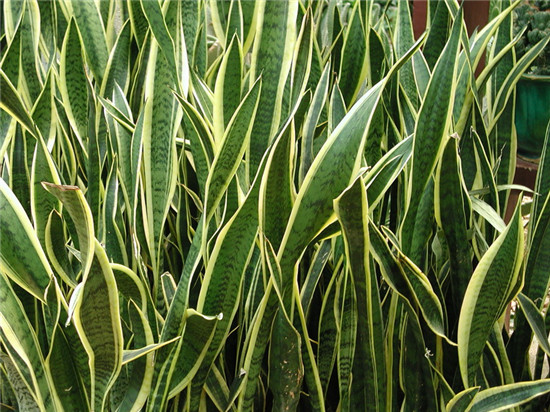
Sansevieria trifasciata 'Laurentii' is a perennial succulent herbaceous plant. It has creeping rhizomes, brown, semi-lignified, with strong branching ability. The leaves grow from the underground stem, clustered, flat, upright, with pointed tips, sword-shaped; the leaves are 30-50 cm long and 4-6 cm wide, with entire margins. The leaf color is light green, with white and dark green transverse cloud-like stripes on both the upper and lower sides, resembling tiger skin, and the surface has a very thick waxy layer. The flowering period is generally in November, with fragrance, and it mostly does not set seed.
For cultivation, Sansevieria trifasciata 'Laurentii' prefers loose, airy, well-draining soil. Leaf mold, loam (or garden soil) and an equal amount of coarse sand plus a little decomposed manure can be mixed evenly to make a nutrient soil. As for watering, in hot seasons it should be watered more to keep the potting soil moist. Since Sansevieria trifasciata 'Laurentii' dislikes strong light, it should be properly shaded in summer. In winter, place it in a sunny spot, water less, and keep the potting soil dry. When planting directly in plastic pots or ceramic pots, be sure to water even less, preferring dry over moist; otherwise, once there is too much water, the roots will rot and the plant will die. During the growing period, pay attention to keeping the leaf surface clean; it can be sprayed and washed regularly with a spray bottle. For fertilizing, in spring a single application of decomposed cake fertilizer can be given, such as sesame oil cake, soybean cake, etc. During the growing period, a thin fertilizer solution soaked from cake fertilizer can be applied. Stop fertilizing when winter arrives.
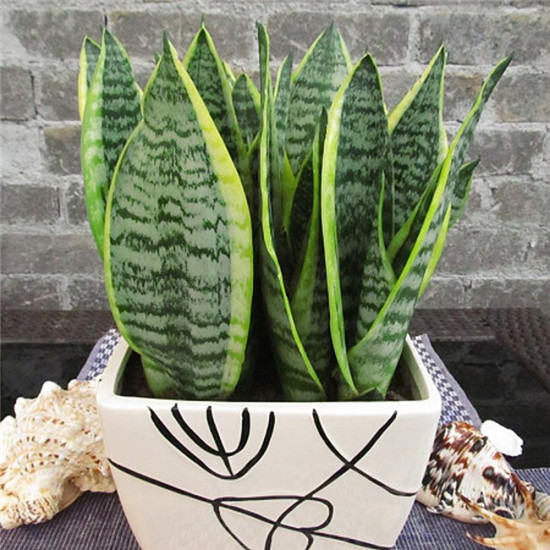
Cultivation of Sansevieria trifasciata 'Laurentii'
1. Propagation. The main propagation methods for Sansevieria trifasciata 'Laurentii' are division and cuttings. For division, the new and old plants can be separated, and the old plant moved to another pot or planted in the ground. For cutting propagation, first cut the leaves into 7-8 cm long sections and insert them into the prepared substrate, paying attention to spraying with medicine and water; after 20-30 days they will be able to take root.
2. Temperature. Sansevieria trifasciata 'Laurentii' grows best at 20-25°C and can be grown indoors year-round; when the weather is warm it can be moved outdoors, where it will grow even better. From late autumn to early winter, when the weather turns cold, it should be placed indoors, preferably somewhere above 10°C, and watering should be controlled well. If the room temperature is below 5°C, watering can be stopped; watering at low temperatures can very easily cause the death of Sansevieria trifasciata 'Laurentii'.
3. Watering. When cultivating Sansevieria trifasciata 'Laurentii', in hot seasons it should be watered more, keeping the potting soil moist at all times. Sansevieria trifasciata 'Laurentii' dislikes strong light, so it should also be properly shaded in summer; in winter, water less to keep the potting soil dry, and place it in a sunny spot. When growing it in a plastic pot or ceramic pot, water less, preferring dry over moist; if water accumulates, it will cause the roots of Sansevieria trifasciata 'Laurentii' to rot and the plant to die. During the growing period of Sansevieria trifasciata 'Laurentii', pay attention to keeping the leaf surface clean; a spray bottle can be used to spray and rinse it often, which can also keep it moist.
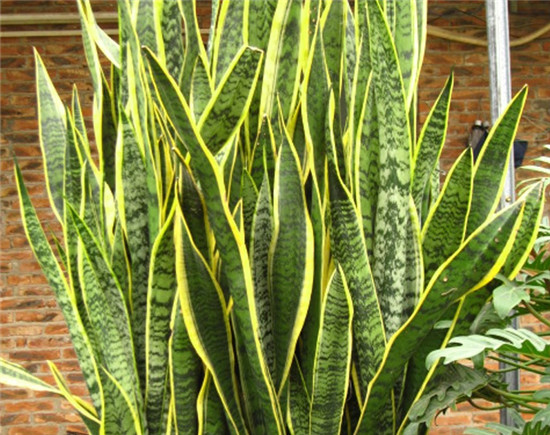
4. Fertilizing. Sansevieria trifasciata 'Laurentii' does not have high fertilizer requirements. In spring, a single application of decomposed cake fertilizer can be given, such as sesame oil cake, soybean cake, etc. During the growing season, Sansevieria trifasciata 'Laurentii' only needs 1-2 applications of thin liquid fertilizer per month to ensure its leaves remain verdant and thick. In winter, when Sansevieria trifasciata 'Laurentii' enters its dormant period, fertilizing should be stopped.
5. Soil planting. For potted Sansevieria trifasciata 'Laurentii', it is best to plant it in a clay pot, and a plastic pot or ceramic pot can be placed outside the clay pot, which is ventilated and breathable and also attractive in appearance. Sansevieria trifasciata 'Laurentii' prefers loose, breathable, well-draining soil; leaf mold, loam or garden soil and an equal amount of coarse sand, plus a little decomposed manure, can be mixed evenly to make a nutrient soil.
The above is the entire content of my summary on how to cultivate Sansevieria trifasciata 'Laurentii'. I hope this article can help everyone. Please also continue to follow us.
Then add a little decomposed manure and mix evenly to make a nutrient soil.The above is the entire content of my summary on how to cultivate Sansevieria trifasciata 'Laurentii'. I hope this article can help everyone. Please also continue to follow us.