How to grow geraniums? Cultivation methods and planting tips
Geranium belongs to the Geraniaceae family, Geranium genus, a perennial evergreen herbaceous or subshrub flowering plant. Next, let's take a look at how to grow geraniums.
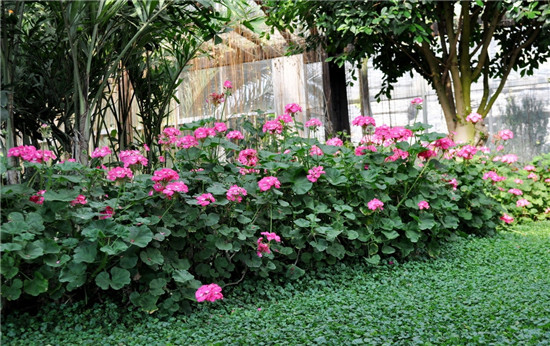
Geranium is native to southern Africa and is now widely cultivated around the world. Young plants are succulent herbs, while older plants become semi-woody; in the West it is an excellent flower for decorating windowsills, and it is especially common in continental Europe, such as in Germany and Austria. The common name for geranium is hydrangea, and there are single, semi-double, double and tetraploid varieties.
They can also be divided into upright geraniums and trailing geraniums. The stems are thick and juicy. The geranium stem is upright, succulent, woody at the base, succulent above, much branched or unbranched, with obvious nodes, densely covered with short soft hairs. Leaves alternate, stipules broadly triangular or ovate, 8-15 mm long, covered with soft hairs and glandular hairs; petiole 3-10 cm long, covered with fine soft hairs and glandular hairs; leaf blade round or kidney-shaped.
The base is heart-shaped, 3-7 cm in diameter, with wavy shallow lobes at the margin, round teeth, both sides covered with transparent short soft hairs, and a dark red horseshoe-shaped ring pattern inside the leaf margin on the surface.
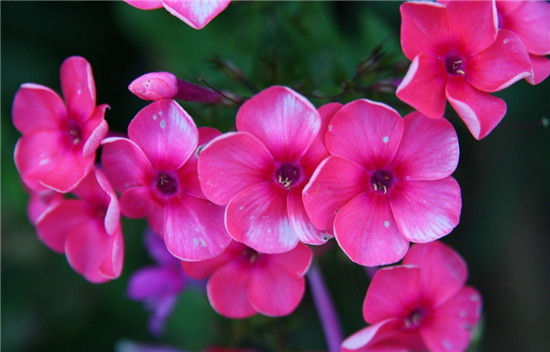
Geranium likes warm winters and cool summers. Indoors in winter, maintaining 10-15°C during the day and above 8°C at night allows it to bloom normally. But the optimum temperature is 15-20°C. Geranium likes dryness and dislikes moisture, so watering should not be too much in winter; water only when the soil is dry. If the soil is wet, the stems become soft and tender, which is unfavorable for the sprouting and opening of flower branches; long-term excessive moisture will cause the plant to grow leggy, the position where flower branches form will move upward, and the leaves will gradually turn yellow and fall off.
Geranium is naturally robust and rarely troubled by pests or diseases; it also has strong adaptability and can grow in various soils, but it grows best in sandy loam rich in humus; it likes sunlight, prefers warmth, is slightly drought-tolerant, fears waterlogging, and cannot tolerate the intense heat of midsummer or exposure to the scorching sun. In summer the plant stops growing and the leaves age, entering a semi-dormant state. At this time it can be moved to a shaded place outdoors, liquid fertilizer should be stopped, watering should be done on time, and on rainy days the pot should be laid on its side to prevent waterlogging and root rot.
By September, when the heat has passed and the weather is pleasant, the pot can be repotted and the soil changed. First cut the branches short, leaving only about 10 cm at the base of each branch, so that new buds and new branches can grow again. Geranium watering should be moderate, and the potting soil should not be too wet; it is best if the potting soil is half-dry half a day after watering.
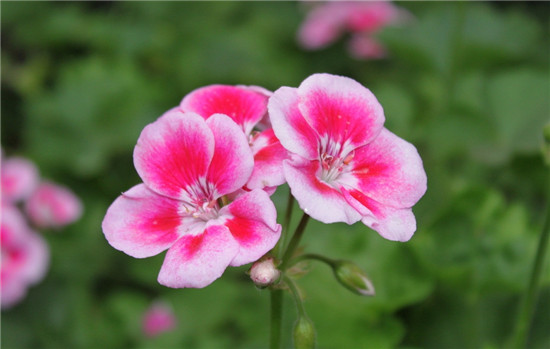
Geranium propagation is mainly by cuttings, mostly in spring and autumn, but those with greenhouse facilities can also take cuttings in winter. Generally, spring cuttings can bloom between New Year's Day and Spring Festival; autumn cuttings can bloom at the end of April. For cuttings, use new or old branches, but the tender shoot tips grow best after cuttings. Select cuttings about 10 cm long, keep two to three leaves at the upper end; if using old branches, they can also be without leaves. After the cut is slightly dried in the shade, insert it into clean sandy soil. The sandy soil should be kept slightly moist, never soaked with heavy water. First place it in half shade to keep the leaves from wilting, then gradually expose it to sunlight after three to five days. Roots generally form in about two weeks, and when the roots are 3-4 cm long, they can be potted up.
Seed propagation: Single-flowered geraniums easily set seeds, and they can be sown immediately after harvest. If you want to sow when the weather is cooler, first dry the seeds and store them in a paper bag. At 20°C, they can germinate in about 7-10 days. After seedling separation and transplanting, when the seedlings grow to 5-7 cm, plant them into 10 cm flower pots, and they can bloom the following spring.
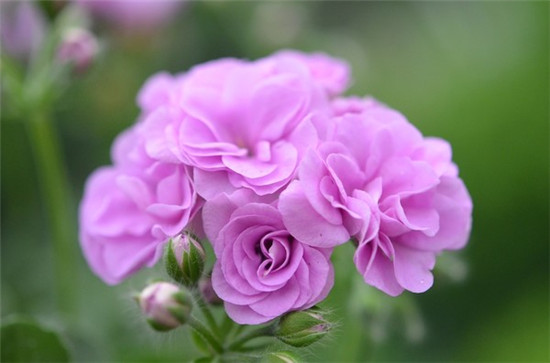
Cutting propagation: Except when the plants are in a semi-dormant state from June to August, cuttings can be taken at any time. But spring and autumn are best. Cuttings are best taken from mother plants that bloom uniformly, bloom frequently, are true to variety, and are free of pests and diseases. Both the tender shoot tips and the tender stems below can be used as cuttings, but the tip is best, with strong growth vigor and fast rooting. After cutting the cuttings, soak them in 100 mg/kg indolebutyric acid for 5-10 seconds, then dry them for half a day, and only after they wilt can they be inserted into a sand bed or a substrate mixed with perlite and peat at 1:1. After watering thoroughly, cover with a small arched shed, and provide shade when sunlight is strong. Keep the temperature at 15-20°C; roots form 2-3 weeks after cutting, and when the roots are 3-4 cm long, transplant them.
The above is all the content I have summarized for you on how to grow geraniums and how to plant geraniums. I hope this article can help everyone. Please also continue to follow us.