Geranium Cultivation Methods and Care Tips
Geraniums originally grew in South Africa and are an upright herbaceous flowering plant; many varieties have now been bred. Next, let us take a look at geranium cultivation and care.
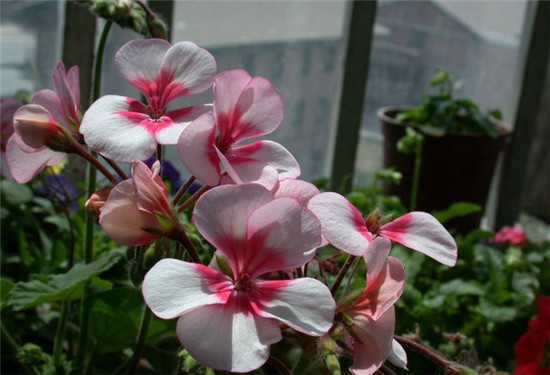
Geranium, also known as zonal geranium, is native to South Africa and is a perennial herbaceous flowering plant. The leaves are palmate with long stalks, the leaf margins are mostly serrated, and the leaf surface has relatively deep ring-like markings. The corolla usually has five petals, and the inflorescence is umbel-shaped, growing at the tip of an upright peduncle. Because the flowers are densely clustered like a ball, it is also called yangxiuqiu (geranium). The flower colors vary greatly among red, white, pink, and purple. The flowering period begins in early winter and lasts until early summer of the following year. Potted plants are suitable for indoor and outdoor decoration; they can also be used as spring flowerbed flowers. Geraniums are usually cultivated as annual or biennial flowers. The base is slightly woody, and the stems are succulent. The leaves are heart-shaped, green, and often have horseshoe-shaped ring markings. The umbel inflorescence is terminal, the flower buds droop, and the corolla has colors such as red, white, light red, and orange-yellow, as well as single, semi-double, double, and tetraploid varieties.
Geraniums can generally grow to 30-60 cm tall. The stems are fleshy, the base is woody, and they may be unbranched or much-branched; the nodes of the plant are visible, and the whole plant is covered with fine hairs. The round to kidney-shaped alternate leaves have prominent markings and serrated edges. The umbel inflorescence grows at the top of the stalk. The corolla generally has 5 petals, and there are many flower colors, mainly red, with others including pink, purple, white, and mixed colors. Because the flower shape is like a ball, it is also called zonal geranium.
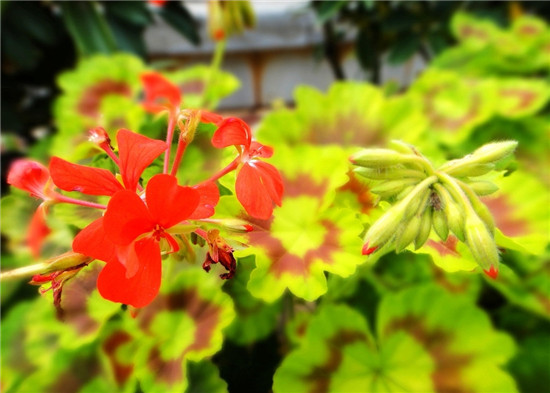
Ornamental value: The plant is upright, with palmate leaves, and the leaf surface has distinctive horseshoe-shaped markings. Multiple corollas form ball-shaped flowers, and the flower colors vary by variety. It is an excellent plant for decorating indoors and outdoors, whether in a room or in an outdoor courtyard flowerbed, it can bring vitality.
Medicinal value: In medicine, it can improve immunity, resist pathogens, stop bleeding and relieve pain, accelerate cell metabolism and circulation, purify and repair the skin, and has a positive effect on treating skin problems such as burns and herpes. Through facial application or aromatherapy, it can stimulate the lymphatic system, speed up circulation, and help treat colitis and gastritis. It can also have a certain regulating effect on women's menstruation and breast development, reducing breast hyperplasia problems. Note that pregnant women must not use it.
Perennial herbaceous plant, stems upright, base woody, upper part fleshy, much-branched or unbranched, with obvious nodes, densely covered with short soft hairs, with a strong fishy smell; leaves alternate; stipules broadly triangular or ovate, 8-15 mm long, covered with soft hairs and glandular hairs; petioles 3-10 cm long, covered with fine soft hairs and glandular hairs; leaf blades round or kidney-shaped, heart-shaped at the base, 3-7 cm in diameter, margin wavy and shallowly lobed, with round teeth, both sides covered with transparent short soft hairs, and within the leaf margin on the surface there is a dark red horseshoe-shaped ring marking.
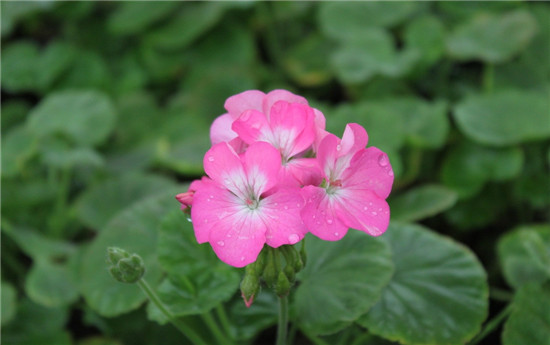
Geranium Cultivation Methods
Soil: Choose soil with humus and good drainage. A small amount of sand can be appropriately mixed in to increase its looseness. A little rice husk ash, bone meal, etc. can also be added. Do not add too much water. The potting soil should be changed once a year to promote flowering and growth.
Light: During the growing period, sufficient light should be provided, but direct sunlight should be avoided, especially in summer, to prevent scorching. In winter, it should receive sufficient light and be placed in a sunny place. Artificial light can be used when necessary to avoid poor plant development and premature withering.
Temperature: The plant is suitable for growing in places warm in winter and cool in summer, with 10-25°C being best. In winter, maintain 10-15°C, and do not let it drop below 8°C at night, to promote normal flowering. When the high temperature is above 35°C, the plant will enter semi-dormancy, so in summer it is necessary to cool it sufficiently.
Water: It likes a dry environment. Especially in winter, do not water too much. Water when the soil is dry and stop when wet. Generally, water once every 3 days on average. Moist soil will slow the plant's growth and flowering. Over time, the root system will become unstable and move upward, causing yellowing and leaf drop.
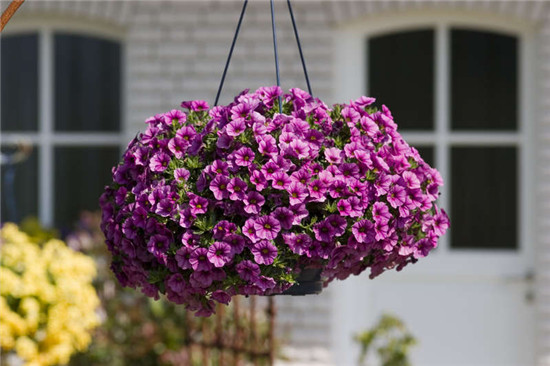
Fertilizing: A small amount of fertilizer can be appropriately added, otherwise flowering will be affected. Generally, in early spring or early autumn, some phosphorus and potassium fertilizer can be applied to promote growth. To make the flowers bloom abundantly, during this period apply dilute fertilizer water every 1 to 2 weeks and apply 800 times diluted potassium dihydrogen phosphate solution every 7 to 10 days.
Diseases: In humid and poorly ventilated conditions, the plant will suffer from flower wilt and leaf spot. Treatment method: improve the ventilation environment, immediately remove diseased branches and leaves and withered flowers to avoid affecting the healthy parts, then spray an appropriate amount of equal-strength Bordeaux mixture. In addition, the plant is susceptible to whiteflies, nematodes, and red spider mites. Use 40% omethoate emulsifiable concentrate at 1000 times dilution to remove them. Nematodes can be removed by spraying 3% furadan diluted with 10 times water.
Pruning: Prune some branches in areas with many branches so that the flowers can bloom fully. Frequent pinching can accelerate branch growth and cultivate flower buds. Withered flowers should have their remaining parts cut off. Timely prune weak branches that cannot grow normally and dense branches so as not to waste too many nutrients. Note that the plant must not be heavily pruned in winter.
Geranium Care
Geraniums are naturally robust and rarely suffer from pests and diseases; they also have strong adaptability and can grow in various soils, but grow best in sandy loam rich in humus; they like sunlight, prefer warmth, are slightly drought-tolerant, fear waterlogging, and cannot tolerate the intense summer heat or exposure to the scorching sun. In summer, the plant stops growing, the leaves age, and it enters a semi-dormant state. At this time, it can be moved to a cool outdoor place, liquid fertilizer should be stopped, watering should be done on time, and on rainy days the pot should be laid on its side to prevent waterlogging and root rot.
By September, when the heat has passed and the weather is cool, repotting and soil changing can be carried out. First cut the branches short, leaving only about 10 cm at the base of each branch, so that new buds and new branches can regrow. Geranium watering should be moderate; the potting soil must not be too wet. It is best if half a day after watering the potting soil is semi-dry.
Geranium propagation is mainly by cuttings, mostly carried out in spring and autumn, but those with greenhouse facilities can also take cuttings in winter. Generally, spring cuttings can bloom between New Year's Day and Spring Festival; autumn cuttings can bloom by the end of April. Use new or old branches for cuttings, but the tender shoot tips grow best after cuttings. Select cuttings about 10 cm long, retain two to three leaves at the upper end. If old branches are used, they may also have no leaves. After slightly drying the cut in the shade, insert it into clean sandy soil. The sandy soil should be kept slightly moist, and never with too much water. First place it in half shade to keep the leaves from wilting, and after three to five days gradually expose it to sunlight. It generally takes about two weeks to root, and when the roots are 3 to 4 cm long, it can be potted.
The above is all the content I have summarized for everyone on geranium cultivation and care. I hope this article can help everyone. Please also continue to follow us.
Then spray an appropriate amount of equal-strength Bordeaux mixture. In addition, the plant is susceptible to whiteflies, nematodes, and red spider mites. Use 40% omethoate emulsifiable concentrate at 1000 times dilution to remove them. Nematodes can be removed by spraying 3% furadan diluted with 10 times water.Pruning: Prune some branches in areas with many branches so that the flowers can bloom fully. Frequent pinching can accelerate branch growth and cultivate flower buds. Withered flowers should have their remaining parts cut off. Timely prune weak branches that cannot grow normally and dense branches so as not to waste too many nutrients. Note that the plant must not be heavily pruned in winter.
Geranium Care
Geraniums are naturally robust and rarely suffer from pests and diseases; they also have strong adaptability and can grow in various soils, but grow best in sandy loam rich in humus; they like sunlight, prefer warmth, are slightly drought-tolerant, fear waterlogging, and cannot tolerate the intense summer heat or exposure to the scorching sun. In summer, the plant stops growing, the leaves age, and it enters a semi-dormant state. At this time, it can be moved to a cool outdoor place, liquid fertilizer should be stopped, watering should be done on time, and on rainy days the pot should be laid on its side to prevent waterlogging and root rot.
By September, when the heat has passed and the weather is cool, repotting and soil changing can be carried out. First cut the branches short, leaving only about 10 cm at the base of each branch, so that new buds and new branches can regrow. Geranium watering should be moderate; the potting soil must not be too wet. It is best if half a day after watering the potting soil is semi-dry.
Geranium propagation is mainly by cuttings, mostly carried out in spring and autumn, but those with greenhouse facilities can also take cuttings in winter. Generally, spring cuttings can bloom between New Year's Day and Spring Festival; autumn cuttings can bloom by the end of April. Use new or old branches for cuttings, but the tender shoot tips grow best after cuttings. Select cuttings about 10 cm long, retain two to three leaves at the upper end. If old branches are used, they may also have no leaves. After slightly drying the cut in the shade, insert it into clean sandy soil. The sandy soil should be kept slightly moist, and never with too much water. First place it in half shade to keep the leaves from wilting, and after three to five days gradually expose it to sunlight. It generally takes about two weeks to root, and when the roots are 3 to 4 cm long, it can be potted.
The above is all the content I have summarized for everyone on geranium cultivation and care. I hope this article can help everyone. Please also continue to follow us.