Key points for propagating geraniums by cuttings: master the method to improve the survival rate
Most geranium propagation methods are seed sowing and cuttings. Next, let us take a look at the key points for propagating geraniums by cuttings.
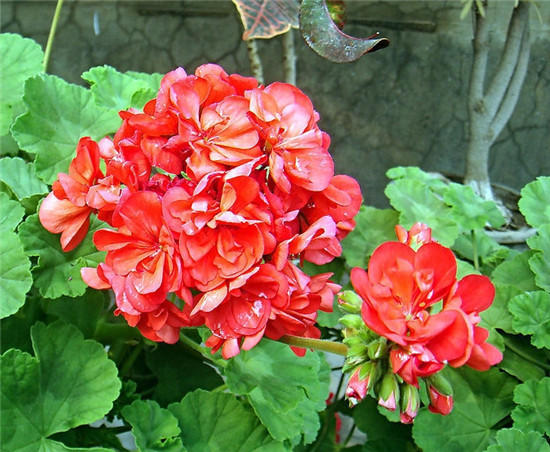
As is well known, geraniums are a fairly tough plant and can perform strongly under both low and high temperatures, but when it comes to cuttings many flower lovers find it somewhat difficult, with black rot and gray mold appearing easily. Especially when cuttings are taken in summer, the survival rate is extremely low. Here I will introduce a relatively simple cutting method with a relatively high survival rate! My cutting survival rate in July was nearly 80%.
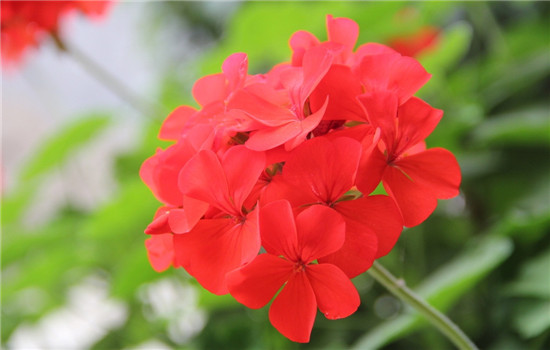
First, choose the container. Choose different containers for different seasons, and it must not be too large. For my batch cuttings, taking plug trays as an example, 50-cell trays are more suitable in summer, 72-cell trays in spring and autumn, and 128-cell trays in winter. The most critical point is that it must be disinfected. The best disinfection method is very simple: rinse the container with clean water, then place it under the sun to bake for three days, and be sure not to let it get rained on during that time. Flower lovers at home can also choose other containers and soak them in disinfectant.
Second, the cutting medium. There are many kinds of cutting media. I use the simplest and cheapest one, peat soil. I personally suggest everyone use imported peat. To save costs, I use domestic peat. Put the peat soil into the container and press it firm. Be sure to press it firm and squeeze the air out of the soil! This way the roots produced by the geraniums will be very strong and the survival rate will also be very high. Next is disinfecting the medium, generally by dissolving carbendazim in water. In summer, use thiophanate-methyl and mix it according to the instructions at a slightly higher ratio.
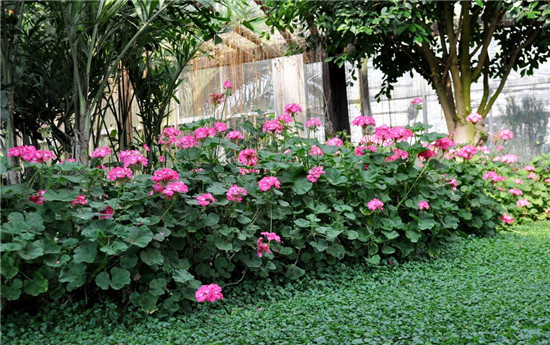
Third, the cuttings. I have seen many people use some old branches for cuttings. Perhaps everyone thinks this kind of branch is thicker and stronger and has a higher survival rate, but I personally do not think it is very ideal. Old branches have almost no advantage either. I generally use softwood cuttings. Softwood cuttings have several advantages: 1. Strong vitality, good apical dominance, and relatively rich nutrients. The seedling recovery period is short, while old branches not only root slowly but also carry miscellaneous bacteria and rot easily. 2. Fast rooting, and the cutting cycle can be shortened by about one week. 3. Saves space. When taking many cuttings, they can be managed in batches. Smaller branches can reduce the number of waterings, and ventilation is more ideal, reducing disease caused by poor ventilation. 3. After surviving, they grow rapidly and the plant shape can also be controlled easily!
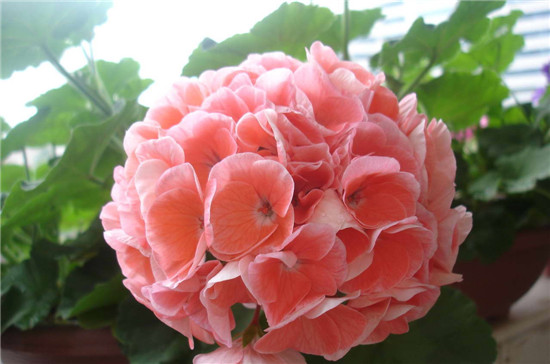
Fourth, cutting management. Do not treat geranium branches with rooting powder; they rot very easily, especially in summer. In fact, geraniums root easily. Pay attention to the moisture of the medium, water when dry and let dry when wet (when the medium surface is dry and the geranium is not wilting). Never keep it always wet; it is better to keep it a bit drier. Use a fungicide once a week. It is better to water in the morning. The light issue is quite important. In summer, after taking cuttings, place them in a semi-shaded cool place for 3 days, then place them in sunlight for the long term. Just pay attention to whether the medium is dry or wet. In summer, they need to be placed in a semi-shaded place with some sunlight in the morning and evening, and roots will appear in about 15 to 20 days.
The above is all the content I have summarized for you on the key points for propagating geraniums by cuttings. I hope this article can help everyone. Please also continue to follow us.