Wild Chrysanthemum Pictures, Benefits and Uses
Many people are familiar with the wild chrysanthemum; sometimes when walking along the road we see it growing by the roadside. Wild chrysanthemums are mostly small and lovely, and they also have excellent medicinal value. Let us learn about the wild chrysanthemum.
About Wild Chrysanthemum
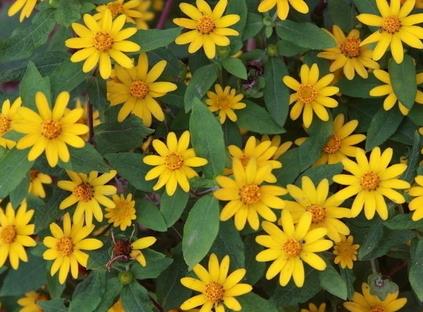
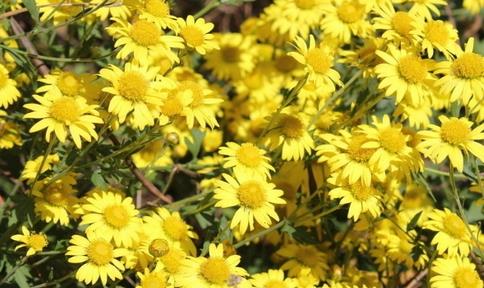
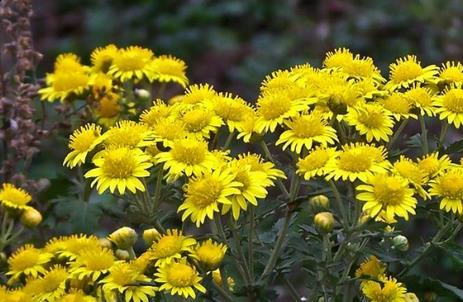
Wild chrysanthemum (scientific name: Dendranthema indicum) is a perennial herbaceous plant of the Asteraceae family. The capitulum of the wild chrysanthemum resembles that of the chrysanthemum in appearance, and it grows wild in hillside grasslands, field edges, roadsides and other wild areas. Those with yellow color, no stems, intact form, bitter and pungent taste, and flowers not fully open are considered the best. Wild chrysanthemum is warm in nature and has the effects of dispersing wind-heat, reducing swelling and detoxifying. It can treat boils and carbuncles, sore throat, red eyes due to wind-fire, headache and dizziness, and other conditions.
The capitulum is nearly spherical, 0.3-1 cm in diameter, brownish-yellow. The involucre consists of 4-5 layers of bracts. There is one row of ligulate flowers, yellow, shrunken and curled; the tubular flowers are numerous and deep yellow. Light in weight. Pungent in odor, bitter in taste, slightly toxic.
Wild chrysanthemum is the capitulum of the wild chrysanthemum, a perennial herbaceous plant of the Asteraceae family. Its appearance resembles the chrysanthemum. Wild chrysanthemum is the capitulum of the Asteraceae plants wild chrysanthemum and rock fragrant chrysanthemum. The wild chrysanthemum is a perennial herb, growing in hillside grasslands and other places. It is also known as wild chrysanthemum, wild yellow chrysanthemum, and bitter aster. The capitulum of the wild chrysanthemum is nearly spherical, brownish-yellow, with 4 to 5 layers of involucral bracts, aromatic in odor, and bitter in taste. Wild chrysanthemum is bitter, pungent, and slightly cold, entering the liver and heart meridians. It has the effect of clearing heat and detoxifying, and can be widely used to treat boils and carbuncles, sore throat, red eyes due to wind-fire, headache and dizziness, and other conditions. It also has a good blood pressure-lowering effect and can be used as an adjunctive treatment for hypertension.
The wild chrysanthemum is a perennial herbaceous plant with a flowering period from September to November and a fruiting period from October to November, generally 25-100 cm in height. The stem is often prostrate at the base, with many branches in the upper part. The leaves are alternate, ovate-triangular or ovate-elliptic, about 3-9 cm long. The flower bud of the wild chrysanthemum is hemispherical, with 4 layers of involucral bracts. The flowers are very small, mostly yellow, with ligulate margins.
Morphological Characteristics of Wild Chrysanthemum
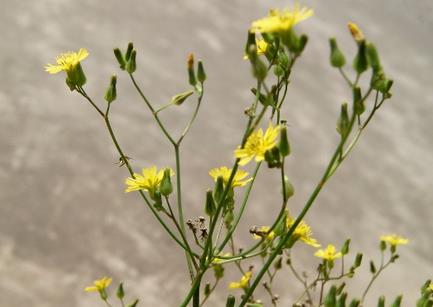
Perennial herbaceous plant, up to 1 m tall. The base of the stem is often prostrate, with many branches in the upper part. Leaves alternate, ovate-triangular or ovate-elliptic, 3-9 cm long, pinnately lobed, with serrated lobe margins, hairy on both surfaces, denser below; there are obvious pseudostipules below the petiole. Capitula 2-2.5 cm in diameter, arranged in cymes; involucre hemispherical, with 4 layers of bracts, membranous at the margins, the outer layer elliptic; flowers small, yellow, ligulate at the margins, with 3 shallow lobes at the apex, female; the center has tubular flowers, with 5 lobes at the apex, bisexual. Flowering period September to November, fruiting period October to November.
Growth Habits of Wild Chrysanthemum
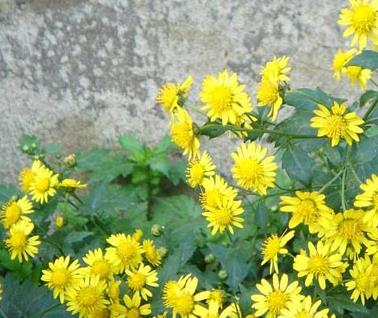
It prefers a cool and moist climate and is cold-resistant. It is best cultivated in loam with deep, loose and fertile soil rich in humus. It mostly grows in hillside grasslands, shrublands, riverside wetlands, coastal saline land, field edges, and roadsides.
Medicinal Value of Wild Chrysanthemum
Wild chrysanthemum has a bactericidal and swelling-reducing effect on the red and swollen pus-filled bumps after mosquito bites in summer.
1. Anti-infection: It has an inhibitory effect on various pathogenic bacteria such as Staphylococcus aureus, Shigella dysenteriae, Pseudomonas aeruginosa, and Salmonella typhi. In terms of clearing heat and detoxifying, wild chrysanthemum is stronger than other medicines. It is often used for influenza, acute infections and fever of the upper respiratory tract, eyes, and throat, for viral infections, bacterial infections or mixed infections, as well as infectious redness and swelling of the skin.
Now that antibiotics are widely available, wild chrysanthemum is rarely used for infectious diseases. However, wild chrysanthemum still has its uses. For example: (1) viral infections and mixed viral-bacterial infections; (2) bacterial infectious diseases, with antibiotics and Chinese herbal medicine used in combination. The effects of using Chinese herbal medicine lie in: (1) antiviral; (2) combining with antibiotics to enhance efficacy; (3) reducing toxins; (4) enhancing immune function; (5) improving symptoms, such as lowering fever, increasing appetite, and assisting recovery. This product has these comprehensive effects in many aspects, thus becoming a commonly used anti-infective medicine in clinical traditional Chinese medicine.
2. Regarding the treatment of cardiovascular diseases: It has a significant inhibitory effect on platelet aggregation induced by ADP, Staphylococcus aureus, and rabbit muscle collagen, and the effect increases with increasing dose. This inhibitory effect of wild chrysanthemum is 2.3-3.2 times stronger than that of Danshen and Dangshen, and it has multiple effects such as dilating coronary arteries, lowering blood pressure, and protecting the heart. In traditional Chinese medicine, for cardiovascular diseases, clinical practice is accustomed to using white chrysanthemum as the main treatment. Wild chrysanthemum is generally not used.
3. Blood pressure-lowering effect: It is related to anti-adrenergic effects and dilation of peripheral blood vessels, as well as inhibition of the vasomotor center.
4. Other effects: Enhancing immune function. Wild chrysanthemum decoction at a concentration of 1:1280 has the effect of promoting human leukocytes to phagocytize Staphylococcus aureus; strengthening the heart and coronary arteries, significantly increasing coronary blood flow. Coronary resistance decreases significantly, while heart rate slows. Blood pressure and peripheral resistance decrease, cardiac output and stroke volume increase, and left ventricular work decreases, all with significant differences compared with before administration. Its extract can significantly increase renal blood flow and significantly reduce renal vascular resistance. The main components that can protect the myocardium and dilate blood vessels are flavonoids, phenolic compounds, and lactones; preventing and treating colds and influenza; treating various infectious inflammations, such as pharyngitis, tonsillitis, bronchitis, pneumonia, enteritis, etc.; treating infections such as boils and abscesses; lowering fever, neutralizing snake venom, etc.
The Flower Language and Symbolism of Wild Chrysanthemum
The flower language and symbolic meaning of wild chrysanthemum: silent and devoted love, warding off evil.
People in northern Shaanxi celebrate the Double Ninth Festival in the evening, while the daytime is spent on a full day of harvesting and threshing. In the evening, when the moon rises above the treetops, people enjoy eating buckwheat noodles with stewed mutton. After dinner, people walk out of their homes in twos and threes, climb the nearby hills, light fires, chat about everything, and do not return home until the rooster crows. When climbing the mountain at night, many people pick a few sprigs of wild chrysanthemum and put them in their daughters' hair back home to ward off evil.
Coronary resistance decreases significantly, while heart rate slows. Blood pressure and peripheral resistance decrease, cardiac output and stroke volume increase, and left ventricular work decreases, all with significant differences compared with before administration. Its extract can significantly increase renal blood flow and significantly reduce renal vascular resistance. The main components that can protect the myocardium and dilate blood vessels are flavonoids, phenolic compounds, and lactones; preventing and treating colds and influenza; treating various infectious inflammations, such as pharyngitis, tonsillitis, bronchitis, pneumonia, enteritis, etc.; treating infections such as boils and abscesses; lowering fever, neutralizing snake venom, etc.
The Flower Language and Symbolism of Wild Chrysanthemum
The flower language and symbolic meaning of wild chrysanthemum: silent and devoted love, warding off evil.
People in northern Shaanxi celebrate the Double Ninth Festival in the evening, while the daytime is spent on a full day of harvesting and threshing. In the evening, when the moon rises above the treetops, people enjoy eating buckwheat noodles with stewed mutton. After dinner, people walk out of their homes in twos and threes, climb the nearby hills, light fires, chat about everything, and do not return home until the rooster crows. When climbing the mountain at night, many people pick a few sprigs of wild chrysanthemum and put them in their daughters' hair back home to ward off evil.