Geranium Cutting Propagation Tips and Detailed Growing Methods
Native to South Africa, the geranium gives off a rose-like fragrance while costing far less than roses, and remarkably, it also has a benefit roses lack - repelling mosquitoes. Placing a few pots of geraniums in the bedroom not only lets you enjoy the refined comfort of a rose garden, but also keeps you free from mosquito bites, so why not? Below, the editor will introduce geranium cutting propagation tips and geranium growing methods.
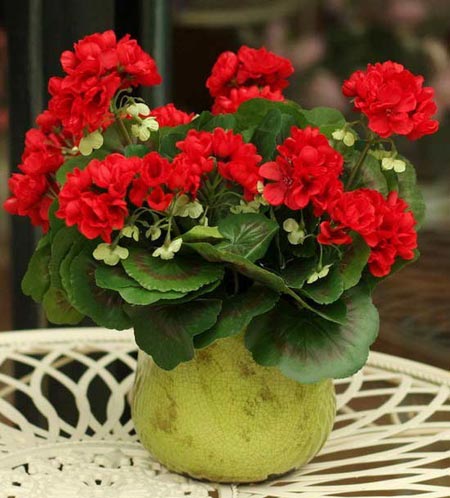
1. Best cutting time: autumn. In principle, cuttings can be taken in any season except summer, but autumn is the best. This is because after vigorous growth in spring and early summer, the geranium's plant shape becomes full again, and after resting semi-dormant through the hot summer, as the weather turns cooler its vitality surges once more, making the branches at this time the strongest.
2. Cutting preparation. Unlike ordinary cutting operations, the method described here does not involve directly cutting off a branch for rooting; instead, it requires a cutting preparation stage, which is also the key point of this technique. The specific method is: choose a strong branch of the current year's growth, find a node 10 cm or less down, and 2 cm below the node, use scissors to gently score a ring-shaped groove, not cut through (as shown in the picture). Be careful with the pressure, avoiding cutting through, and do not score too deep, otherwise touching or wind may cause it to break. Let the branch continue to grow on the mother plant for two to three weeks.
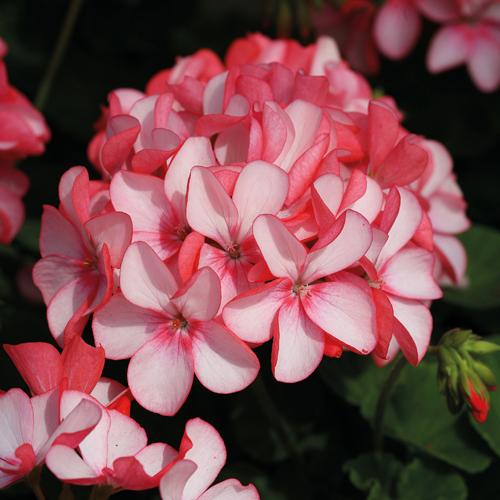
4. Place in a semi-shady spot, and roots will form in about four weeks. During this period, water when the soil is completely dry, but avoid over-wetting.
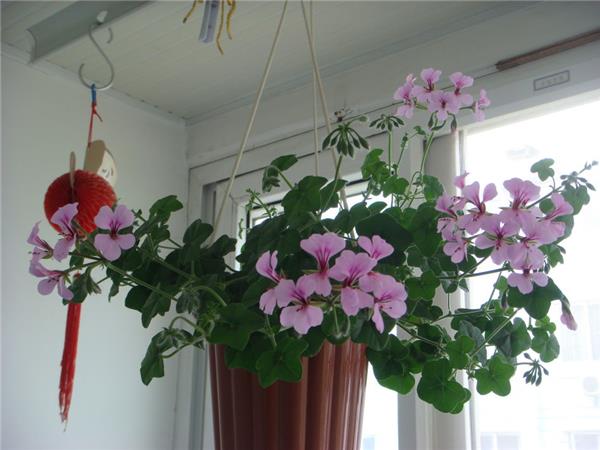
First of all, you should know that geranium growing methods mainly rely on cuttings. You can choose to take cuttings in spring or autumn. If you take geranium cuttings in spring, the geranium will bloom around the Spring Festival the following year. If you take cuttings in autumn, you can also get a glimpse of the geranium's blooms by the end of April the following year.
As for choosing cutting branches, it is best to use the tender shoot at the tip of a geranium branch. You can cut it off with scissors 10 cm from the tip, preferably keeping 2-3 tender leaves, and then insert it into clean sandy soil. For the first two weeks, place the geranium tender shoot in a cool place to ensure the leaves do not lose too much water and wilt; after that, you can move it out to get some sun.
Geranium Growing Methods
1. Soil: Geraniums are highly adaptable and can grow in various soil types, but grow best in sandy loam rich in humus.
2. Watering: Geraniums like dryness and dislike dampness, so in winter do not water too much; water only when dry. When the soil is wet, the stems are soft and tender, which is unfavorable for the budding and opening of flower branches; long-term over-wetting causes leggy growth, the flower branch attachment point moves upward, and the leaves gradually yellow and fall off.
3. Sunlight: Geraniums need ample sunlight during the growing period, so in winter they must be placed in a sunny spot. With insufficient light, stems and leaves grow leggy, flower stalks become thin and soft, and the inflorescence develops poorly; flower buds under weak light often fail to open well and wither early.
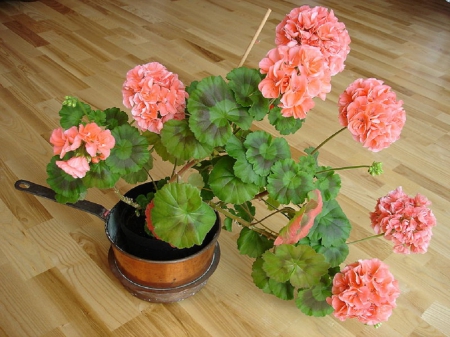
5. Fertilizing: Geraniums do not like heavy fertilizer; too much fertilizer makes geraniums grow excessively and hinders flowering. To make flowering abundant, apply a dilute thin fertilizer solution (decomposed soybean cake water) once every 1-2 weeks; applying 800 times diluted potassium dihydrogen phosphate solution every 7-10 days can promote normal flowering.
6. Pests and diseases: When geraniums have poor ventilation and are too damp, they are prone to leaf spot disease and flower wilt disease. After discovery, pay attention to ventilation, immediately remove diseased flowers and leaves to prevent infection, and spray Bordeaux mixture at equal parts to control it. The main pests are red spider mites and whiteflies, which harm leaves and flower branches; they can be killed by spraying 1000 times diluted 40% omethoate emulsion.
7. Pruning: Pruning branches and pinching. To encourage geraniums with many branches to bloom more, the plant should be pinched several times to promote more branches and flower bud formation. After the flowers fade, promptly cut off the spent flowers and remove overly dense and weak branches to avoid excessive nutrient consumption, but in winter when it is cold, heavy pruning is not suitable.

Prone to leaf spot disease and flower wilt disease. After discovery, pay attention to ventilation, immediately remove diseased flowers and leaves to prevent infection, and spray Bordeaux mixture at equal parts to control it. The main pests are red spider mites and whiteflies, which harm leaves and flower branches; they can be killed by spraying 1000 times diluted 40% omethoate emulsion.
7. Pruning: Pruning branches and pinching. To encourage geraniums with many branches to bloom more, the plant should be pinched several times to promote more branches and flower bud formation. After the flowers fade, promptly cut off the spent flowers and remove overly dense and weak branches to avoid excessive nutrient consumption, but in winter when it is cold, heavy pruning is not suitable.