Differences Between Tufuling and Fuling and Detailed Introductions
Tufuling and Fuling sound similar and even look quite alike. Next, let us take a look at the differences between Tufuling and Fuling.
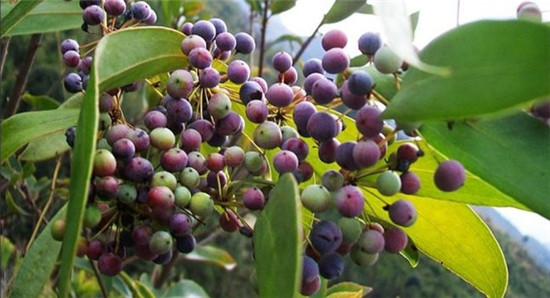
Differences Between Tufuling and Fuling
Fuling is a diuretic and dampness-draining medicinal, and it can also strengthen the spleen and calm the mind. Its nature and flavor are sweet, bland and neutral, and it enters the heart, spleen and kidney meridians. Tufuling is a heat-clearing and detoxifying medicinal, and it can remove dampness and benefit the joints. Its nature and flavor are sweet, bland and neutral, and it enters the liver and stomach meridians. In terms of effects, Tufuling clears heat and drains dampness, detoxifies, kills parasites and stops itching, and has a very good effect on skin diseases caused by damp-heat, such as syphilis and eczema; while Fuling is an essential medicinal for strengthening the spleen and draining dampness, and is often used in formulas that tonify qi and strengthen the spleen to enhance the effect of strengthening the spleen and draining dampness. In terms of taste, Tufuling tends to be bitter, while Fuling is bland, so there is no need to confuse them when choosing.
Efficacy and Effects of Tufuling
Traditional Chinese medicine believes that Tufuling is neutral in nature and sweet and bland in flavor, enters the liver and stomach meridians, and has effects such as detoxification, removing dampness and benefiting the joints. Western medicine believes that Tufuling is a relatively strong immunosuppressive drug and is the best traditional Chinese medicine for treating oral and genital ulcers in immune diseases. Tufuling is also used to treat rheumatoid arthritis, psoriatic arthritis, Behcet's disease arthritis, gouty arthritis and so on, often in combination with Jinquegen (Caragana sinica root), Shanrengen (Rhodomyrtus tomentosa root), Xuchangqing (Cynanchum paniculatum), Hongteng (Sargentodoxa cuneata) and others. Tufuling is also effective for allergic dermatitis, pemphigus, eczema and other immune diseases.
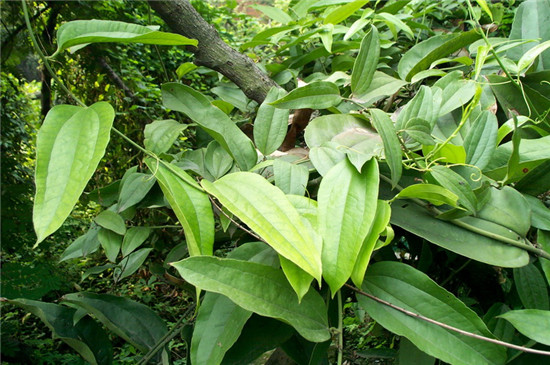
Efficacy of Fuling
Fuling is bland in taste and is often sold cut into small white square cubes. Fuling mainly has three major effects: draining water and dampness, tonifying the middle and strengthening the spleen, and calming the mind and soothing the spirit.
1. Fuling can drain water and dampness. It is used to treat edema and distention with difficult urination, and is often eaten together with Zhuling (Polyporus umbellatus), Zexie (Alisma orientale) and Baizhu (Atractylodes macrocephala).
2. Fuling can tonify the middle and strengthen the spleen. It is used to treat poor appetite and loose stools due to spleen deficiency with abundant dampness, and is often eaten together with Dangshen (Codonopsis pilosula) and Baizhu (Atractylodes macrocephala).
3. Fuling can calm the mind and soothe the spirit. It is used to treat palpitations, insomnia and forgetfulness, and is often eaten together with Longyanrou (dried longan flesh) and Suanzaoren (Ziziphus jujuba seed).
How to Consume Tufuling
Tufuling is often used to make congee or soup. Foods cooked with Tufuling become higher in efficacy and value.
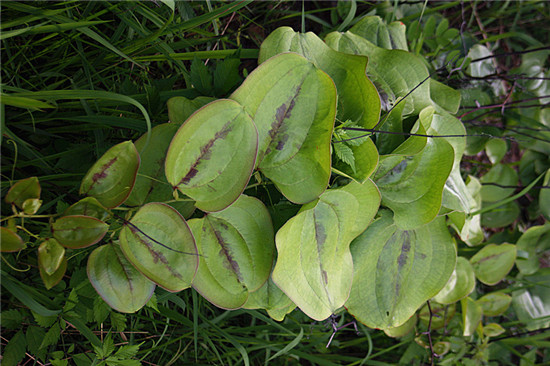
Mung Bean and Tufuling Sweet Soup
Ingredients for mung bean and Tufuling sweet soup: 50 g mung beans, an appropriate amount of brown sugar. Medicinal: 50 g Tufuling.
Efficacy of mung bean and Tufuling sweet soup: removes damp-heat, detoxifies and cools the blood.
Method for mung bean and Tufuling sweet soup: Wash the mung beans, wash the Tufuling, add 6 bowls of water and simmer until the beans are soft, add brown sugar, cook for a moment longer and the soup is ready; it can be eaten and drunk.
Consumption notes for mung bean and Tufuling sweet soup: Mung beans have the effect of detoxifying and clearing heat, and adding Tufuling removes dampness and drains water, helping boils and sores heal faster.
How to Consume Fuling
There are many ways to consume Fuling, but because Fuling is bland in taste, it basically plays the role of a tonic with beneficial effects. In the market, Fuling is often cut into small cubes, and people often use it to steep in water and drink. In fact, Fuling can also be used in soups, congee and other ways of consumption.
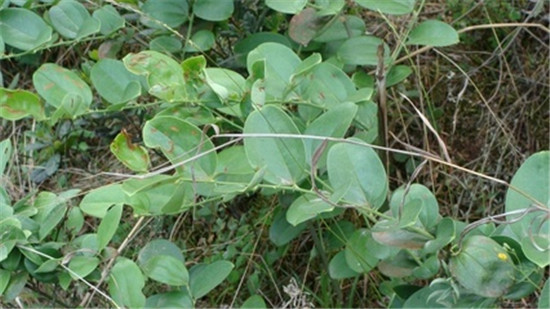
1. A brief introduction to how to make Fuling chestnut congee: 15 g Fuling, 25 g chestnuts, 10 large jujubes, 100 g japonica rice. Add water and first cook the chestnuts, large jujubes and japonica rice; grind the Fuling into powder, and when the rice is half cooked, add it slowly, stir evenly, and finally cook until the chestnuts are thoroughly cooked. Sugar may be added for seasoning before eating. Fuling chestnut congee strengthens the spleen and drains dampness, strengthens the spleen and stops diarrhea, and benefits the spleen and stomach. Fuling chestnut congee is used for weakness of the spleen and stomach, reduced food intake, and loose stools and diarrhea.
2. A brief introduction to how to make Fuling chicken wontons: 50 g Fuling, an appropriate amount of chicken, 200 g flour. Grind the Fuling into fine powder, knead it with flour and water into a dough, then mince the chicken, add ginger, pepper and salt to make the filling, and wrap into wontons. Finally, cook and eat. Fuling strengthens the spleen and drains dampness, while chicken strengthens the spleen and tonifies qi, and ginger and pepper stimulate the appetite and descend qi. Fuling chicken wontons are used for weakness of the spleen and stomach, vomiting and little eating, and indigestion.
The above is the full content of the differences between Tufuling and Fuling and the introductions to Tufuling and Fuling that I have summarized for everyone. I hope this article can help everyone. Please also continue to follow us.