How to graft Christmas cactus for a high survival rate? Teach you the correct method
Grafting is something everyone has heard of, and some may have actually tried it themselves. So, have any of you grafted Christmas cactus? Christmas cactus, a common plant in the cactus family, is widely loved and grown in our daily lives, so many people are quite interested in its grafting methods. So how do you graft Christmas cactus so the plant has a higher survival rate? Let's take a look at grafting Christmas cactus together below.
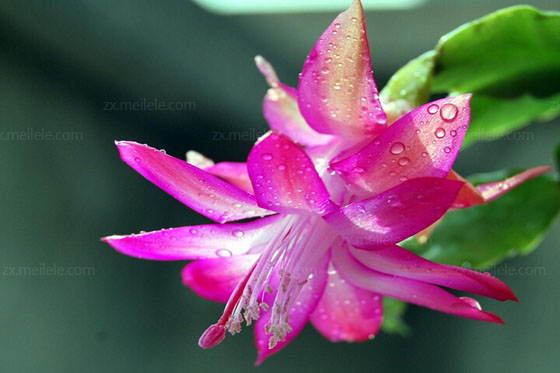
Time for grafting Christmas cactus
Usually, the time for grafting Christmas cactus is from late March to mid-June, or from mid-September to mid-October. However, the earlier period, that is, late spring and early summer, is preferable, because the weather is warmer then, and light and temperature are easier to control, which is more favorable for plant growth, so the chances of the Christmas cactus surviving are also higher. Moreover, when grafting is chosen at this time, the affinity between the scion and the rootstock is strong, and the plant is less prone to rot or cold damage, so the survival rate is naturally higher. In addition, since spring has just passed, the plant still retains its spring vitality and is naturally very robust.
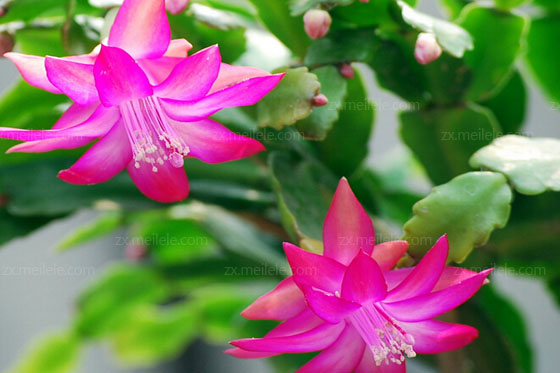
Grafting method and process for Christmas cactus
1. Making the rootstock and scion for grafting
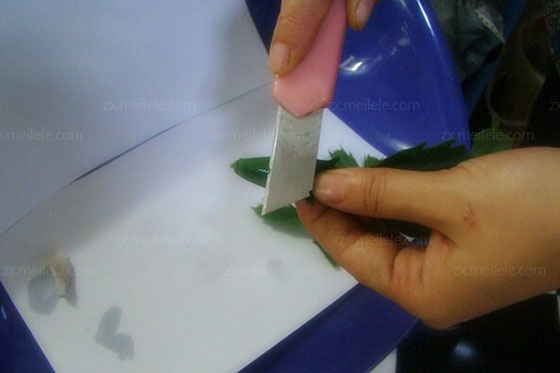
Grafting Christmas cactus is relatively simple. After confirming the grafting time, you can start grafting. First, choose a sunny day for grafting, then select the rootstock needed for grafting. Generally speaking, for grafting Christmas cactus, it is best to choose cactus as the rootstock, because such a plant has a strong main stem and great support, and the grafted Christmas cactus will also look more beautiful. Take a robust one-year-old cactus branch as the rootstock, remove it from its parent plant and insert it into a sand bed to cultivate it into a grafting rootstock. On a robust mother Christmas cactus plant, select a one-year-old young shoot at the top as the scion, use a blade to cut off one third of its lower part, then disinfect with alcohol, and at the same time use the blade to cut the lower part of the scion into a wedge shape; it is best to make it with a single cut.
2. Grafting process for Christmas cactus
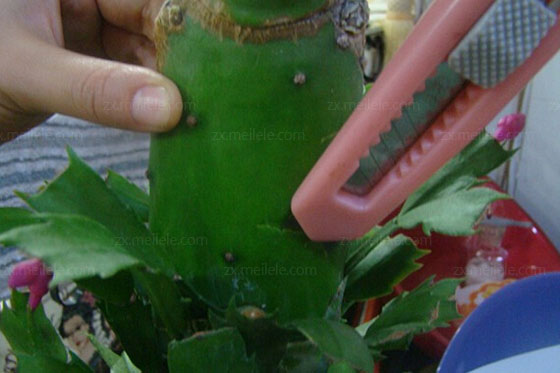
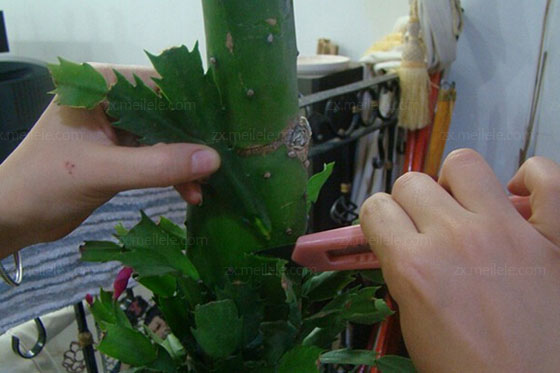
Make a cut at the top of the prepared rootstock; the width and depth of the cut should both be slightly larger than the scion, then quickly place the scion into the cut of the rootstock. After the scion is inserted into the cut, because there is quite a lot of sticky slippery liquid inside the rootstock cut, the scion is prone to slipping, and it may change position with a single careless move, so you should immediately fix the scion and the cut with your hand, then use the previously prepared cactus thorn to pierce horizontally through the rootstock and scion, so that they are connected and fixed together. In this way, the Christmas cactus is basically grafted, but it is still best to carefully check it again to see whether there are any problems you have not noticed.
3. Care and management after grafting Christmas cactus
After the grafting of Christmas cactus is completed, do not think that this is the end of it; this is only the initial grafting work being done well, and the later care and management have only just begun. First, you need to place the potted plant that has just been grafted in a cool, wind-and-rain-sheltered, ventilated and airy place indoors, and because the plant has just been separated from the plant body, it is very easy for it to become wilted due to excessive water loss, so water it appropriately and keep the potting soil slightly moist; however, when watering, be sure to make sure the graft interface does not come into contact with water, otherwise the wound is easily infected, reducing the plant's survival rate. With such careful care, after about half a month to one month, the Christmas cactus will be able to survive.
Conclusion: Grafting Christmas cactus is not something that can be completed with just a grafting method and process. If you want the plant to survive better, choosing a good grafting time and doing a good job of care and management after grafting are also very important matters.
[You may be interested in]
☑ How much does one azalea plant cost ☑ How to grow bamboo palm ☑ What to do if lucky bamboo turns yellow ☑ Epiphyllum pictures ☑ Striped wallpaper
☑ How to care for lucky bamboo in winter ☑ How many stalks of lucky bamboo bring wealth ☑ How much do 99 roses cost ☑ Sago palm pictures ☑ Cactus flower