How to Grow the Phoenix Plant Succulent? Key Planting Points and Cultivation Techniques
Legend has it that in a distant mythical age, there was a divine bird called the phoenix, which could rise from the fire and be reborn, never truly dying. Today we do not know whether that story is true, but in real life there is a succulent plant called the phoenix plant. So is there any connection between the two, and what kind of plant is this phoenix plant succulent, and what are its cultivation methods? Below we will take a look together at the key planting points and cultivation techniques for the phoenix plant.
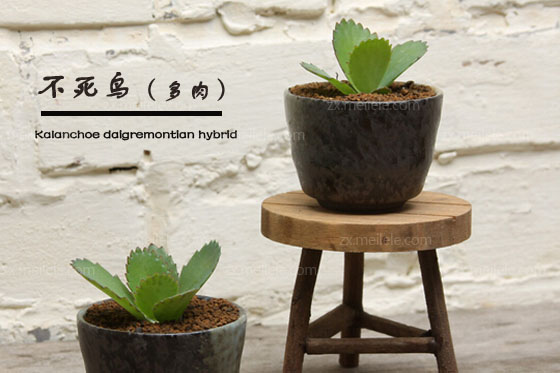
Introduction to the Phoenix Plant
The phoenix plant, scientific name Kalanchoe daigremontian hybrid, is another name for a succulent in the Crassulaceae family, the club-leaf air plant (Kalanchoe delagoensis). This succulent looks very distinctive, with long dangling leaves that some say look like little snakes, appearing quite bizarre, though others find its shape very unusual. At the same time, the plant grows long bulbs beside its bulbs, and bulbs grow on top of bulbs, while small plantlets and seeds grow on the leaves, making the plant very peculiar. In addition, this succulent has an especially tenacious vitality: with just a tiny bit of soil powder it can reproduce, and it is said that you can even see it on a vertical 90° wall. That is why the plant is named the phoenix plant, praising its vitality as being like the phoenix of mythology.
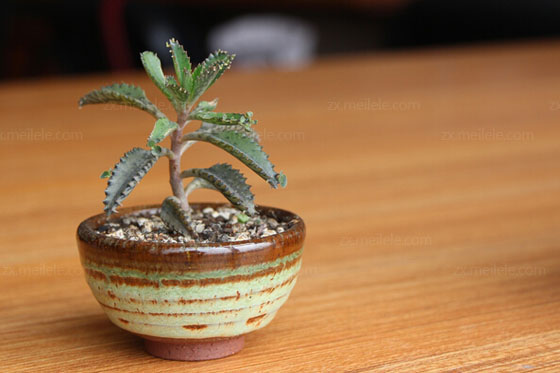
Key Planting Points and Cultivation Techniques for the Phoenix Plant
1. Temperature and Light
Although the phoenix plant is a very unique plant, it is still itself a succulent, a Crassulaceae succulent, so its key planting points are still very similar to those of ordinary succulents. First, in terms of temperature, the phoenix plant succulent likes a warm environment, so a warm environment should be maintained during cultivation. This air plant succulent in particular is very intolerant of cold in winter; when the surrounding temperature is below zero, the plant will be frostbitten, its leaves will be frozen into a jelly-like state, and after the sun comes out the next day the leaves will turn white, wither, and slowly head toward death. So when growing it in winter, be sure to keep it well protected from the cold. At the same time, the phoenix plant likes light, so sufficient light should be maintained during cultivation.
2. Water
Usually, succulents do not particularly need water, and the phoenix plant is the same. But during cultivation, sufficient water still needs to be maintained, because the phoenix plant likes a moist environment, although it can also grow and survive normally in dry soil. Conversely, when there is too much water, the phoenix plant may develop disease and die, because with too much water the plant's root system is prone to root rot, followed by the invasion of pests, diseases, and bacteria, so there is danger. Therefore, during cultivation, water must be strictly controlled, not too much, but not too little either; just the right amount of water is fine.
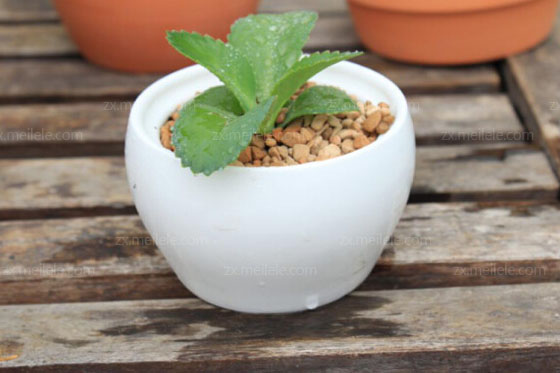
3. Soil
The phoenix plant truly has no particularly strict requirements for soil; as long as the soil can let air through, it will do, so even if people plant it in their own vegetable garden, it can still grow normally. However, in order for the plant to grow healthily and vigorously, the more nutrients in the soil, the better the plant grows, so during cultivation you can repot it regularly. In addition, when planting it is good to appropriately add some growing soil, so that the nutrients in the soil will be more sufficient. Furthermore, during ordinary cultivation, it is best to place the phoenix plant in a cool, ventilated place, which is more conducive to its growth.
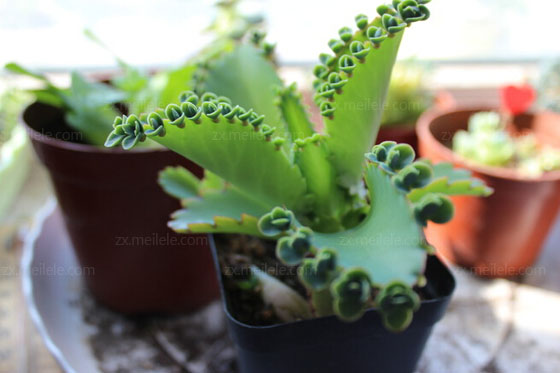
Conclusion: The reason the phoenix plant is called by this name is precisely because of its strong vitality, just like the phoenix in mythology. Even with only a tiny bit of soil powder, even without water for a month, it can survive, which is astonishing and also deeply fascinating.
[You may be interested in]
☑ Complete Collection of Wedding Cross-Stitch Patterns ☑ How to Grow Lucky Bamboo in Water ☑ Fashionable Curtains ☑ Curtain Hanging Methods ☑ Bed Sheet Sizes
☑ What Does a Blue Rose Mean ☑ When Does Lavender Bloom ☑ Music Pillow ☑ Double Pillow ☑ Quilt Sizes