How to Grow Succulents? A Detailed Guide to Cultivation Methods
Succulents are also known as succulent plants or fleshy plants, and in horticulture they are sometimes called succulent flowers, but the name "succulents" is the most commonly used. Commonly cultivated succulents include the Cactaceae, Aizoaceae, Euphorbiaceae, Crassulaceae, Liliaceae, Asclepiadaceae, Agavaceae and Asteraceae families. So what are the methods for growing succulents?
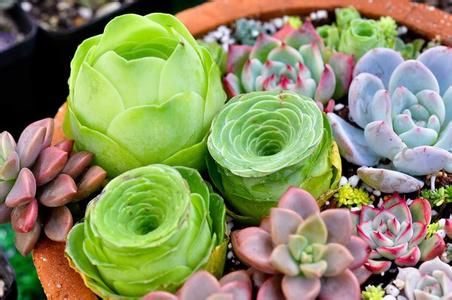
How to Grow Succulents
Growing medium: The soil should be loose, airy and well-draining, yet with a certain water-holding capacity, and neutral or slightly acidic. For highland globular types (the genera Rebutia, Gymnocalycium and Echinocactus) and Ariocarpus, a little more rice husk ash and small-grained weathered rock can be added. For tall columnar species, coarse quartz sand can be mixed in to stabilize the plant.
Transplanting and planting should generally be carried out during the recovery period just after the plant's dormancy ends. Before planting, the roots should be trimmed. After root trimming, leave the plant to dry for a few days before planting it in moist growing medium; after planting, provide appropriate shade and do not rush to water, and do not fertilize within one month.
Regulation of temperature and light: Cacti and succulents generally prefer warmth and a large day-night temperature difference. Except for epiphytic cacti and Haworthia species, light should be abundant but soft. For this reason, apart from a few flat-stemmed jointed species, tall columnar species and certain Agave species, they should generally be cultivated in a greenhouse year-round. Epiphytic types should be shaded except in winter, and in summer, combined with cooling, the shading level should be 50% to 70%. Although Epiphyllum and Schlumbergera (Christmas cactus) have a certain cold tolerance, keeping them warm in winter favors flowering the following year. Hylocereus undatus, widely cultivated as a rootstock, is not cold-tolerant and must be kept at at least 5°C in winter with full sunlight. Most terrestrial cacti grow most vigorously at 28°C to 35°C during the day and 10°C to 15°C at night. When indoor temperatures are often above 35°C to 38°C, growth stalls, and highland globular types and some species of hairy columnar types are also very prone to rot. Therefore, cooling is necessary, but not at the cost of reducing light as much as one would for epiphytic types. Most terrestrial types, when the potting soil is kept dry in winter, can withstand low temperatures of 2°C or even 0°C, but must not be directly exposed to frost or snow. Species of the genus Melocactus native to the Caribbean region and globular species that flower in winter require higher temperatures. Succulents that grow in summer can basically have their temperature regulated by referring to terrestrial cacti. Their light requirements are relatively lower, and some species with swollen stem bases are not cold-tolerant and should be kept at higher temperatures in winter. Succulents that grow in winter need ventilation and cooling to stay cool during their summer dormancy, and in winter they require ample sunlight with a minimum temperature maintained above 7°C.
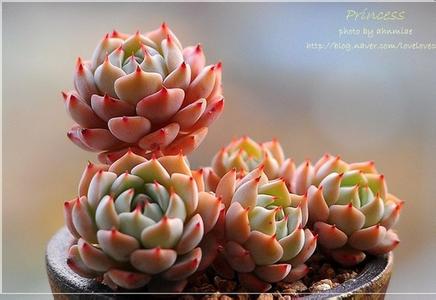
Watering and fertilizing: Watering should be carried out according to the plant's growth state. Whether a species is dormant in winter or in summer, watering into the pot must stop during dormancy. However, species that are dormant in summer must have water spread in walkways and similar areas to maintain a certain air humidity. Plants in their vigorous growth period should have their water needs fully met. Seedlings should be watered more, large globular plants less (referring to frequency); terrestrial types watered less, epiphytic types more; more watering during bud formation and flowering, less after flowers fade and fruit drops; plants with many thin leaves watered more, those with thick few leaves watered less. Fertilizing should be done during the vigorous growth period and bud formation period. Organic fertilizer must be fully decomposed. When applying chemical fertilizer, the nitrogen, phosphorus and potassium ratio should be 5:15:10 or 5:10:10, and a small amount of trace elements should be mixed in. Fertilizer should be applied lightly rather than heavily, and can be applied several more times when needed. Plants with damaged roots, poor growth, or wounds on stems and leaves must not be fertilized.
Pest and disease control: Pest and disease control should mainly focus on prevention. First, the environment must be clean and tidy. Strict checks must be made on introduced plants, and they should only be placed inside the greenhouse once confirmed free of pests and diseases. Concentrated pesticide spraying inside the greenhouse during the three periods of early winter, early spring and before the plum rain season has a doubly effective result. In addition, disinfecting the growing medium has a very good preventive effect. The commonly used agents are mainly two categories: fungicides for preventing and treating diseases (such as carbendazim, thiophanate-methyl, chlorothalonil, zineb, etc.) and insecticides (such as omethoate, dicofol, malathion, fenvalerate, etc.), which can be applied according to the symptoms. The concentration of the agents must be strictly controlled according to the instructions, especially insecticides, as even a slightly higher concentration causes phytotoxicity; Obregonia denegrii and some Euphorbiaceae succulents are especially sensitive to this. Spraying must be repeated several times to be effective (with a 2-day interval in between). After using the same agent twice, switch to a different one, as long-term use of a single pesticide easily leads to resistance.
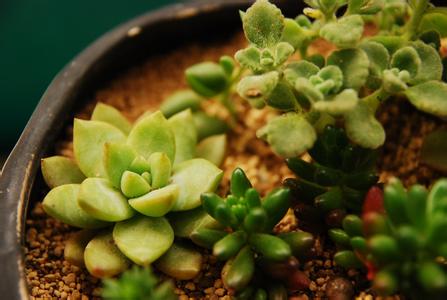
How to Pot Succulents
1. Regardless of whether they were bought from a flower market, a greenhouse or online, throw away all the soil from the original pot. (Online purchases generally do not come with potting soil.)
2. Wash the roots of the plant. Make sure that basically all the soil carried on the root system is rinsed off. This is because it very likely contains large numbers of insect eggs and bacteria. Be gentle when washing; some root damage is unavoidable, but keep it to a minimum. You can hold the roots in a basin of water and shake them back and forth. It is recommended not to turn on the tap and flush with very strong water, as this will break off a large number of roots. After repeated shaking and soaking several times, it is enough when the white main roots become visible.
3. After washing the root system, if you feel it is necessary, do some root trimming. Cut off those diseased and dead roots that have turned black or even become empty shells. Also appropriately trim away those lateral roots that have grown too long and become heavily tangled, to encourage new fibrous roots to grow. This will make the entire root system look evenly distributed and neat. After root trimming, the newly regrown root system will be strengthened, making the plant grow more robust. If you are not confident about it, you can also skip the trimming; that is fine, as long as you remove the dead and diseased roots.
4. At this point the root system will certainly have some damage, so next it needs to be soaked in a prepared disinfectant solution for about one hour. Carbendazim, chlorothalonil and thiophanate-methyl can all be used. Do not mix the concentration too high; multiple plants can be soaked in one small washbasin.
5. After the disinfection step is done, dry the plant's root system. Note that this is natural air-drying. Generally, it can be potted the same day (within a few hours).
6. Prepare the growing medium and disinfect it in advance.
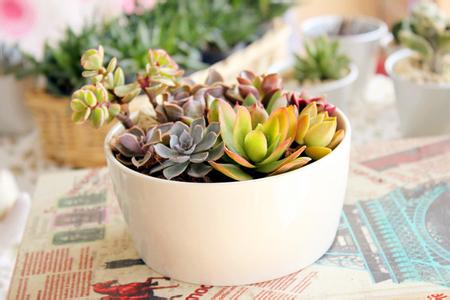
Key Points for Potting Succulents
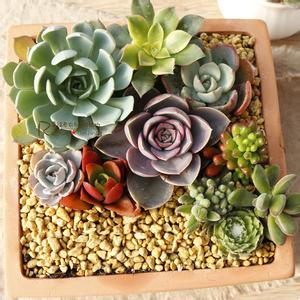
Potting succulents is very different from potting other plants. Whether the size of the container is appropriate has a great influence on the plant's appearance. A common misconception is that you want to use a large pot to give the plant's roots ample growing space, thinking that this way they will grow fast and well. In fact, the opposite is true: many succulents actually slow down their growth rate under such conditions. Some slow-growing rare varieties may even stop growing completely, because they simply do not like sitting in so much damp soil. Many experienced growers have already been rethinking this issue and have given up using oversized containers.
When repotting, it is enough to increase the pot size by only 0.5 inches (1.27 cm). For large pots of 5 inches (12.7 cm) or more, an upgrade of 1 inch (2.54 cm) is also sufficient. If you use an oversized container, the growth of the roots and other parts of the plant will be out of proportion, causing energy to be spent on branches and leaves. Some plants have an oversized crown, weak slender stems and soft drooping leaves, and it can be seen at a glance that the pot used is too large.
Be gentle when washing; some root damage is unavoidable, but keep it to a minimum. You can hold the roots in a basin of water and shake them back and forth. It is recommended not to turn on the tap and flush with very strong water, as this will break off a large number of roots. After repeated shaking and soaking several times, it is enough when the white main roots become visible.
3. After washing the root system, if you feel it is necessary, do some root trimming. Cut off those diseased and dead roots that have turned black or even become empty shells. Also appropriately trim away those lateral roots that have grown too long and become heavily tangled, to encourage new fibrous roots to grow. This will make the entire root system look evenly distributed and neat. After root trimming, the newly regrown root system will be strengthened, making the plant grow more robust. If you are not confident about it, you can also skip the trimming; that is fine, as long as you remove the dead and diseased roots.
4. At this point the root system will certainly have some damage, so next it needs to be soaked in a prepared disinfectant solution for about one hour. Carbendazim, chlorothalonil and thiophanate-methyl can all be used. Do not mix the concentration too high; multiple plants can be soaked in one small washbasin.
5. After the disinfection step is done, dry the plant's root system. Note that this is natural air-drying. Generally, it can be potted the same day (within a few hours).
6. Prepare the growing medium and disinfect it in advance.
Key Points for Potting Succulents
Potting succulents is very different from potting other plants. Whether the size of the container is appropriate has a great influence on the plant's appearance. A common misconception is that you want to use a large pot to give the plant's roots ample growing space, thinking that this way they will grow fast and well. In fact, the opposite is true: many succulents actually slow down their growth rate under such conditions. Some slow-growing rare varieties may even stop growing completely, because they simply do not like sitting in so much damp soil. Many experienced growers have already been rethinking this issue and have given up using oversized containers.
When repotting, it is enough to increase the pot size by only 0.5 inches (1.27 cm). For large pots of 5 inches (12.7 cm) or more, an upgrade of 1 inch (2.54 cm) is also sufficient. If you use an oversized container, the growth of the roots and other parts of the plant will be out of proportion, causing energy to be spent on branches and leaves. Some plants have an oversized crown, weak slender stems and soft drooping leaves, and it can be seen at a glance that the pot used is too large.