How to grow Alocasia macrorrhizos? An experienced flower enthusiast teaches you the cultivation methods
Alocasia macrorrhizos, which is actually what we commonly call the Alocasia macrorrhizos plant in daily life, is much loved by people because of its excellent air-purifying ability. Moreover, recently, as urban air quality pollution has worsened, Alocasia macrorrhizos has once again received people's welcome and favor. However, recently many people say that the Alocasia macrorrhizos they grew died, and they do not know why, so they are very curious about the question of how to grow Alocasia macrorrhizos. So below let us take a look at Alocasia macrorrhizos together.
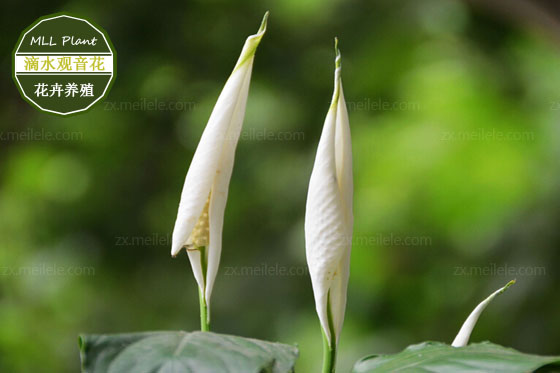
▋Introduction to Alocasia macrorrhizos
Alocasia macrorrhizos, also called dripping lotus, is called Alocasia macrorrhizos by people because the overall shape of the plant is like the hand of Guanyin in our mythology, and the leaf tips will also drip water when the plant has sufficient moisture. It is an evergreen herbaceous plant of the genus Alocasia in the Araceae family, and because it originated in tropical rainforests, it is a tropical rainforest plant. Alocasia macrorrhizos has excellent air-purifying ability and can absorb excess dust in the air and gases harmful to the human body, such as formaldehyde, benzene and other harmful substances, so it is deeply loved and welcomed by contemporary urban people and is very popular in modern society.
▋How to grow Alocasia macrorrhizos
1. Temperature and light
Alocasia macrorrhizos is a plant that is not cold-tolerant. Its suitable growing temperature is about 20 to 30 degrees Celsius. After all, it is a tropical plant, so it is not cold-tolerant. When the temperature is below 5 degrees Celsius, the plant may enter a dormant period, but the plant can tolerate high temperatures, and it grows better under high temperatures. At the same time, Alocasia macrorrhizos particularly loves light, but it is also a shade-tolerant plant and also very fond of semi-shaded environments, so when growing it, in order to avoid the plant's leaves being scorched by strong light, it is best to place it in a place that is both shaded and ventilated, and scattered light is also best, so that the plant grows faster and more healthily.
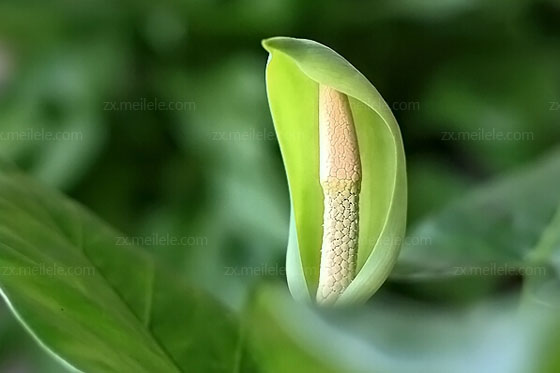
2. Watering and fertilizing
Alocasia macrorrhizos is very fond of water, and its demand for water is even greater during the growing season. In addition to basically keeping the soil moist, the air humidity also cannot be lower than 60 percent, so when growing it in high summer temperatures, in addition to watering in the morning and evening, it is also necessary to increase spraying. Spraying water on the leaf surface and spraying water into the air around the plant are both necessary. However, in winter, the plant enters dormancy and needs less watering. Alocasia macrorrhizos is also quite fond of fertilizer. During the period from March to October, applying fertilizer once every half month is enough. Generally, liquid fertilizer is fine, but when the temperature is below 15 degrees Celsius, fertilizing should be stopped.
3. Soil and pruning
The growth of Alocasia macrorrhizos requires sufficient nutrients, so fertile soil is very necessary. Usually people can prepare it by mixing some leaf mold, peat soil, and some river sand together with thoroughly composted cake fertilizer, but some people also grow Alocasia macrorrhizos hydroponically, and adding nutrient-rich nutrient solution in that case is also fine. In addition, when growing it in soil, note that the pot should be changed once every spring. Although Alocasia macrorrhizos does not have dead branches like trees, improper cultivation can also cause leaves to turn yellow, so in order to maintain the ornamental appearance of Alocasia macrorrhizos, these excess yellowed and withered leaves need to be pruned in time to avoid this situation continuing to exist.
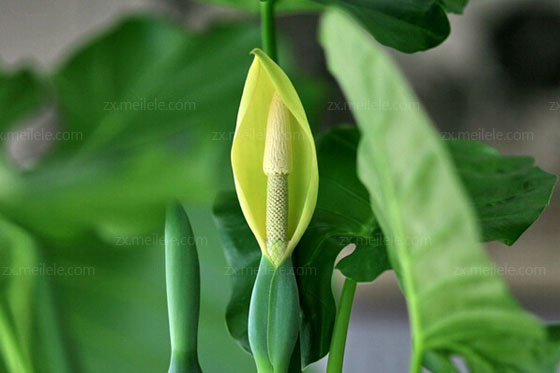
▋Is Alocasia macrorrhizos poisonous
Alocasia macrorrhizos is poisonous. Everyone should clearly understand that the white sap in the stem of this plant and the liquid it drips both contain a certain toxicity. If people accidentally touch it or eat it by mistake, it may cause serious consequences. In milder cases, it may cause discomfort in the human throat and mouth, and in severe cases, it may cause asphyxiation and death from cardiac paralysis. Moreover, if people's skin touches its sap, it may also cause allergic reactions, such as itching or redness and swelling. So when growing it indoors, everyone must reduce the possibility of contact with the plant and place the plant in a place a little farther away.
Conclusion: Growing Alocasia macrorrhizos is actually not very difficult. The hardest part is temperature control, since the plant has very high temperature requirements, so everyone just needs to grasp the growing temperature well during cultivation.
[You may be interested in]
☑ How to grow and care for Pachira aquatica and precautions ☑ Latex pillow ☑ Non-slip floor mat ☑ Boxwood bonsai ☑ Spathiphyllum
☑ How to grow and care for Clivia and precautions ☑ Soft furnishings ☑ Bookmark making ☑ Rubber floor mat ☑ Orchid grass