How to grow Clivia? A detailed guide to cultivation methods
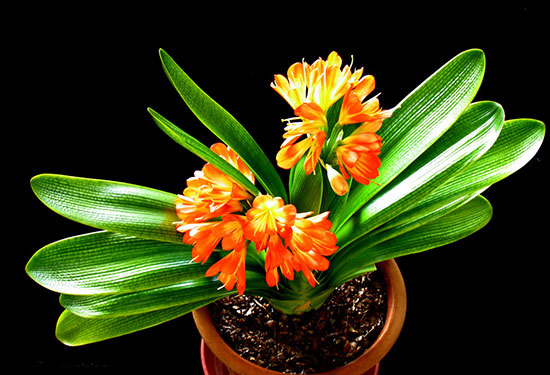
How to grow Clivia? What are the cultivation methods for Clivia? Clivia is native to the tropics. It prefers partial shade, with 10 to 25 degrees being the most suitable temperature, and it thrives in loose, fertile, slightly acidic organic soil. If the temperature is too high, it is not conducive to the growth of Clivia, and special care measures need to be taken to help Clivia "beat the heat and cool down."
Editor's picks: A complete guide to plant flower meanings - the flower meanings of four plants. What do lilies symbolize? What is the flower meaning of the bird of paradise?
>>Click the image to learn more <>
How to grow Clivia? What are the cultivation methods for Clivia? Below is an introduction to the cultivation methods for Clivia:
I. Heat avoidance and shading
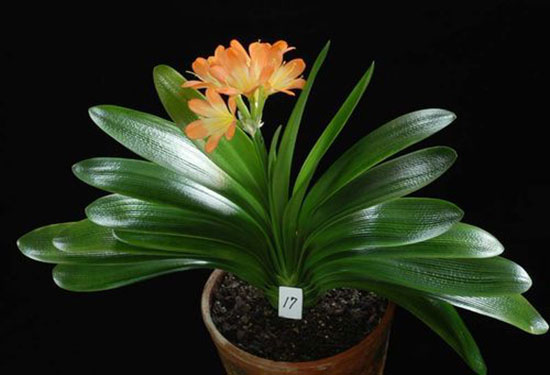
In summer, Clivia should be placed in a well-ventilated environment without direct strong light. Clivia is a medium-light flower, suitable for the soft light of spring and autumn, and not suited to harsh sun exposure. In summer, it is best to place the potted plant under a shade shed, with sunlight filtering through the gaps of the shade shed so the plant receives weaker light. If it can be placed in a spot that blocks direct sunlight at noon while still receiving sunlight in the morning and evening, that is ideal. Generally, summer shading should reach 60%-70% or more.
>>Click the image to learn more <>
II. Cooling and increasing humidity
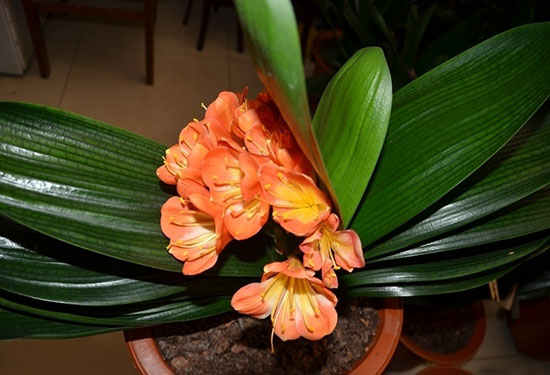
If the ambient temperature in summer is above 35°C, water in the soil evaporates too quickly, which will make Clivia's water and nutrient supply fall short of demand. Therefore, it is best to place the Clivia pot on a water pool or water basin (raised with a wooden board), and frequently spray water around the plant and on the leaf surfaces to improve Clivia's temperature and humidity environment, so that it can grow in a small environment below 25°C with humidity reaching 60%-70%, which helps it pass the summer safely and can also promote Clivia's summer growth.
>>Click the image to learn more <>
III. Appropriate watering
Clivia is native to the primitive forests of South Africa, which has given it special characteristics in form and physiological function. Clivia has broad leaves and a tender texture, requiring relatively high soil moisture content and relatively high air humidity. In the hot summer, Clivia grows slowly, and the root system absorbs little water, but the amount of water evaporated from the leaf surfaces is very large. Therefore, Clivia cannot lack water, otherwise the fleshy roots shrink, the leaf shape becomes thin and weak, and the leaves become dull and lusterless. When watering, adhere to the principle of watering when half-dry, and watering thoroughly when watering. But do not water as soon as the surface soil looks dry. Otherwise, if the potting soil remains moist for a long time, it is very easy to cause root rot and yellow leaves. When watering, be very careful not to let water flow into the leaf center, so as to avoid rotten heart disease, which leads to "beheading."
IV. Controlling fertilization
Summer temperatures are high, and Clivia is in a semi-dormant or dormant state. Therefore, fertilization should be controlled, and it should be applied as little as possible or not at all. This is because during this period its root absorption capacity is weak, and if fertilizer is applied or slightly too much fertilizer is applied, the fertilizer will accumulate around the root system for a long time, easily causing root rot and stem rot. However, during this period, if the temperature of Clivia's growing environment is lowered below 25°C, then some dilute liquid fertilizer can be applied appropriately to promote its growth and shorten its dormant period; if the temperature drops below 20°C and the humidity also meets the requirements, then fertilization can be carried out as usual.