A Detailed Guide to Croton Propagation Methods and Growing Techniques
Croton, also known as variegated laurel, is commonly seen as a shrub in the tropics. It is native to Malaysia and the Pacific region. Next, let us take a look at croton propagation together.
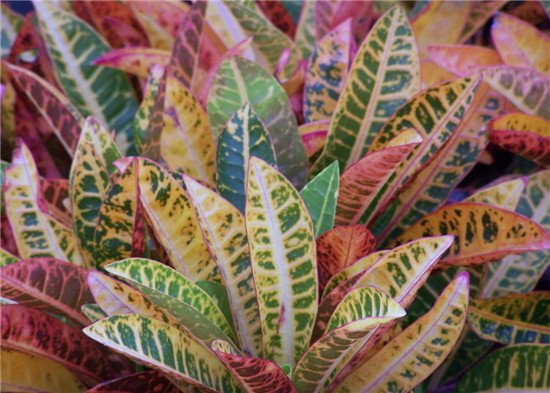
Croton is also known as variegated laurel. Euphorbiaceae, shrub or small tree. Leaves leathery, brightly colored and glossy. Often grown as a potted plant, and as a shrub in the tropics. The leaves contain anthocyanins, either single-colored or mixed in various colors including green, yellow, white, orange, pink, red, scarlet and purple. Leaves are 10-15 cm (4-6 in) long, with forms varying by cultivar, ranging from slender linear, lanceolate, ovate to deeply lobed. Its leaf colors include bright green, white, gray, red, light red, dark red, purple, yellow, yellow-red and so on.
Croton leaves are 5-30 cm long, (0.3-)0.5-8 cm wide, with tips shortly pointed, acuminate to rounded-obtuse, bases wedge-shaped, shortly pointed to obtuse, margins entire, shallowly lobed to deeply lobed, both surfaces hairless, green, light green, purplish red, purplish red alternating with yellow, yellow alternating with green, or sometimes with yellow or golden yellow spots or markings scattered on green leaves; petioles 0.2-2.5 cm long. Croton likes moisture and fears dryness. During the growing period, stems and leaves grow rapidly, so give plenty of water and spray the leaves daily. However, at low temperatures in winter, the potting soil should be kept slightly dry. If it is in a semi-dormant state in winter, too much water will cause leaf drop, so it must be strictly controlled.
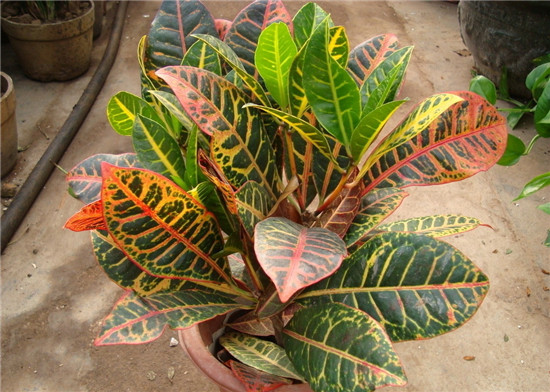
Croton is native to Java, Indonesia, and Australia. It likes a high-temperature, humid environment with plenty of sunlight, and is not cold-tolerant. The suitable growing temperature for croton is 20-30°C, and from March to October it is 21-30°C. In winter, the temperature should not be lower than 13°C. For a short period at 10°C, the leaf color becomes less vivid, appearing dull and lacking luster. At 4-5°C, the leaves suffer cold damage, causing heavy leaf drop and even the death of the whole plant from freezing. Croton is a light-loving plant and needs sufficient sunlight throughout the growing period; then the stems and leaves grow luxuriantly and the leaf color is bright and vivid, especially the red markings, which become even more brilliantly red.
Croton Growing Methods
1. Soil: Croton likes fertile, moist, well-drained soil. For potting, use 3 parts garden soil, 1 part compost, 1 part river sand, or a mix of 3 parts coarse peat, 3 parts leaf mold and 2 parts sand as the substrate.
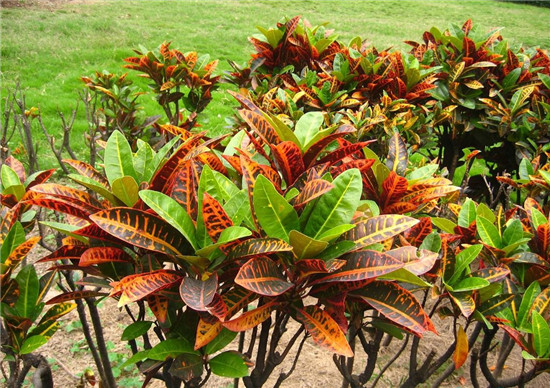
2. Sunlight: Croton has a relatively wide tolerance for light, but sufficient sunlight helps promote good growth and achieve higher ornamental value. Therefore, apart from needing appropriate shading under strong summer light, in spring, summer and autumn the leaf color becomes more beautiful under open-air light conditions. Croton is not very shade-tolerant, and is generally suitable for placement indoors in a spot with strong diffused light, and for no more than 2-3 weeks. If light is lacking or insufficient for a long time, the leaf color will lose its luster and leaves will drop easily.
3. Watering: During the growing period from May to October, croton should be given relatively sufficient water, spraying the leaves and the ground every day to maintain high air humidity and keep the leaf surface clean and glossy. In late autumn and winter, gradually reduce the amount of watering, but be sure to spray the leaves to keep the indoor air humid, and provide appropriate ventilation.
4. Temperature: Croton likes heat and fears cold. The safe indoor wintering temperature in winter is 10-15°C. Below 10°C, leaf drop easily occurs, and water-soaked or discolored areas also appear on the branches. In summer it can adapt to high temperatures above 30°C.
5. Fertilizing: Croton is generally given 1 application of decomposed liquid fertilizer every 2 weeks. Nitrogen fertilizer must not be too much, otherwise the leaves turn green and dull, losing their vividness. From late autumn to winter, fertilize less or not at all, to avoid producing new shoots.
6. Pest and disease control: If the growing environment is hot and dry, croton is prone to damage from scale insects, red spider mites and aphids. For red spider mites and aphids, spray 1000 times diluted dimethoate solution for control; for scale insects, spray 100-150 times diluted petroleum emulsion for control; if sooty mold occurs, wipe with clean water or spray 500-1000 times diluted carbendazim.
The Role of Croton in the Home
Keeping croton at home has medicinal value, including clearing heat and regulating the lungs, and dispersing blood stasis and reducing swelling. It is used for the syndrome of upward reversal of lung qi, carbuncles, sores and toxins, and venomous snake bites.
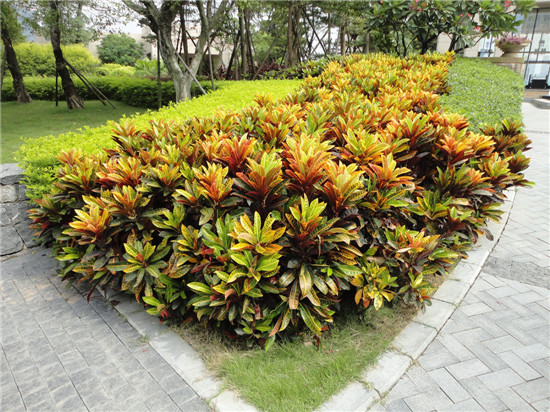
Because croton shows beauty of color and beauty of form in its leaf shape and leaf color, it is deeply loved among foliage plants and is mostly used for beautifying green spaces and gardens. Its branches and leaves are ideal foliage material for flower arrangements. Croton is the foliage tree species with the greatest variation in color and shape in nature, and it is extremely beautiful. Medium-sized potted plants, displayed in halls, conference rooms, hotels and restaurants, add a touch of luxurious style; small potted plants can also be placed on desks and coffee tables in bedrooms and studies, offering an exotic flavor.
Croton's peculiar leaf shape variations and brilliantly colorful leaf colors leave people full of admiration. Placed as potted plants in a home's hallway or on a balcony, they can display an elegant and luxurious style. A few pots dotted around a room and a small courtyard present a thriving scene. Because it is not very shade-tolerant, the indoor viewing time should not exceed 2-3 weeks. In the south it is also suitable for courtyard arrangements, and its leaves are also excellent decorative material for wreaths, flower baskets and flower arrangements. Potted croton is insensitive to ethylene during storage and transport, and at a temperature of 16-18°C and 80%-90% relative humidity, it can tolerate darkness for 30 days.
The above is the full content of the croton propagation methods and croton growing techniques that I have summarized for everyone. I hope this article can help you. Please also continue to follow us.
It can display an elegant and luxurious style. A few pots dotted around a room and a small courtyard present a thriving scene. Because it is not very shade-tolerant, the indoor viewing time should not exceed 2-3 weeks. In the south it is also suitable for courtyard arrangements, and its leaves are also excellent decorative material for wreaths, flower baskets and flower arrangements. Potted croton is insensitive to ethylene during storage and transport, and at a temperature of 16-18°C and 80%-90% relative humidity, it can tolerate darkness for 30 days.The above is the full content of the croton propagation methods and croton growing techniques that I have summarized for everyone. I hope this article can help you. Please also continue to follow us.