Golden Agave Cultivation Methods and Uses Explained in Detail
Agave, also known as dragon tongue palm and sisal hemp, is a perennial evergreen large herbaceous plant of the Agavaceae family, Agave genus. Next, let us take a look at what the cultivation and uses of Golden Agave are.
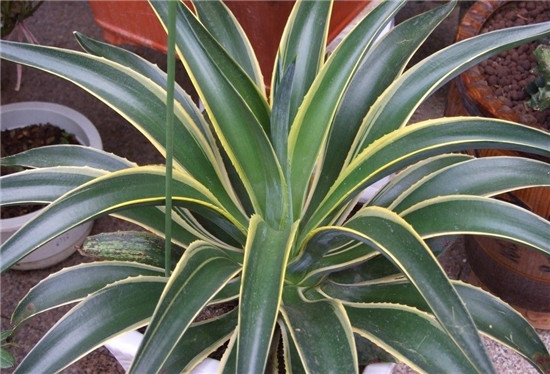
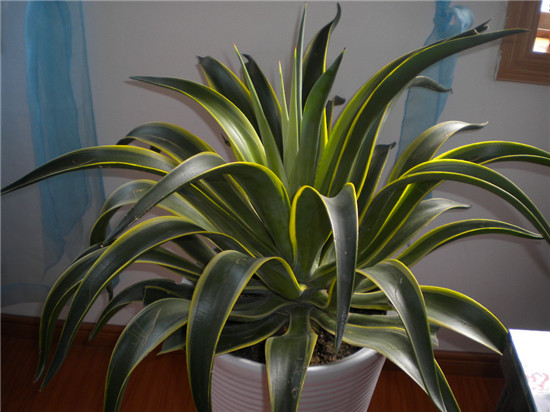
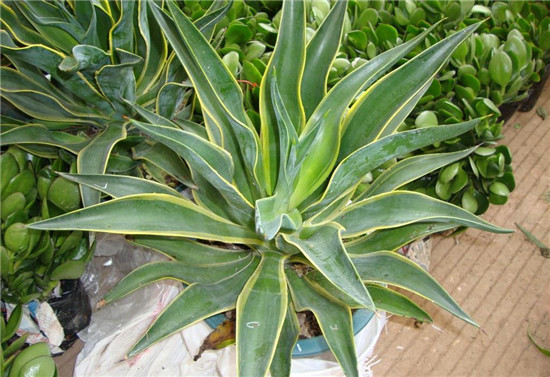
Perennial evergreen herb. Stem short, slightly woody. Leaves mostly clustered, sword-shaped, varying in size; small ones 145-25cm long, 5-7cm wide, large ones up to 1m long, thick, smooth, green, with yellow-white bands along the margins, and red or purplish-brown spiny teeth. Leaf blades have many transverse stripes, flowers yellow-green, fleshy; stamens 6, anthers T-shaped in attachment; ovary 3-locular, style subulate. Capsule long elliptic, loculicidal dehiscence. Seeds numerous, flat, black. Flowering in summer.
This product is flat and sheet-like, variable in length, 1-5mm thick, margins often curled. Surface yellow-brown to dark brown, wrinkled, densely covered with longitudinal stripes; leaf margins pale yellow, relatively smooth. Texture brittle, easily broken, fracture surface fibrous.
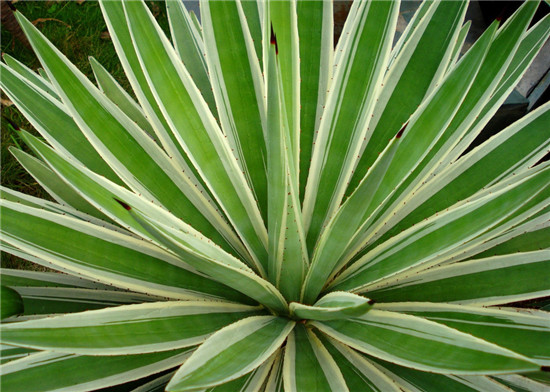
Growth and distribution: native to the desert regions of the Americas. Prefers a warm, well-lit environment, with a growing temperature of 15-25°C; extremely drought-tolerant, requiring loose, permeable soil.
Propagation: commonly propagated by division and sowing. Division is carried out in early spring in April when repotting; lift out the mother plant and peel off the offshoots beside the mother plant to plant separately. For sowing, seeds can only be set through cross-pollination; after collecting seeds, sow in April-May, germinating in about 2 weeks. Seedlings grow slowly, growing rapidly once established; only old plants over 10 years old can flower and set seed.
Cultivation: For pot culture, a mixed soil of leaf mold plus coarse sand is commonly used. Fertilize once a month during the growing season. In summer, increase watering to keep the leaves emerald green and tender; when exposed to strong sun, provide slight shading. After autumn, Agave grows slowly, so watering should be controlled, aiming for dryness, fertilization stopped, and soil hilled up appropriately. If grown as a potted ornamental, promptly remove side offshoots to keep the plant's form attractive.
Propagation Methods
Most species of Agave plants flower only once in their lifetime, and after flowering, as the seeds mature, the plant gradually dies. Agave generally accumulates nutrients over many years, then suddenly sprouts and grows wildly. However, this exhausts all its energy, and the Agave soon dies after the burst of growth. Moreover, some precious varieties are very difficult to flower, so in production, division, cuttings, and sowing are commonly used for propagation.
Division is mostly carried out during the growing season, often combined with spring repotting. Remove the young plantlets sprouting from the base of the old plant; those with roots can be directly potted, and both rooted and unrooted ones can survive.
Cuttings are carried out during the growing season. Remove the young shoots sprouting from the leaf axils, let them dry for 5-7 days, and after the wounds are dry, plant them in a well-drained, well-aerated growing medium; they root and survive easily.
Sowing: if seeds can be collected, sowing propagation can also be carried out. Sowing propagation has a fairly high emergence rate, and seedling management is not too difficult. The optimal temperature for seed germination is above 15°C at night and around 30°C during the day; if the nighttime temperature is below 10°C and the daytime temperature below 20°C, the germination rate drops greatly, or they may even fail to sprout. After sowing, cover the pot surface with a transparent glass pane to keep warm and moist; seedlings emerge 7-10 days after sowing.
Uses of Golden Agave
Golden Agave can be used as a medicinal material: the fresh juice of the original species Agave (which flows out naturally when the bud is cut off at flowering) has mild laxative and diuretic effects. It has certain therapeutic effects on experimental nephritis in dogs. The leaves contain a pungent volatile oil and can be used as a local stimulant. Extracts of the related plant Agave schottii have an inhibitory effect on Walker carcinoma-256, with the active component being saponins (the aglycone being gitogenin). Golden Agave has medicinal effects for people in moistening the lungs, resolving phlegm, and relieving cough. It is used for consumptive cough, vomiting of blood, and asthma.
Agave can also purify indoor air: Agave has the effect of purifying indoor air at night, mainly because, like cactus-family plants, it has the special function of absorbing carbon dioxide and releasing oxygen at night.
The above is all the content I have summarized for you on what the cultivation and uses of Golden Agave are. I hope this article can help everyone. Please also continue to follow us.