What are the benefits and effects of red salvia miltiorrhiza?
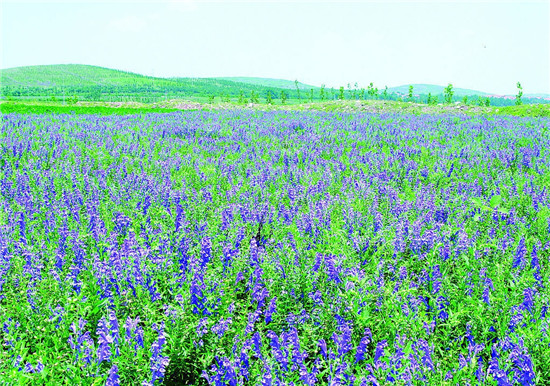
Salvia miltiorrhiza, also known as Xichan grass, benma grass, and long sage, is a perennial herb 30-80 cm tall. Next, let us take a look at the benefits and effects of salvia miltiorrhiza.
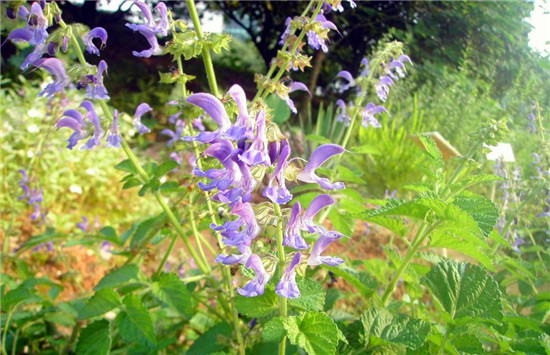
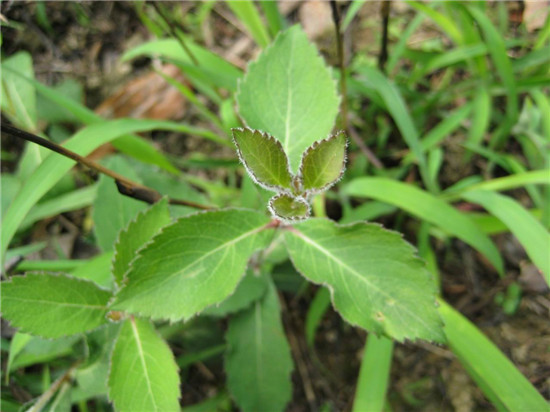
The whole plant of salvia miltiorrhiza is densely covered with yellowish-white soft hairs and glandular hairs. The root is slender and cylindrical, with a vermilion outer bark. The stem is upright, square, with shallow grooves on the surface. The leaves are odd-pinnate compound, opposite, with petioles; leaflets number 3-5, rarely 7, with the terminal leaflet being the largest and also having the longest petiolule, while the lateral leaflets have short petiolules or none; the leaflets are ovate or broadly lanceolate, 2-7.5 cm long and 0.8-5 cm wide, with acute or acuminate tips, oblique-rounded, broadly cuneate, or nearly cordate bases, and rounded serrate margins; the upper surface is dark green and sparsely covered with white soft hairs, while the lower surface is grayish-green and densely covered with long white soft hairs, especially densely along the veins.
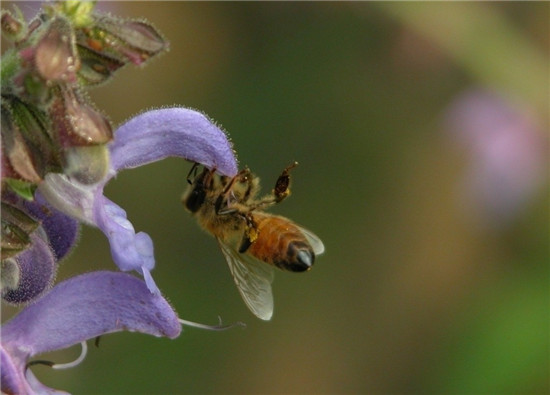
The inflorescence is a raceme, terminal or axillary, 10-20 cm long; the florets are whorled, with 3-10 flowers per whorl; the bracteoles are lanceolate, about 4 mm long; the calyx is purplish, long bell-shaped, 1-1.3 cm long, with a two-lipped tip, the upper lip broadly triangular with an acute tip, the lower lip triangular with a two-pointed tooth split at the tip, and the throat of the calyx tube densely covered with long white hairs; the corolla is blue-purple, two-lipped, about 2.5 cm long, the upper lip straight and slightly sickle-shaped, the lower lip shorter and rounded, with a 3-lobed tip, the central lobe longer and larger, and its tip further shallowly 2-lobed; there are 2 fertile stamens, with columnar filaments, a slender and horizontally extended connective, and T-shaped attachment; the anther is unilocular, linear, and extends beyond the corolla; there are 2 staminodes, with anthers reduced to petal-like structures; the ovary is superior, deeply 4-lobed, the style extends beyond the corolla, and the stigma is 2-lobed and purplish. The nutlets are 4, elliptical, black, and 3 mm long. The flowering period is May-August. The fruiting period is August-September.
Benefits and Effects of Red Salvia Miltiorrhiza
If you are troubled by dysmenorrhea, you can soak your feet in salvia miltiorrhiza, which can promote blood circulation, activate blood and resolve stasis, and regulate menstruation and relieve pain. Red salvia miltiorrhiza is also a treasure for older people; consuming it can help prevent cardiovascular and cerebrovascular diseases and protect the heart.
Activating blood and resolving stasis. For older people, if there are blood clots in the blood vessels, it is quite troublesome. The blood clots mentioned here are also blood stasis. Once blood stasis accumulates, blood circulation will be blocked, making it impossible to supply blood to various organs, and the situation is relatively serious. Consuming salvia miltiorrhiza can solve this, because salvia miltiorrhiza has the effect of activating blood and resolving stasis, keeping blood flow smooth.
Improving the problem of cold hands and feet. Many people experience cold hands and feet in winter. Even if they wear a lot of clothes, their hands and feet are still cold, and these people tend to be more afraid of the cold. Generally speaking, this is cold hands and feet caused by insufficient blood and qi or poor circulation of blood and qi. Drinking soup made with salvia miltiorrhiza regularly can not only warm the body, but also activate blood and nourish blood.
Removing dark circles under the eyes. Dark circles are actually caused by the production of melanin due to microcirculation disorders. Some people may simply not rest well, but the main cause is blocked blood circulation. Consuming red salvia miltiorrhiza can improve microcirculation and help remove dark circles.
Preventing cardiovascular and cerebrovascular diseases. Salvia miltiorrhiza has relatively good therapeutic effects on cardiovascular and cerebrovascular diseases. It can also treat high blood pressure, high blood lipids, and arteriosclerosis, and it also has a good effect on treating diabetes.
The above is the full content of the benefits and effects of red salvia miltiorrhiza that I have summarized for everyone. I hope this article can help you. Please also continue to follow us.