A Detailed Guide to the Care Methods and Techniques for the Watermelon Peperomia
The watermelon peperomia, also known as the round-leaf peperomia, is a perennial herbaceous plant. Next, let us take a look at how to care for the watermelon peperomia.
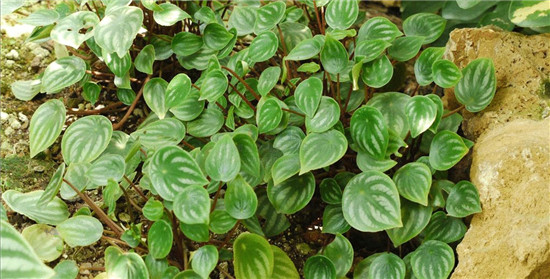
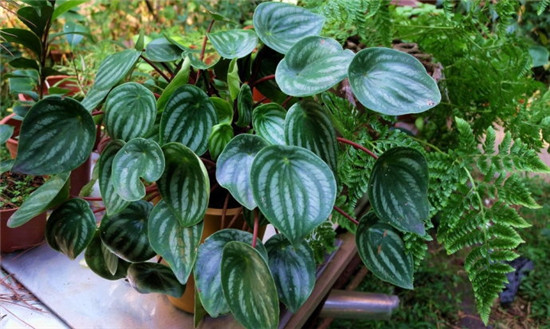
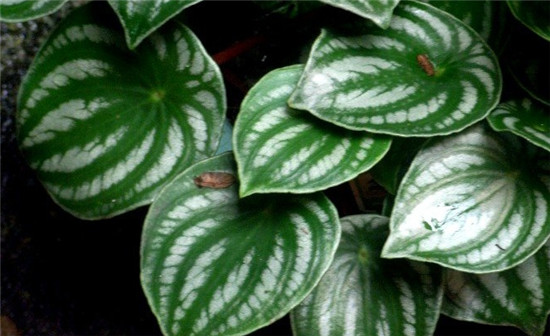
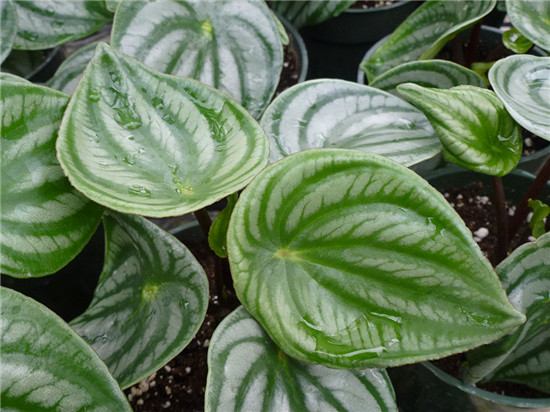
The watermelon peperomia, also known as the round-leaf peperomia, is a perennial herbaceous plant that stays evergreen all year round and is native to South America and tropical regions. Its stems are short and clustered, and the leaf stalks are reddish-brown. The leaves are ovate with pointed tips and about 6 cm long. The leaf veins radiate from the center outward, with 8 main veins in dark green and the areas between the veins in silvery gray, resembling watermelon rind, which is why it is called the watermelon peperomia.
For the watermelon peperomia, the suitable growing temperature is 20-28°C. Above 30°C and below 15°C, growth slows down. Its cold tolerance is rather poor, and in winter the indoor minimum temperature must not be lower than 10°C, otherwise it is prone to cold damage. It is commonly propagated by division and leaf cuttings.
How to Grow the Watermelon Peperomia
1. The soil should be fertile
The watermelon peperomia needs to be grown in loose, fertile, well-drained soil, and grows poorly in clay soil. For the potting soil, it is best to use a mix of leaf mold and coarse sand or coal cinder ash. Peat moss + perlite can also be used for cultivation.
2. Water should be moderate
During the growing season, the potting soil should be kept moist, but water must not accumulate in the pot, otherwise the roots and leaves are prone to rot, and even the whole plant may die. In summer and dry seasons, water should be sprayed on the leaves 2-3 times a day to increase air humidity and encourage the formation of leaf markings. It fears both drought and waterlogging. Drought causes wilting, yellowing, and even death; waterlogging causes root rot. It is enough to keep the potting soil slightly moist, or water whenever the surface of the potting soil looks dry. In winter, if the temperature is somewhat low, watering should be controlled, letting the potting soil alternate between dry and wet.
3. Humidity should be sufficient
It needs relatively high air humidity and is not tolerant of dryness. In addition to normal watering, the plant should also be sprayed with water frequently. If conditions permit, it is best to sprinkle water in the growing environment to increase humidity, which gives good results. In a dry environment, the leaves grow very abnormally.
4. Light should be dim
Because the watermelon peperomia is relatively shade-tolerant, it should usually be placed in a spot indoors with bright, diffused light, and direct strong light must be avoided. In spring and autumn, it should be moved outdoors to a well-ventilated spot with a little sunlight for care. It likes semi-shade or diffused light, and only in winter can it be grown in full sun. In summer, 50% shade must be provided, otherwise the leaves are easily scorched. However, if it is too shaded, the leaf color becomes dull and grayish-green, and the markings are not obvious.
5. Temperature should be suitable
The watermelon peperomia tolerates neither severe cold nor intense heat. The optimum growing temperature is 20-30°C. When the temperature exceeds 30°C or falls below 15°C, growth slows down. In winter, the minimum temperature must not be lower than 10°C, otherwise it is prone to cold damage. It may even develop physiological disorders.
Causes of Root Rot in the Watermelon Peperomia
The watermelon peperomia dislikes direct strong light and likes plenty of diffused light, so it should usually be placed in a semi-shaded spot for cultivation. The watermelon peperomia has relatively strict water requirements. During the growing season, it is enough to keep the potting soil moist, but water must not accumulate in the pot, otherwise the roots and leaves are prone to rot, and even the whole plant may die. The watermelon peperomia has relatively poor cold tolerance. The optimum growing temperature is 20-30°C, and in winter the minimum temperature must not be lower than 10°C, otherwise it is prone to cold damage. In winter, the water temperature should be controlled even more carefully when watering; water that is too cold can also cause the plant to rot. The watermelon peperomia rarely suffers from diseases, but during propagation or at the mature plant stage it is often infected by Phytophthora, causing rot of the stem base and leaves.
Solutions for Root Rot in the Watermelon Peperomia
1. Too much watering
The most common cause of root rot in the watermelon peperomia is too much watering. If the rot is not too severe, it can be placed in a spot with plenty of diffused light. Be careful not to repot or water at this time, and wait until the rotted area dries and heals before returning to normal care. If the rot is severe, the top with two or three leaves can be cut off, or a single leaf with about 0.5 cm of stem can be cut off, inserted into looser soil, watered moist, and placed in a cool place, where it will easily grow roots.
2. Water temperature too low
After winter begins, the watermelon peperomia needs its watering amount and water temperature controlled. If the water temperature is lower than room temperature, the watermelon peperomia will be chilled and its roots will rot. Generally, watering or spraying the plant with lukewarm, calcium-free soft water gives relatively good results.
3. Phytophthora infection
Phytophthora infection is another cause of root rot in the watermelon peperomia. In this case, careful maintenance is required. Be careful not to let it become too wet, and do everything possible to bring the humidity down. When watering, do not splash mud onto the base of the plant stems. After rain, drain promptly to prevent moisture from lingering. In the early stage of the disease, spray 27% copper hydroxide suspension concentrate at 600 times dilution, or 53.8% Kocide 2000 dry suspension concentrate at 1000 times dilution, 70% fosetyl-Al·mancozeb wettable powder at 500 times dilution, 69% dimethomorph·mancozeb wettable powder at 1000 times dilution, or 70% Baidefu wettable powder at 500-700 times dilution.
The above is the full content of my summary on how to care for the watermelon peperomia. I hope this article can help everyone. Please also continue to follow us.
The above is the full content of my summary on how to care for the watermelon peperomia. I hope this article can help everyone. Please also continue to follow us.