What are the characteristics of softstem bulrush? A detailed explanation of its morphological features and growth habits
Softstem bulrush is a perennial rootstock emergent herbaceous plant in the Cyperaceae family. Its stems are tall and straight, much like the edible scallion. Let us now learn about this plant, softstem bulrush!
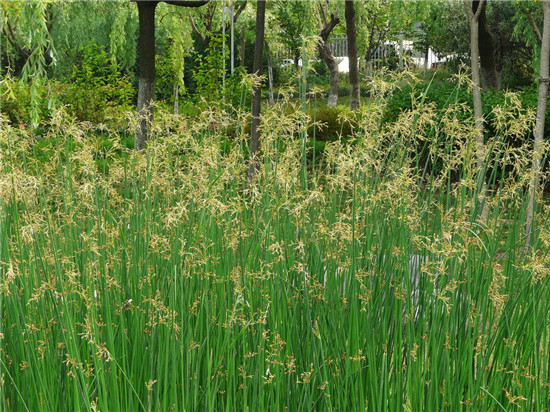
Softstem bulrush is a perennial rootstock emergent herbaceous plant in the Cyperaceae family, with a plant height of 1-2 m. Its stems are tall and straight, very similar to the edible scallion, but it is not edible. It often grows on lakeshores, watersides, shallow ponds, swamps or wet grasslands. The aboveground parts of softstem bulrush can all be used as medicine, and it has the effect of promoting diuresis and reducing swelling.
Softstem bulrush not only has good ornamental value, but can also purify the water environment. It can absorb nutrient elements such as nitrogen and phosphorus from the silt at the bottom of the water, improve water eutrophication, and thereby achieve the effect of purifying water bodies.
Softstem bulrush also has certain medicinal value. Its stems can be used as medicine, with the effects of removing dampness, promoting urination, and eliminating edema. In addition, the stems of softstem bulrush can be used as textile materials or papermaking raw materials.
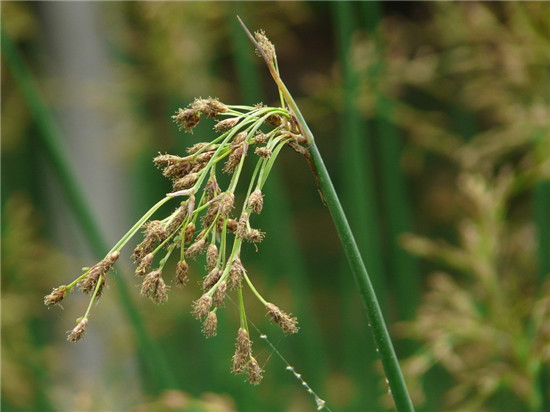
Morphological features of softstem bulrush
Perennial rootstock emergent herbaceous plant. Plant height 1-2 m, stems tall and straight, much like the edible scallion we eat, but not edible. The culm is cylindrical and hollow. The rhizome is thick and creeping, with many fibrous roots. At the base there are 3-4 membranous tubular leaf sheaths, the sheath length can reach 40 cm, and the uppermost leaf sheath has a leaf blade.
The linear leaf blades are 2-11 cm long. The paniculate inflorescence is pseudolateral, and the inflorescence appears terminal. The bracts extend from the top of the culm, at the tips of many rays, up to 5 cm long. Elliptic or ovate spikelets are solitary or in clusters of 2-3 at the tips of the rays, 5-15 mm long and 2-4 mm wide, bearing numerous flowers.
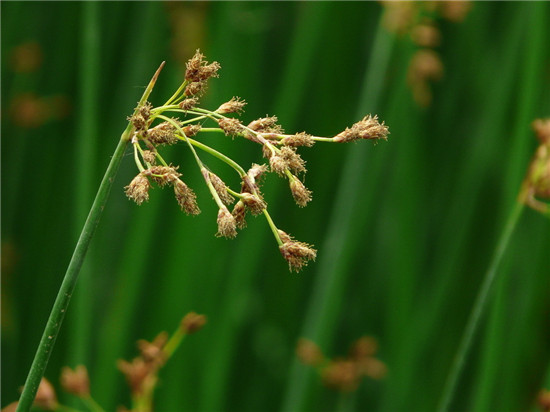
The scales are ovate with a small notch at the apex, and the midrib extends beyond the notch into a short mucro; the margins are pubescent, and there are spots on both sides of the back. There are 6 barbed hypogynous bristles, brown, equal in length to the nutlet; 3 stamens, stigma two-cleft, slightly longer than the style. The nutlet is obovoid, biconvex, about 2-3 mm long. Flowering and fruiting period is June-September.
Key points for planting softstem bulrush
1. Softstem bulrush prefers a cool climate, avoids intense heat, and is tolerant of frost and cold. It is not very demanding regarding winter temperature; as long as it is not exposed to frost, it can overwinter safely. It dies when the temperature rises above 30°C in late spring and early summer, and the most suitable growth temperature is 15-25°C. Try to sow in autumn and winter to avoid high summer temperatures.
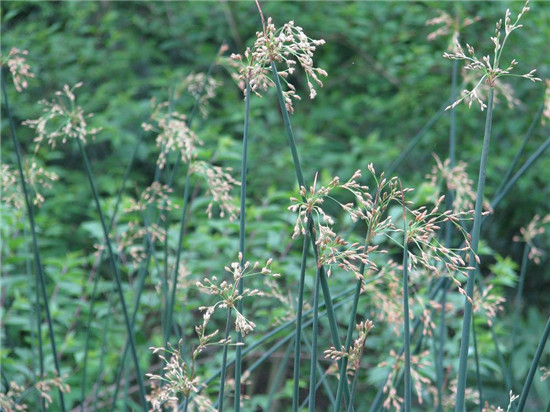
2. In the three seasons of late autumn, winter and early spring, since the temperature is not very high, it should be given direct sunlight to facilitate photosynthesis and the formation of flower buds, flowering and fruiting. If high-temperature weather occurs in summer, it needs to be shaded from about 50% of the sunlight. If it is kept indoors for ornamental cultivation after flowering, it should be placed near southeast-facing doors and windows to extend the flowering period and increase the number of flowers as much as possible.
The above is all the content I have summarized for everyone on the characteristics of softstem bulrush. I hope this article can help everyone. Please also continue to follow us.