Dieffenbachia in Detail: Get to Know This Foliage Plant
Dieffenbachia is one of the better-known varieties of the Dieffenbachia genus, an elegant indoor foliage plant, and one of the most favored indoor foliage plants today. Today I will walk you through an introduction to Dieffenbachia.
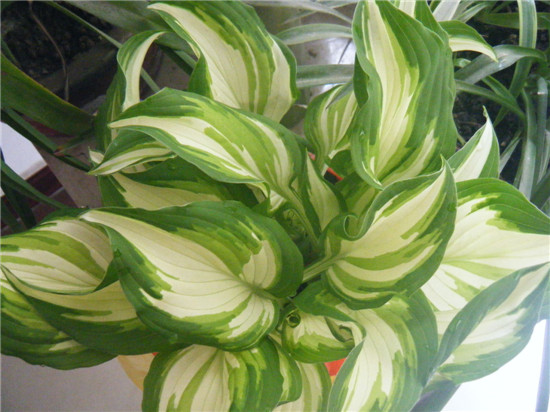
Dieffenbachia, also known as dumb cane, is a plant of the genus Dieffenbachia in the family Araceae. This genus contains about 30 native species, mainly distributed in tropical America. It was introduced to the UK in the 1860s and quickly spread throughout Europe, the Americas and Oceania. It is widely cultivated around the world, and its many cultivars have entered countless homes.
Dieffenbachia has deep green leaves with clear, glossy markings; it is dignified yet elegant. It is relatively shade-tolerant and easy to care for, and under ordinary conditions it can survive for a long time, making it an ideal foliage plant for indoor green decoration.
Dieffenbachia is an evergreen plant of the family Araceae, grown mainly for its foliage. Zebra plant gets its name because the markings on its leaves closely resemble the stripes on a zebra; it is also called silver-vein aphelandra, an evergreen shrub or perennial herbaceous plant of the genus Aphelandra in the family Acanthaceae. The sap of the leaves is highly toxic and can render a person mute, so caution is needed.
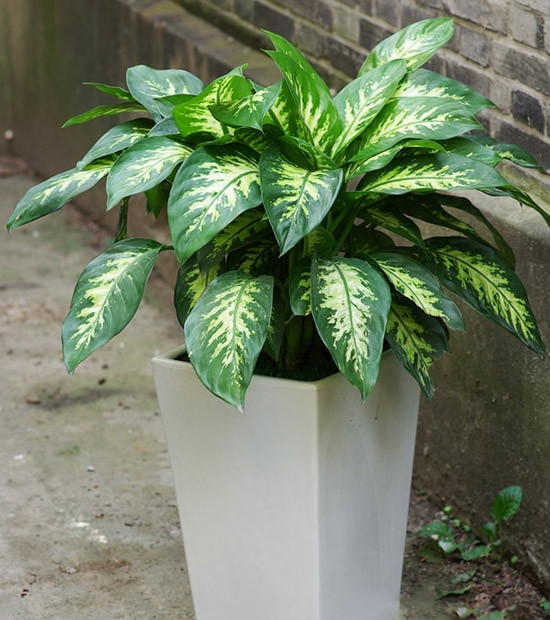
Dieffenbachia leaves can reach 12 cm in width and 30 cm in length. The name Dieffenbachia likely comes from its leaves, which bear many spots. These spots are all irregular; some are large, some small, and some patches are white while others are yellow-green.
Overall, Dieffenbachia likes hot, humid places, but strong sunlight must be avoided. When the growing environment of Dieffenbachia drops below 10°C, we will see its leaves turn yellow and appear unhealthy. As the seasons change, attention must also be paid to Dieffenbachia's environment; in spring, place it in a shaded spot where it will not be exposed to rain.
Although Dieffenbachia likes to grow in warmer places, this does not mean it likes direct sunlight. Exposure to strong sunlight in particular will cause its leaves to lose their luster and vitality. In caring for Dieffenbachia, we must prevent it from being exposed to direct sunlight.
The benefits of Dieffenbachia:
1. Ornamental value
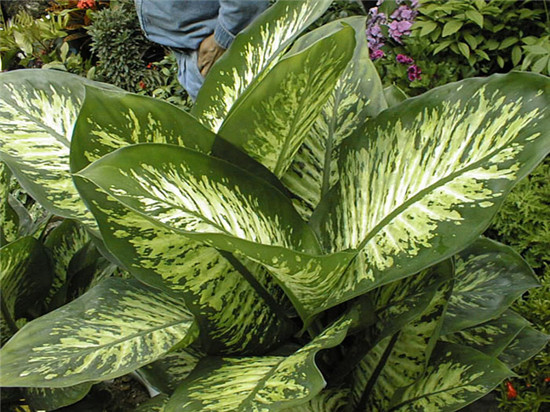
Dieffenbachia is an excellent indoor foliage plant. Its leaves are broad and yellow-green, with dense irregular white or yellowish-white spots; some are golden yellow with green edges. The colors are bright and striking, graceful and elegant, with very high ornamental value, making it one of the more popular indoor foliage plants today.
2. Home decoration
Dieffenbachia is generally grown indoors in pots for display. Small potted young plants can be placed on a desk or windowsill for viewing; medium-sized potted plants can be placed in a corner of the living room or beside the sofa as decoration, filling the home with natural vitality. A home decorated with Dieffenbachia is very elegant and stylish; it is an excellent green plant for home decor.
3. Air improvement
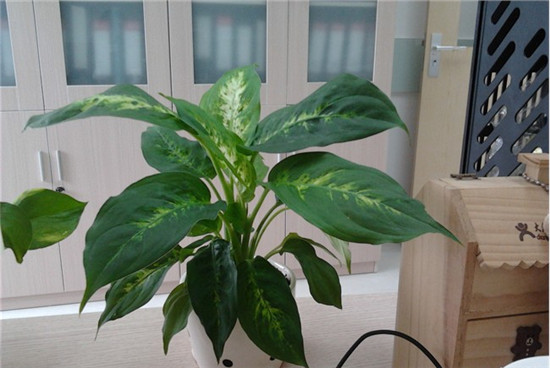
Placing Dieffenbachia in the home is not only highly ornamental with a good decorative effect, but can also effectively clean indoor air pollution. The higher the concentration of pollutants in the air, the more it can exert its purifying ability, offering certain benefits for improving household air.
4. Medicinal use
Dieffenbachia can be ornamental and improve air quality, and its medicinal value is not bad either. Dieffenbachia has the effect of clearing heat and detoxifying, and is used for ailments such as bruises and injuries, tendon rupture and fractures, cuts from metal wounds, sprains and strains, boils, erysipelas, and carbuncles. The leaves of Dieffenbachia, roasted over a fire until withered or made into an ointment with the sap for external application, can also promote urination and reduce swelling. However, the sap of the leaves and stems is toxic and irritates the skin and respiratory mucosa, so it should be placed out of easy reach of children and pets.
The above is the full content of the detailed introduction to Dieffenbachia that I have summarized for everyone. I hope this article can help you. Please also continue to follow us.