How to Propagate Snake Plant? Detailed Propagation Methods
Snake plant (Sansevieria), a perennial foliage plant, is also known as tiger skin plant, yellow-edge sansevieria, and so on. Next, let us take a look at the propagation methods of snake plant.
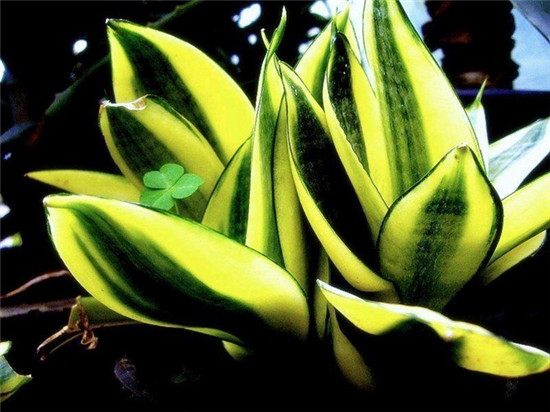
Snake plant is a herbaceous plant of the Liliaceae family, and is mostly used as a potted plant for offices, studies, and living rooms. Because it has many varieties, the leaves formed by different varieties are also different. The underground stem of snake plant is a single plant, with no forking or branching, and the leaves grow clustered from top to bottom. Generally, the whole plant is about 60cm tall, and the common snake plant grows with light yellow and green alternating. According to its leaf type, it can be divided into golden-edged snake plant, short-leaf snake plant, stone-pencil snake plant, and so on.
In fact, if snake plant is well cared for, it will also bloom. Its flowers are mostly pale white, some slightly green, and the flowering period is generally around December. The leaves of snake plant are relatively firm and the color is also attractive. It not only brings vitality to people, but is also a good helper for purifying the air in home decoration. So many people like to grow snake plant. When cultivating it, you need to know the habits of snake plant in order to grow it better.
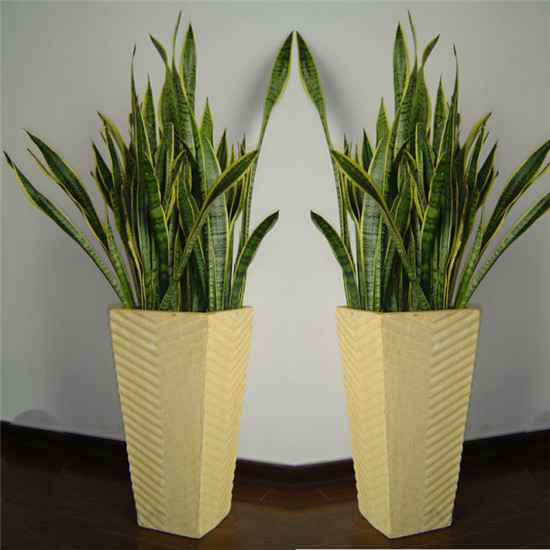
Snake plant is a plant that, like clivia and peace lily, prefers a warm and humid environment, but also has drought tolerance similar to maidenhair fern. In daily growth, it relatively likes light, but rainy days will not cause a relatively bad effect on it, and its demand for light is not very high. It generally grows at around 35 degrees Celsius, and in winter, if the temperature is kept above 10 degrees Celsius, it can survive the winter safely. The soil characteristic for general growth is sandy soil, and spring and summer are the rapid growth periods. The propagation of snake plant is mainly by cuttings and division, and seeds are not easy to survive.
How to Grow Snake Plant
1. Soil requirements: Like home-grown plants such as bromeliads, cyclamen, epiphyllum, and dumb cane, snake plant requires loose soil, and air permeability also has certain requirements. An ordinary potting soil can be used as the basic soil, and after the plant matures, a special fertilizer soil can be chosen for cultivation.
2. Temperature requirements: The other requirements of snake plant are actually not harsh, but temperature is a rather tricky point, because its environment for growth and development is around 25 degrees Celsius. If lower, growth is inhibited; if higher, then growth stops. In winter, the temperature must be kept above 10 degrees Celsius, otherwise it will be frostbitten.
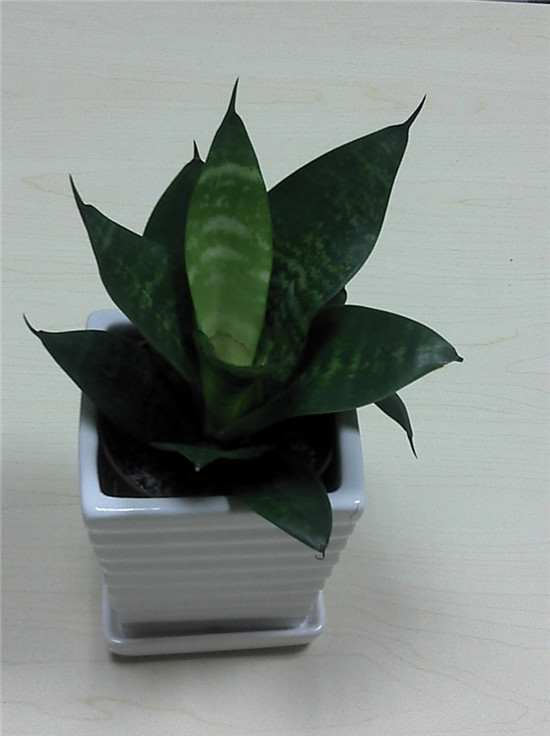
3. Water requirements: Water is the same as for other plants; just keep the soil moist, but it must not be too wet, especially not waterlogged. In winter, water less; generally 1-2 times in a whole winter is enough.
4. Light requirements: Tiger skin plant relatively likes sunlight. Even direct sunlight will not cause death due to transpiration being too fast. On the contrary, if placed in a shady place for a long time, the leaves will turn yellow. So provide as much light as possible.
5. Pruning requirements: Generally, tiger skin plant can mature in a few months. At this time, in order to ensure aesthetics and growth needs, mainly prune the places that grow relatively luxuriantly. Ensure the extent of sunlight exposure.
6. Repotting requirements: When it grows to the second or third year, tiger skin plant needs a soil change to ensure the normal intake of nutrients.
7. Pest damage requirements: Generally, the diseases suffered by snake plant are leaf spot disease caused by pests or weevils, and so on. Some pesticide can be applied appropriately.
8. Fertilizer requirements: Tiger skin plant only needs sufficient soil nutrients. Generally, no fertilization of the soil is needed, but when repotting, a large amount of nutrients needs to be added.
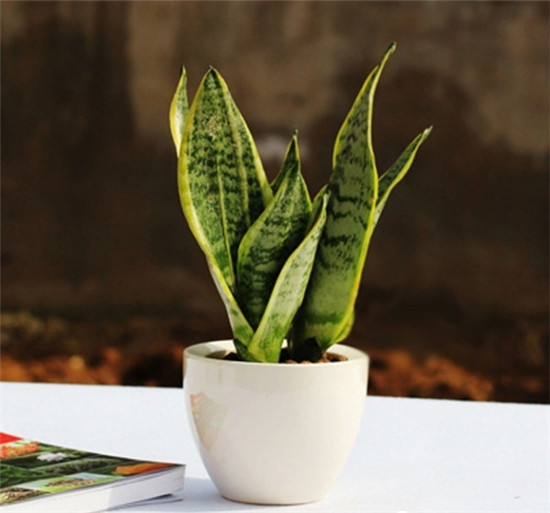
Care of Snake Plant
1. It is very simple to plant and does not require many conditions. Snake plant has strong adaptability and can be managed relatively extensively. For potting, use 3 parts fertile garden soil, 1 part coal cinders, and add a small amount of bean cake crumbs or poultry manure as base fertilizer.
2. During the growing period, it relatively needs fertilizer, and there are no special requirements in other periods. Snake plant does not have great demands for fertilizer, but if during the growing period a thin cake fertilizer water is applied once every 10 to 15 days, it can grow better.
3. It needs an appropriate amount of light. Potted snake plant should not be placed in a dark place for a long time, and should often be given scattered light; otherwise, the leaves will become dull and lack vitality. But it also must not be suddenly moved into sunlight; it should first adapt in a dark place.
4. It needs to be propagated and cultivated in this way. Tiger skin plant can be propagated by division and cuttings.
Division: Suitable for all varieties of tiger skin plant, generally carried out in combination with spring repotting. The method is to cut the overly dense leaf clusters into several clusters. In addition to leaves, each cluster must also have a section of rhizome and suckers, and they can be planted separately in pots.
Cuttings: Only suitable for varieties whose leaves do not have golden-yellow edges or silver veins; otherwise, the yellow and white markings on the leaves will disappear, becoming an ordinary variety of tiger skin plant. The method is to select robust and plump leaves, cut them into 5-6 cm lengths, insert them into sandy soil or vermiculite, expose half above the soil surface, keep them slightly moist, and they can take root in about one month.
The above is all the content of the snake plant propagation methods I have summarized for everyone. I hope this article can help everyone. Please also continue to follow us.
Tiger skin plant can be propagated by division and cuttings.Division: Suitable for all varieties of tiger skin plant, generally carried out in combination with spring repotting. The method is to cut the overly dense leaf clusters into several clusters. In addition to leaves, each cluster must also have a section of rhizome and suckers, and they can be planted separately in pots.
Cuttings: Only suitable for varieties whose leaves do not have golden-yellow edges or silver veins; otherwise, the yellow and white markings on the leaves will disappear, becoming an ordinary variety of tiger skin plant. The method is to select robust and plump leaves, cut them into 5-6 cm lengths, insert them into sandy soil or vermiculite, expose half above the soil surface, keep them slightly moist, and they can take root in about one month.
The above is all the content of the snake plant propagation methods I have summarized for everyone. I hope this article can help everyone. Please also continue to follow us.