A Detailed Guide to Planting and Caring for the Sago Palm
The sago palm stays evergreen all year round and is a fairly good ornamental plant. Indoors, it can be placed in the living room, hallway and other spots. Next, let us take a look at how to plant a sago palm.
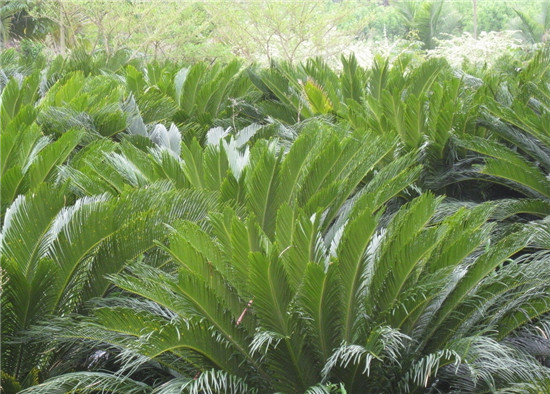
The sago palm is native to the tropics. It has a distinctive tree shape, with evergreen pinnate compound leaves clustered at the top of the stem. In the south it can be planted in flower beds, while in the north it is grown in pots; the ornamental effect is excellent, and it is an important material for decorating venues and the like. However, many people care for sago palms improperly, resulting in thin, soft, elongated branches and leaves, yellowing dry branches, and poor growth. The experience of propagating and caring for sago palms is introduced below:
I. Propagation Methods
1. Sowing: After the seeds are harvested, store them in sand, and sow them in spots in late April of the following spring. Before sowing, first grind through the seed coat; cover the seeds with about 2 cm of soil. After sowing, place the sowing pot in a spot with plenty of sunlight. The optimum germination temperature is about 30°C, and they will germinate in half a month.
2. Cuttings: From April to May, cut 10-20 cm long small branches from the trunk, trim off some leaves, place them indoors in a ventilated spot, and after the wounds have dried slightly, insert them into a sandy loam seedbed.
II. Care and Management
1. Temperature: It likes warmth. In the hot summer season, misting with water can be used to lower the temperature appropriately. In winter, move it indoors in late October, keep the room temperature at about 10°C, and move it back outside in mid-to-late April of spring.
2. Fertilizing: Each year during the growing season (spring and autumn), apply topdressing 3-4 times, using fully decomposed cake fertilizer water or human manure and urine, and add an appropriate amount of ferrous sulfate to the fertilizer, or directly apply the "humic acid flowering fertilizer" sold on the market. Regular fertilizing can keep the leaves evergreen and glossy.
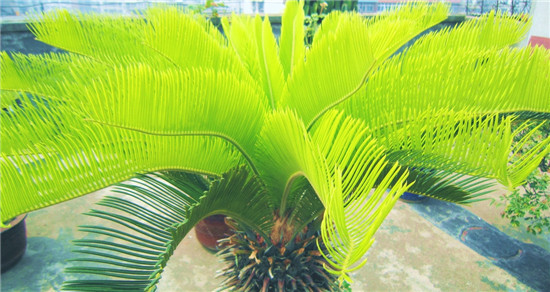
3. Watering: Watering should follow the principle of watering when dry and stopping when moist. In winter, if the room temperature is low, growth stops and the plant enters a semi-dormant state, so water should be given sparingly. During the vigorous growth period in spring and summer, water a little more to keep the soil moist; after autumn begins, growth gradually slows, so moisture should be controlled and a certain degree of dryness maintained to help it overwinter.
4. Temperature and Light: The sago palm likes sun but also tolerates shade. When cared for indoors, in summer it can be placed on a ventilated, shaded balcony or by a window, to avoid strong light exposure, especially when new leaves have just emerged, when direct strong light must be avoided even more to prevent the leaves from being damaged. In spring, autumn and winter, direct strong light should also be appropriately avoided. Before the cold wave arrives in winter, move the sago palm indoors, keeping the minimum room temperature no lower than 5°C.
5. Pest and Disease Control: It is prone to physiological yellow-leaf disease, which can be prevented by applying an appropriate amount of ferrous sulfate. It is also susceptible to scale insects. First, good ventilation should be maintained; once scale insects are found, spray with lime-sulfur mixture or fluoroacetamide.
6. Shaping and Pruning: When a family buys a sago palm for the first time, in order to increase its ornamental value, 2-3 young small plants can be purchased and planted together in a shallow pot. Without any need for pruning, wiring or shaping, it can be made into a distinctive tree-stump bonsai.
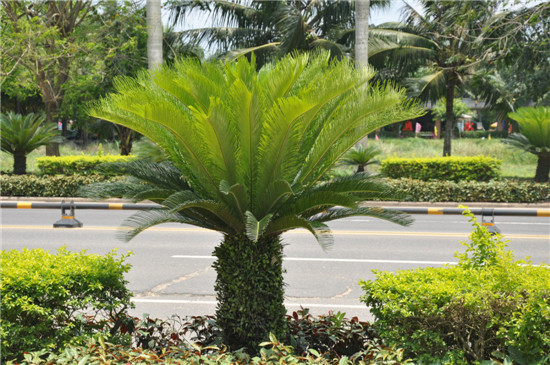
The Feng Shui Role of the Sago Palm
The sago palm symbolizes unyielding integrity, unwavering resolve, longevity, wealth and honor, and good fortune. It implies strength and can replenish the qi and blood of a home. It is a fairly ideal feng shui plant for invigorating prosperity in the home and can be placed on the balcony and in the living room. However, it should not be grown by people in the household whose Chinese zodiac signs are the dragon, dog or rabbit.
1. The most important position in the living room is called the wealth position in feng shui, and it is related to the rise and fall of the whole family's finances, career, reputation and so on, so the layout and arrangement of the wealth position must not be neglected. The best location for the wealth position is the diagonal direction from the living room entrance, where a sago palm can be placed to attract wealth.
2. The sago palm wards off evil influences. The sago palm (Note: source text says "tie shu" i.e. sago palm) can be placed at the doorway of a room or the kitchen door to block evil and avert misfortune.
Precautions for Growing Sago Palms
(1) The sago palm likes a warm, well-ventilated environment and is suited to slightly acidic, fertile sandy soil. Normally it should be placed in a spot with plenty of sunlight, and watering should be moderate; waterlogging should be avoided to prevent root rot and yellow leaves. The sago palm should be repotted and have its soil changed once every 3 years. Some scrap iron can be placed in the pot to increase the iron content, which can make the branches and leaves more attractive. The sago palm is susceptible to sooty mold, which can be controlled with a 1000-fold dilution of Tuzet solution. Normally, the leaves can often be wiped with a warm cloth, which not only keeps them clean and more attractive but also prevents infection by pests and diseases.
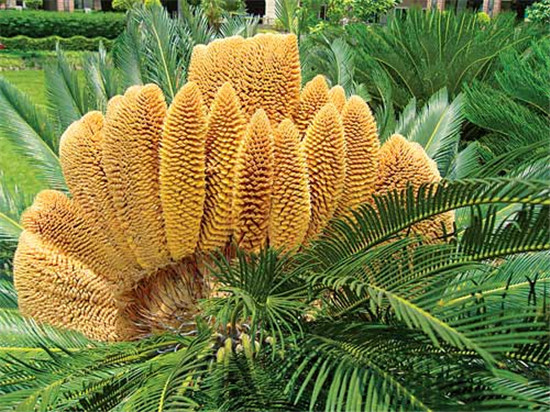
(2) The roots of the sago palm and the heart at the top of its stem are toxic; full caution must be taken when using the roots and stems of the sago palm for medicinal purposes.
(3) For indoor potted sago palms, never use clayey soil. The sago palm likes fertilizer, especially iron-rich fertilizer. To keep the leaves moist, deep green, radiant and glossy, apply a diluted liquid fertilizer once or twice in late spring and early summer, with added ferrous sulfate solution. Folk practice often uses scrap iron filings as a base fertilizer. In early spring, place scrap iron filings on the pot soil; through normal watering and care, the iron rusts and gradually seeps into the pot soil, which also has a certain effect.
(4) In the hot summer weather, sago palms often show dull color. To improve this dull-color condition, a small amount of ferrous sulfate can be added to the fertilizer water. When watering, the amount should not be too large, and the pot soil must not be allowed to become waterlogged, so as to avoid causing root rot and yellow leaves.
The above is the entire content I have summarized for everyone on how to plant a sago palm. I hope this article can help everyone. Please also continue to follow us.
In early spring, place scrap iron filings on the pot soil; through normal watering and care, the iron rusts and gradually seeps into the pot soil, which also has a certain effect.(4) In the hot summer weather, sago palms often show dull color. To improve this dull-color condition, a small amount of ferrous sulfate can be added to the fertilizer water. When watering, the amount should not be too large, and the pot soil must not be allowed to become waterlogged, so as to avoid causing root rot and yellow leaves.
The above is the entire content I have summarized for everyone on how to plant a sago palm. I hope this article can help everyone. Please also continue to follow us.