What is the flower language of the white magnolia? A detailed explanation of its meaning and symbolism
The white magnolia blooms continuously, though its fragrance is not as rich as that of summer flowers. But the beauty of the flower is meant to spread beautiful kindness throughout the world; the fragrance of the flower is meant to spread fragrant love throughout society; the purity of the flower is meant to offer a pure and sincere heart to the ten directions; the colors of the flower are meant to form bonds with others through colorful good intentions.
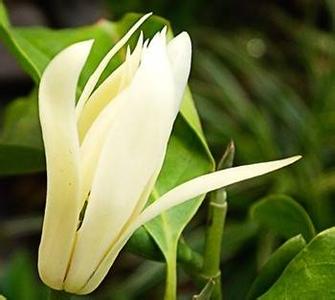
White magnolia flower language
[White magnolia flower language: pure love, sincere affection]
The white magnolia blooms elegantly and falls quietly; its blossoming is so silent, untouched by favor or disgrace, yet each flower can evoke a mood, an elegant and quiet secret thought. The white magnolia has an upright, branching form and carries itself with easy grace. In the south it can be cultivated outdoors in courtyards, and it is a backbone tree species in southern gardens. Because it fears smoke, it should be placed in a spot with circulating air; its flowers are white, and its petals are flat in shape.
[White magnolia flower language: pure love, sincere affection]
The white magnolia has bloomed, blooming so quietly and beautifully. Those are pure flowers, opening serenely, giving off a faint scent that drifts near and far. Besides being enjoyed for both its flowers and leaves, as an aromatic plant the white magnolia can also serve as a source of fragrance and medicine. The white magnolia contains aromatic volatile oils, antioxidants, bactericides and other substances, and can beautify the environment, purify the air and fragrance the home.
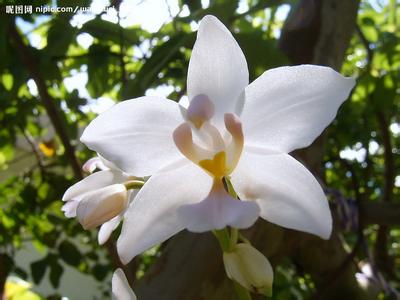
[White magnolia flower language: pure love, sincere affection]
Moreover, the essential oil and dried aromatic substances extracted from the white magnolia can also be used for beauty care, bathing, food and medicine, among other uses. The white magnolia always quietly dedicates its essence, letting its fragrance fill the world. This is it - the white magnolia, always maintaining its nobility.
[White magnolia flower language: pure love, sincere affection]
The rich floral fragrance of the white magnolia refreshes the spirit, its scent filling the nose; pure love, sincere affection, just like this phrase, symbolize beauty, symbolize love. It does not have the gaudy, colorful flamboyance of the rose; all it has is simple elegance and serenity, charm and fragrance.
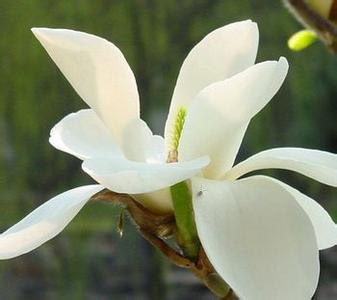
A brief introduction to the white magnolia
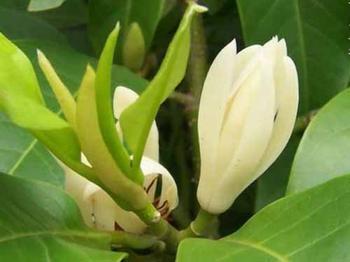
White magnolia, a deciduous tree of the Michelia genus in the Magnoliaceae family, reaches 17-20 m tall; potted plants are usually 3-4 m tall, and there are also small plants. The bark is grayish white, the young branches are often green, the leaves are oblong, simple and alternate, blue-green, leathery and glossy, long-elliptical. Its flower buds resemble the tip of a writing brush, with 8 petals, white as snow, growing in the leaf axils. The flowers are white or slightly yellow, the petals thick and long-lanceolate, with a strong fragrance; the flowering period is long, blooming continuously from June to October. If the winter temperature is suitable, flowers will continue to open continuously, though the fragrance is not as rich as that of summer flowers.
How do you grow a white magnolia?
How do you grow a white magnolia? According to the white magnolia's preferences: it likes a sunny and moist environment and is not suited to growing long-term in alkaline soil; planting should choose a wind-sheltered, sunny, well-drained and fertile spot. Before flowering there should be sufficient water and fertilizer to promote large, fragrant flowers. The white magnolia does not have many branches; apart from dead branches, diseased and pest-damaged branches, and branches that spoil the tree's shape, it generally does not need pruning. After the flowers fade, if seed is not wanted, the fruit should be cut off to avoid consuming nutrients. The white magnolia has fairly strong cold resistance, and in North China and the southern part of Northeast China it can overwinter outdoors.
How do you grow a white magnolia? How to grow a potted white magnolia: wiring can be done, that is, after sprouting in April, as the new shoots grow, wire them at any time, bending them into curved postures to limit the trunk from growing tall. Also, because magnolia has a deep root system and easily weakens after long periods in a pot, after the flowers fade the main roots should be trimmed and it should be planted in the ground for cultivation, then repotted before flowering; only in this way can the flowers be abundant and colorful.
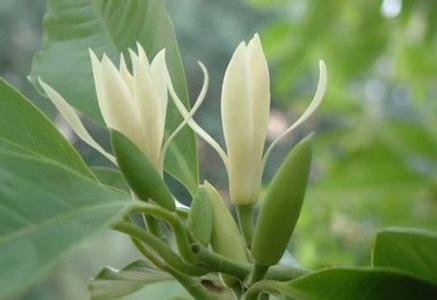
How do you grow a white magnolia? Propagation of the white magnolia: grafting is the main method, but it can also be propagated by sowing, cuttings and layering. Grafting mostly uses magnolia seedlings as rootstock, with cut grafting done before Qingming; in the south, cut grafting can also be done around the autumn equinox, or bud grafting in August-September. Both cut grafting and bud grafting are the same as for general flowering trees. For sowing and raising seedlings, at the end of September or the beginning of October, harvest the ripe fruit, take out the seeds, soak them in wood-ash water for 1-2 days, then rub off the waxy aril, wash clean with clear water and sow; the seeds can also be washed clean and stored in moist sand layers under cold conditions, otherwise they easily lose their ability to germinate. In March of the following year, sow in pots indoors, and seedlings emerge in about 20 days.
How do you grow a white magnolia? Overall, watering is the key to growing a good white magnolia, but because its root system is fleshy, it fears waterlogging and is not tolerant of drought. In spring, when it is brought out, water thoroughly once, then water thoroughly once every other day; in summer, water once in the morning and once in the evening, and in too-dry conditions spray water on the leaves; in autumn, water once every 2-3 days; in winter, withhold water, as long as the potting soil is slightly moist; after rain, promptly pour off accumulated water. Apply light fertilizer frequently, preferably cake fertilizer; do not fertilize in winter; from after new buds sprout until June, water with fertilizer once every 3-4 days, and from July to September, water with fertilizer once every 5-6 days; after applying fertilizer several times, stop once.
It likes well-drained, humus-rich, loose, slightly acidic sandy soil. Usually repot once every 2-3 years, preferably after Grain Rain, and add loose fertile soil. It is not cold-tolerant; except in South China, all other regions must move it indoors for winter care, with the lowest room temperature kept above 5°C, and the suitable time to move it outdoors is from Qingming to Grain Rain.
It sends out new shoots 3 times a year. Generally, the first is in late February, the second in mid-June, and the third in early August. Because it flowers while growing after each sprouting, the flowering period lasts as long as 150 days. During the growing period, fertilize once every ten days; during the flowering period, apply phosphorus fertilizer 2-3 times more, and at the same time cut off diseased branches, dead branches and leggy branches, and remove some old leaves, to suppress the tree's vigor and encourage more flowering.
Layering and grafting are commonly used for propagation. For layering, use the air-layering method in June-July, keep it moist, and roots form after about 2 months. For grafting, use two-year-old lily magnolia as rootstock; in the plum rain season, select white magnolia branches of the same thickness as the rootstock; after grafting they heal in 60-70 days, then cut them from the mother plant to form new plants.