A Detailed Explanation of the Effects, Functions and Culinary Uses of Gui Zhi (Cassia Twig)
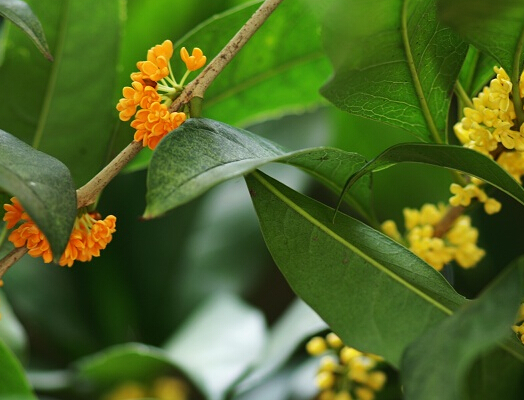
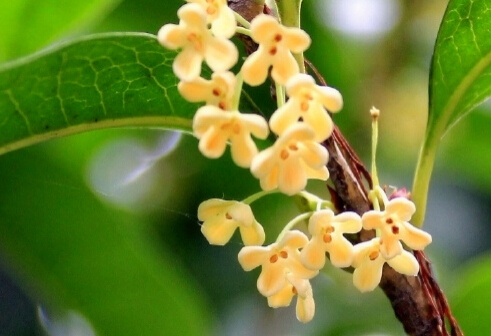
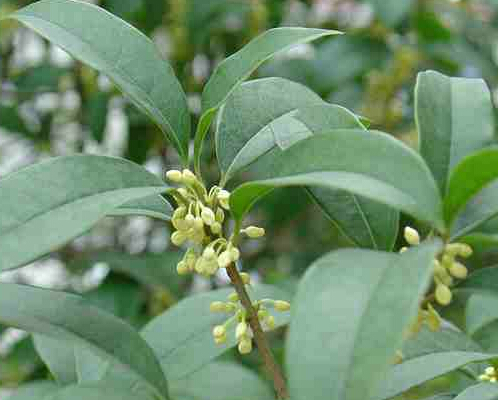
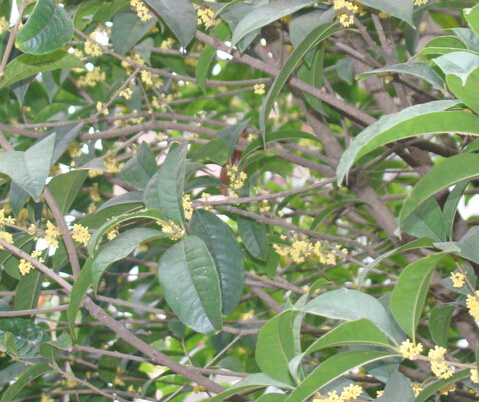
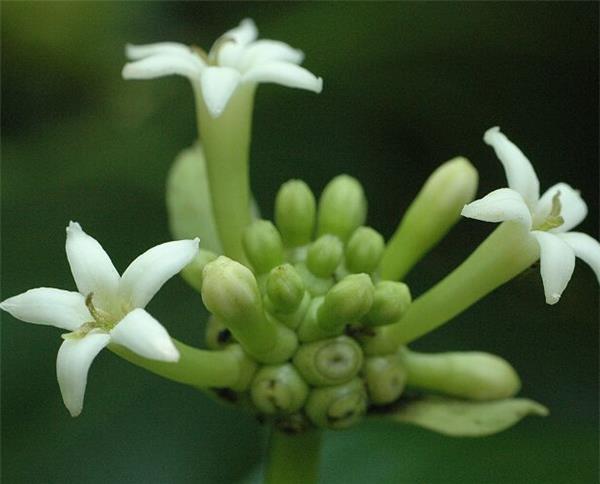
Gui Zhi is the dried young twig of the cinnamon tree, an arbor in the Lauraceae family. The young twigs are cut in spring and summer, dried in the sun or in the shade, and then cut into thin slices or small pieces for use. Those with fine, tender and uniform twigs, a reddish-brown color and a strong aroma are considered the best.
Gui Zhi is pungent and sweet in flavor and warm in nature, and enters the Heart, Lung and Bladder meridians. It was first recorded in the Shennong Bencao Jing (Divine Farmer's Materia Medica). The Grand Dictionary of Chinese Materia Medica states that it has functions such as "inducing sweating and releasing the exterior, warming the meridians and unblocking yang. It treats wind-cold exterior patterns, wind-dampness painful obstruction, chest painful obstruction with phlegm-fluid, amenorrhea and abdominal masses, and difficult urination."
The effects of Gui Zhi:
Dispersing cold and releasing the exterior
Gui Zhi is pungent and warm and disperses outward, having the function of dispersing wind-cold pathogenic factors outward. The Shennong Bencao Jing (hereafter referred to as the Ben Jing) says Gui Zhi is "pungent in flavor, warm, and non-toxic." The Song dynasty Bencao Bieshuo states: "In Zhang Zhongjing's Shanghan Lun, Gui Zhi is used to induce sweating." The Qing dynasty Bencao Beiyao also says: "Gui Zhi treats headache from wind attack; when there is no sweat, it can induce it. In wind-strike with spontaneous sweating, when there is sweating, it stops it." It can be seen that the materia medica texts of successive dynasties are unanimous in the view that Gui Zhi has the effect of dispersing cold and releasing the exterior. However, some physicians of the Qing dynasty believed that Gui Zhi is warm and even hot in nature, and that a biased nature carries "toxicity," so it should be used only after a clear pattern diagnosis; otherwise, using it will harm the patient.
Harmonizing the nutritive and defensive qi
Physicians of successive dynasties mostly believed that Gui Zhi has the function of harmonizing the nutritive and defensive qi. The Bencao Gangmu says: "Gui Zhi penetrates and reaches the nutritive and defensive qi, hence it can release the flesh and drive out wind pathogens." The Jingyue Quanshu says: "Gui Zhi is light in qi, hence it can travel to the exterior; because it is good at harmonizing the nutritive and defensive qi, it can treat cold damage, induce pathogenic sweating, treat wind attack, and stop yin sweating." The Qing dynasty Bencao Qiuzhen directly calls it "harmonizing the nutritive and defensive qi." It can be seen that the medical texts and materia medica works of successive dynasties all hold that Gui Zhi has the function of harmonizing the nutritive and defensive qi.
Warming and unblocking the meridians
The medicinal material of Gui Zhi is a twig, and twigs can reach the four limbs, giving it the function of warming and unblocking the meridians. Zhang Bingcheng of the Qing dynasty pointed out: "The body and function of Gui Zhi can unblock the limbs; being pungent and sweet, it can enter the blood, warm the meridians, reach the collaterals and disperse wind-cold." (Bencao Biandu). Wang Ang commented: "Gout has differences of wind-phlegm, wind-dampness, damp-phlegm, blood stasis, qi deficiency and blood deficiency; Gui Zhi is used as a guiding drug." (Bencao Beiyao). Huang Gongxiu further elaborated on its function of diffusing painful obstruction, saying: "Gui Zhi can move horizontally through the arm; to treat gout (moving painful obstruction), Gui Zhi must be used as a guide." (Bencao Qiuzhen). Zhou Yan of the Qing dynasty summarized in the Bencao Sibian Lu: "What Gui Zhi excels at is warming the meridians and unblocking the vessels, and it is suitable for both internal and external patterns," all of which show that Gui Zhi has the effect of warming and unblocking the meridians.
Warming and assisting yang qi
Gui Zhi is warm and even hot in nature, enters the qi aspect, and is pungent and sweet in flavor. Just as the Suwen, Chapter on the Most Important and Profound Discourses says: "Pungent and sweet dispersing outward is yang," it is "yang within yang" (Yaoxing Fu). Gui Zhi is thick in qi, and "what is thick in qi is yang," "what is thick produces heat" (Suwen, Chapter on the Correspondences Between Yin and Yang and the Great Discourse on Images). The Shennong Bencao Jing says it "supplements the center and boosts qi," the Mingyi Bielu says it "mainly treats heart pain," and the Bencao Jing Jizhu says it "mainly warms the center, treats cold disorders of the heart and abdomen with alternating cold and heat. It regulates and supplements insufficiency, and guides all medicines without fear." From the discussions of physicians of successive dynasties, it can be seen that Gui Zhi not only warms and unblocks the yang qi of the five zang organs and regulates the blood vessels and meridians, but can also supplement the center and boost qi, possessing the function of treating illness, nourishing life and preserving youthful appearance.
Benefiting the qi of the liver and lungs
Tao Hongjing was the first to mention the effect of Gui Zhi in "benefiting the qi of the liver and lungs." Benefiting liver qi includes both the effects of calming the liver and soothing the liver, while benefiting lung qi refers to descending and purifying lung qi. How can Gui Zhi, with its pungent and warm nature, calm the liver and purify the lungs? "Beneath the cinnamon tree there are no other trees" (Lushi Chunqiu). From the records in ancient books, it can be seen that the cinnamon tree can "subdue" other trees and is the "king of a hundred trees." In Chinese medicine, this is extended to mean that Gui Zhi can calm the liver, attack the liver and suppress liver wood. The Bencao Qiuzhen says: "Gui Zhi is light in body and pungent in flavor, and has ascending but no descending, hence it can enter the lungs and benefit qi. Hypochondriac wind originally belongs to the liver; in all cases of hypochondriac wind, Gui Zhi should be used to enter the liver and calm it." The great warm-disease expert Ye Tianshi even made a brilliant judgment: "The qi of cinnamon is warm, receiving the harmonious qi of spring from heaven, and enters the foot jueyin liver meridian. Its flavor is pungent and non-toxic, obtaining the moistening metal flavor of the west from earth, and enters the hand taiyin lung meridian." He explained Gui Zhi's benefit to liver and lung qi from its qi and flavor and its habits.
Calming counterflow and descending rebellious qi
Gui Zhi has the effect of calming counterflow and descending rebellious qi, which refers to the upward counterflow of cold qi or water-dampness (fluid pathogens) from the lower jiao. By warming and transforming, and warming and dispersing cold congealed water-dampness, it achieves the goal of calming counterflow and descending rebellious qi. This is essentially different from the previous effect of benefiting liver and lung qi: that one soothes the qi mechanism of the liver and lungs, taking free flow as correct, while this one descends rebellious qi, taking calmness as correct. In Zhang Zhongjing's formulas, Gui Zhi Jia Gui Tang and Ling Gui Gan Zao Tang both embody this characteristic of calming counterflow and descending rebellious qi to treat running piglet. Gui Zhi can warm and disperse the water qi of the bladder, so that the counterflow qi does not rise upward from the abdomen, but can steam the water qi out through the back and the defensive exterior. This effect of calming counterflow and descending rebellious qi can be said to be a special application of Gui Zhi's effect of warming and assisting yang qi; because of its special nature, physicians of successive dynasties mostly listed it as a separate effect. The effects of Gui Zhi are precisely: dispersing cold and releasing the exterior and harmonizing the nutritive and defensive qi, warming and assisting yang qi to "treat a hundred diseases," warming and unblocking the blood vessels "without fear," and calming the liver, descending rebellious qi and benefiting the liver and lungs.
The actions of Gui Zhi:
Antibacterial action
The alcohol extract of Gui Zhi can inhibit Escherichia coli, Bacillus subtilis and Staphylococcus aureus in vitro, with an effective concentration of 25mg/ml or below. It also has an inhibitory effect on Staphylococcus albus, Shigella dysenteriae, Salmonella typhi and Salmonella paratyphi A, pneumococcus, Enterobacter aerogenes, Proteus, Bacillus anthracis, Salmonella enteritidis, Vibrio cholerae and others.
Antiviral action
Using primary monolayer epithelial cell tissue culture of human embryonic kidney, the decoction of Gui Zhi (1:20) has an inhibitory effect on influenza A Asian strain Jingke 68-1 and orphan virus (ECHO11). On chick embryos, it has an inhibitory effect on influenza virus, with the 70% alcohol infusion being more effective.
Diuretic action
Intravenous injection of Wuling San containing Gui Zhi at 0.25g/kg into anesthetized dogs can significantly increase urine output in dogs. When Gui Zhi alone was injected intravenously (0.029g/kg), its diuretic effect was more significant than that of the other four drugs used alone, so Gui Zhi is considered one of the main diuretic components in Wuling San, and its mode of action may be similar to mersalyl.
Dilating blood vessels and promoting sweating
The cassia oil in Gui Zhi can dilate blood vessels, regulate blood circulation, cause blood to flow to the body surface, and strengthen the sweating effect of Ma Huang (Ephedra).
Antipyretic and analgesic
Cinnamaldehyde and sodium cinnamate in Gui Zhi can dilate skin blood vessels, increase heat dissipation, promote sweating and raise the pain threshold.
Sedative and anticonvulsant
Gui Zhi contains cinnamaldehyde. After mice were given cinnamaldehyde, their spontaneous activity decreased, the effects of barbiturates were enhanced, and it counteracted the effects of amphetamine and strychnine. It reduced nicotine-induced convulsions and inhibited audiogenic seizures.
Anti-inflammatory and anti-allergic
The volatile oil in Gui Zhi can inhibit IgE-induced mast cell granule reaction. It lowers complement activity and has an anti-allergic effect.
Culinary uses of Gui Zhi:
Gui Zhi Tang
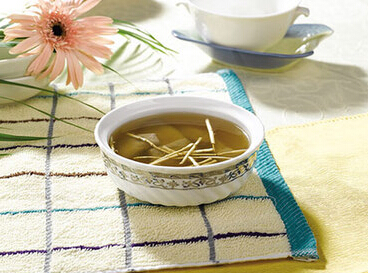
Gui Zhi (peeled) three qian (9 grams), Bai Shao (peony root) three qian (9 grams), Sheng Jiang (fresh ginger) three qian (9 grams), Da Zao (jujube, cut) twelve pieces (3 pieces), Gan Cao (licorice, honey-fried, 6 grams). It treats taiyang wind-strike, with floating yang and weak yin. When yang is floating, heat arises spontaneously; when yin is weak, sweat comes out spontaneously; there is shivering aversion to cold, gradual aversion to wind, gathering heat, nasal sound and dry heaving. For the above five ingredients, finely cut three of them, use seven sheng of water, cook over a gentle fire to obtain three sheng, remove the dregs, and take one sheng when it is at a suitable temperature. Shortly after taking it, drink more than one sheng of hot thin congee to assist the medicinal power, and cover warmly for about one shichen. It is even better if the whole body is slightly damp with a faint sweat.
Gui Zhi Long Gu Mu Li Tang
From the upper volume of the Jingui Yaolue, also known as Gui Zhi Gan Cao Long Gu Mu Li Tang, Long Gu Tang, Gui Zhi Mu Li Tang, and Long Gu Mu Li Tang. Take Gui Zhi, Bai Shao and Sheng Jiang 45 grams each, Gan Cao 30 grams, Da Zao 12 pieces, Long Gu (dragon bone) and Mu Li (oyster shell) 45 grams each. For the above seven ingredients, use 700 milliliters of water, cook to obtain 300 milliliters, and take it warm in three divided doses. It can invigorate heart yang, regulate yin and yang, harmonize the nutritive and defensive qi, and also secure and astringe essence fluid.
Gui Zhi Shao Yao Zhi Mu Tang
From the upper volume of the Jingui Yaolue: take Gui Zhi 12 grams, Bai Shao 9 grams, Gan Cao 6 grams, Ma Huang 12 grams, Sheng Jiang 15 grams, Bai Zhu (Atractylodes macrocephala) 15 grams, Zhi Mu (Anemarrhena asphodeloides) 12 grams, Fang Feng (Saposhnikovia divaricata) 12 grams, and Fu Zi (aconite, prepared) 10 grams. Or Gui Zhi 25 grams, Bai Shao 18.5 grams, Gan Cao 12.5 grams, Ma Huang 12.5 grams, Sheng Jiang 12.5 grams, Bai Zhu 30 grams, Zhi Mu 25 grams, Fang Feng 25 grams, and Fu Zi 12.5 grams. Use 700 milliliters of water, cook to obtain 210 milliliters, take 70 milliliters warm each time, three times a day. It can dispel wind and remove dampness, unblock yang and disperse cold, with an adjunct of clearing heat. It mainly treats pain in the joints of all limbs, emaciation of the body, swelling of the feet as if about to drop off, dizziness, shortness of breath, and a feeling of warmth with desire to vomit.
Antibacterial action
The alcohol extract of Gui Zhi can inhibit Escherichia coli, Bacillus subtilis and Staphylococcus aureus in vitro, with an effective concentration of 25mg/ml or below. It also has an inhibitory effect on Staphylococcus albus, Shigella dysenteriae, Salmonella typhi and Salmonella paratyphi A, pneumococcus, Enterobacter aerogenes, Proteus, Bacillus anthracis, Salmonella enteritidis, Vibrio cholerae and others.
Antiviral action
Using primary monolayer epithelial cell tissue culture of human embryonic kidney, the decoction of Gui Zhi (1:20) has an inhibitory effect on influenza A Asian strain Jingke 68-1 and orphan virus (ECHO11). On chick embryos, it has an inhibitory effect on influenza virus, with the 70% alcohol infusion being more effective.
Diuretic action
Intravenous injection of Wuling San containing Gui Zhi at 0.25g/kg into anesthetized dogs can significantly increase urine output in dogs. When Gui Zhi alone was injected intravenously (0.029g/kg), its diuretic effect was more significant than that of the other four drugs used alone, so Gui Zhi is considered one of the main diuretic components in Wuling San, and its mode of action may be similar to mersalyl.
Dilating blood vessels and promoting sweating
The cassia oil in Gui Zhi can dilate blood vessels, regulate blood circulation, cause blood to flow to the body surface, and strengthen the sweating effect of Ma Huang (Ephedra).
Antipyretic and analgesic
Cinnamaldehyde and sodium cinnamate in Gui Zhi can dilate skin blood vessels, increase heat dissipation, promote sweating and raise the pain threshold.
Sedative and anticonvulsant
Gui Zhi contains cinnamaldehyde. After mice were given cinnamaldehyde, their spontaneous activity decreased, the effects of barbiturates were enhanced, and it counteracted the effects of amphetamine and strychnine. It reduced nicotine-induced convulsions and inhibited audiogenic seizures.
Anti-inflammatory and anti-allergic
The volatile oil in Gui Zhi can inhibit IgE-induced mast cell granule reaction. It lowers complement activity and has an anti-allergic effect.
Culinary uses of Gui Zhi:
Gui Zhi Tang
Gui Zhi (peeled) three qian (9 grams), Bai Shao (peony root) three qian (9 grams), Sheng Jiang (fresh ginger) three qian (9 grams), Da Zao (jujube, cut) twelve pieces (3 pieces), Gan Cao (licorice, honey-fried, 6 grams). It treats taiyang wind-strike, with floating yang and weak yin. When yang is floating, heat arises spontaneously; when yin is weak, sweat comes out spontaneously; there is shivering aversion to cold, gradual aversion to wind, gathering heat, nasal sound and dry heaving. For the above five ingredients, finely cut three of them, use seven sheng of water, cook over a gentle fire to obtain three sheng, remove the dregs, and take one sheng when it is at a suitable temperature. Shortly after taking it, drink more than one sheng of hot thin congee to assist the medicinal power, and cover warmly for about one shichen. It is even better if the whole body is slightly damp with a faint sweat.
Gui Zhi Long Gu Mu Li Tang
From the upper volume of the Jingui Yaolue, also known as Gui Zhi Gan Cao Long Gu Mu Li Tang, Long Gu Tang, Gui Zhi Mu Li Tang, and Long Gu Mu Li Tang. Take Gui Zhi, Bai Shao and Sheng Jiang 45 grams each, Gan Cao 30 grams, Da Zao 12 pieces, Long Gu (dragon bone) and Mu Li (oyster shell) 45 grams each. For the above seven ingredients, use 700 milliliters of water, cook to obtain 300 milliliters, and take it warm in three divided doses. It can invigorate heart yang, regulate yin and yang, harmonize the nutritive and defensive qi, and also secure and astringe essence fluid.
Gui Zhi Shao Yao Zhi Mu Tang
From the upper volume of the Jingui Yaolue: take Gui Zhi 12 grams, Bai Shao 9 grams, Gan Cao 6 grams, Ma Huang 12 grams, Sheng Jiang 15 grams, Bai Zhu (Atractylodes macrocephala) 15 grams, Zhi Mu (Anemarrhena asphodeloides) 12 grams, Fang Feng (Saposhnikovia divaricata) 12 grams, and Fu Zi (aconite, prepared) 10 grams. Or Gui Zhi 25 grams, Bai Shao 18.5 grams, Gan Cao 12.5 grams, Ma Huang 12.5 grams, Sheng Jiang 12.5 grams, Bai Zhu 30 grams, Zhi Mu 25 grams, Fang Feng 25 grams, and Fu Zi 12.5 grams. Use 700 milliliters of water, cook to obtain 210 milliliters, take 70 milliliters warm each time, three times a day. It can dispel wind and remove dampness, unblock yang and disperse cold, with an adjunct of clearing heat. It mainly treats pain in the joints of all limbs, emaciation of the body, swelling of the feet as if about to drop off, dizziness, shortness of breath, and a feeling of warmth with desire to vomit.