A Detailed Guide to the Propagation and Care of Bromeliads
Nowadays indoor floral decoration has gradually become popular; placing plants indoors not only helps freshen the air but also serves a decorative purpose. Some even use indoor plants to change their feng shui fortune, but most people still choose plants with auspicious meanings to decorate their interiors. Today the editor wants to introduce to you the bromeliad; let us take a look at bromeliad propagation methods and bromeliad care methods.
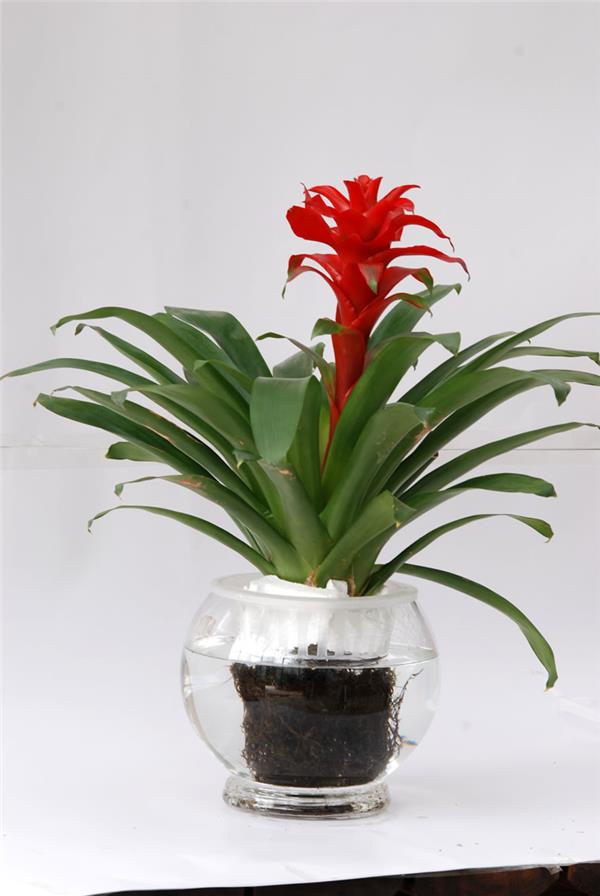
Bromeliad propagation can be divided into: cutting propagation, division propagation, and seed propagation.
Division: the leaf axils at the base of ornamental bromeliads continuously produce small offsets; when they have grown 5 to 6 leaves, they can be cut off for cutting propagation, and in about 1 month or so they will produce roots.
Cuttings: this can be done together with repotting in spring, by cutting off the small tubers growing from the tuberous part of the mother plant for cuttings, or by dividing the rooted young shoots sprouting from the roots of an old bromeliad plant; in all cases keep them shaded, moist and warm, use a soil of half leaf mold and half plain sandy soil, and when the roots grow to 2-3 cm, they can be planted in place.
Sowing: under conditions of 25°C to 30°C, sow the seeds obtained after artificial supplementary pollination following flowering; seedlings emerge in about 4 weeks or so, and in about 3 to 4 years they can grow into a flowering bromeliad plant.
Bromeliad Care Methods
For the care and management of bromeliads after propagation, we simply need to get these conditions right: soil, water and fertilizer, temperature, light, and humidity.
1. Soil: it is best to use leaf mold plus 1/4 river sand as the growing medium, or all moss and bark chunks can be used for wrapping and planting; for potted plants use 1/4 granular drainage material as filler to facilitate root aeration and drainage; if a small amount of decomposed chicken manure, cake fertilizer residue or bone meal and other base fertilizer can be placed at the bottom of the pot, growth will be even better.
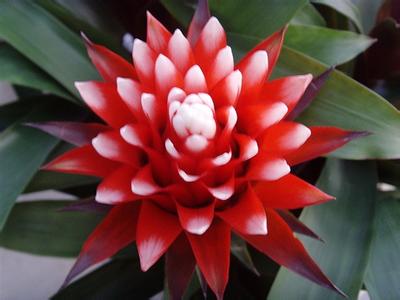
3. Temperature: bromeliads have a relatively wide temperature tolerance and can grow at 5-37°C. The most suitable temperatures are a night temperature of 10-18°C and a day temperature of 21-32°C, and the day-night temperature difference should be above 6°C.
4. Water and fertilizer: the ideal irrigation water is rainwater, followed by surface water such as river and lake water, and the pH of the water should be 5.5-6.5. The water management state requires that there be no standing water at the bottom of the pot, that moss grow on the surface of the medium, and that there be water in the leaf cups. Because bromeliads mainly absorb nutrients through their leaf cups, liquid fertilizer should be used. Bromeliads are very sensitive to some elements; for example, copper and chlorine can cause the plant to blacken or even die; zinc can cause dry leaf tips; boron causes leaf curling or dropping; and too much phosphorus can also cause poisoning symptoms in bromeliads, such as dry leaf tips. The leathery leaves of bromeliads have a relatively high demand for magnesium; sufficient magnesium can give the leaves of some bromeliad varieties (such as 'Torch') a distinctive metallic luster, so magnesium should be added to the nutrient solution, generally at 1/10 of the potassium (potassium oxide).
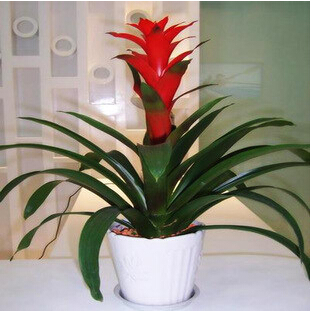
After a bromeliad flowers, the central leaf rosette dies, while the side offsets continue to grow. When this offset is 15 cm tall, it can be removed from the mother plant together with its roots and planted separately. Doing this can only be "a single heir passed down from generation to generation", and the number propagated is limited. Therefore, it is best to combine this with spring repotting, cutting off the small tubers growing from the tuberous part of the mother plant for cuttings, or dividing the rooted young shoots sprouting from the roots of an old plant; in all cases keep them shaded, moist and warm, and when the roots grow to 2-3 cm, they can be planted in place. If cultivated properly, one mother plant can propagate about 10 plants each year.
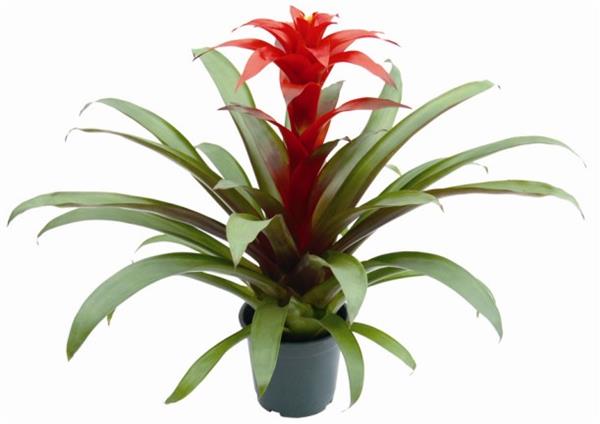
How to Grow Bromeliads
Catering to their preferences is key, because bromeliads originate from the tropical rainforest regions of the Americas and like a hot and humid climate. If grown indoors, attention should be paid to sunlight, moisture, and air conditions, and an indoor temperature controlled at 15-20°C is most suitable for bromeliad growth. In terms of temperature, bromeliads are suitable for indoor cultivation, and in terms of soil, moisture is suitable for bromeliad growth during the peak growing season. Therefore, during the flowering period, water should be sprayed on their leaves and surroundings several times a day to increase air and soil humidity.
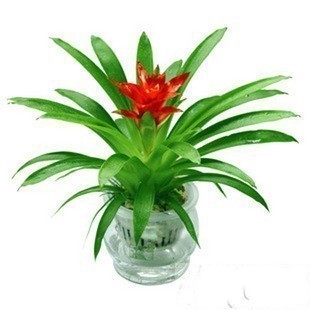
Because bromeliads originate from the tropical rainforest regions of the Americas and like a hot and humid climate. If grown indoors, attention should be paid to sunlight, moisture, and air conditions, and an indoor temperature controlled at 15-20°C is most suitable for bromeliad growth. In terms of temperature, bromeliads are suitable for indoor cultivation, and in terms of soil, moisture is suitable for bromeliad growth during the peak growing season. Therefore, during the flowering period, water should be sprayed on their leaves and surroundings several times a day to increase air and soil humidity.